Laboratory of Signal Transduction, Department of Medical Sciences, Institute of Biomedicine-iBiMED, University of Aveiro, 3810-193 Aveiro, Portugal.
School of Biosciences, The University of Birmingham, Edgbaston, Birmingham B15 2TT, UK.
Open Biol. 2021 Jun;11(6):200322. doi: 10.1098/rsob.200322. Epub 2021 Jun 2.
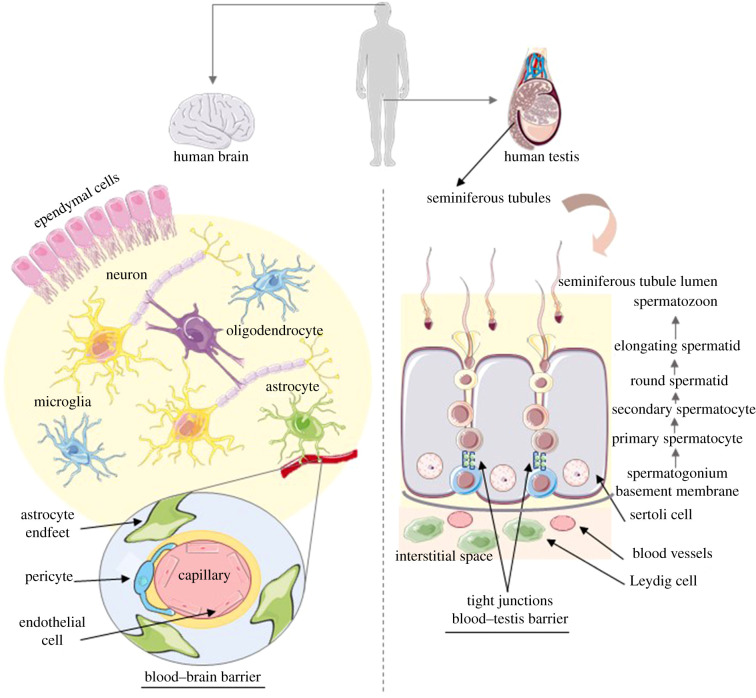
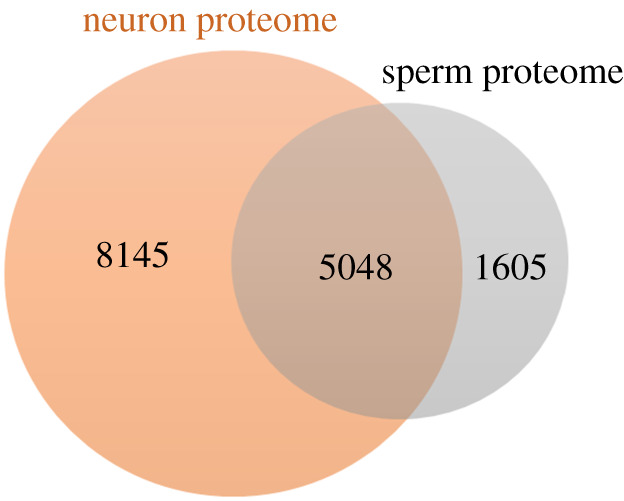
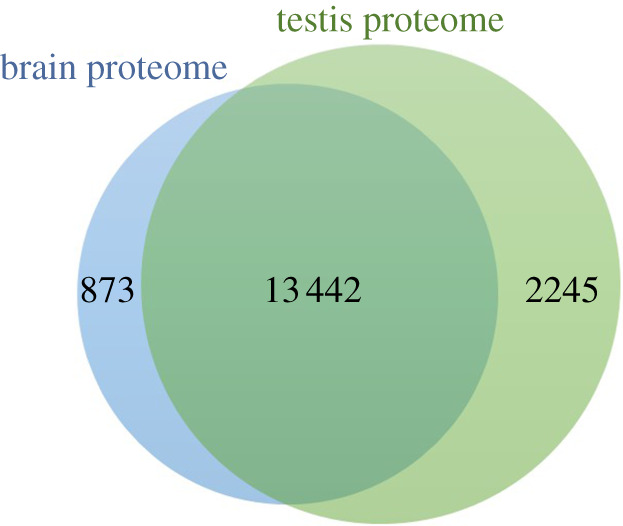
Several strands of evidence indicate the presence of marked similarities between human brain and testis. Understanding these similarities and their implications has become a topic of interest among the scientific community. Indeed, an association of intelligence with some semen quality parameters has been reported and a relation between dysfunctions of the human brain and testis has also been evident. Numerous common molecular features are evident when these tissues are compared, which is reflected in the huge number of common proteins. At the functional level, human neurons and sperm share a number of characteristics, including the importance of the exocytotic process and the presence of similar receptors and signalling pathways. The common proteins are mainly involved in exocytosis, tissue development and neuron/brain-associated biological processes. With this analysis, we conclude that human brain and testis share several biochemical characteristics which, in addition to their involvement in the speciation process, could, at least in part, be responsible for the expression of a huge number of common proteins. Nonetheless, this is an underexplored topic, and the connection between these tissues needs to be clarified, which could help to understand the dysfunctions affecting brain and testis, as well as to develop improved therapeutic strategies.
有几方面的证据表明,人脑和睾丸之间存在明显的相似之处。了解这些相似之处及其意义,已成为科学界关注的一个话题。事实上,已经有报道称智力与某些精液质量参数有关,而且人脑和睾丸的功能障碍之间也存在关联。当比较这些组织时,可以发现许多共同的分子特征,这反映在大量共同的蛋白质上。在功能水平上,人类神经元和精子具有许多共同的特征,包括胞吐过程的重要性以及存在类似的受体和信号通路。这些共同的蛋白质主要参与胞吐作用、组织发育和神经元/大脑相关的生物学过程。通过这项分析,我们得出结论,人脑和睾丸具有一些共同的生化特征,除了参与物种形成过程外,这些特征至少部分可能是导致大量共同蛋白质表达的原因。尽管如此,这仍是一个尚未充分探索的课题,需要阐明这些组织之间的联系,这有助于理解影响大脑和睾丸的功能障碍,并开发出更好的治疗策略。