Obstetrics and Gynecology Hospital, Institute of Reproduction and Development, Fudan University, Shanghai, 200011, China.
Shanghai Key Laboratory of Reproduction and Development, Shanghai, China.
J Neuroinflammation. 2024 Oct 4;21(1):249. doi: 10.1186/s12974-024-03248-8.
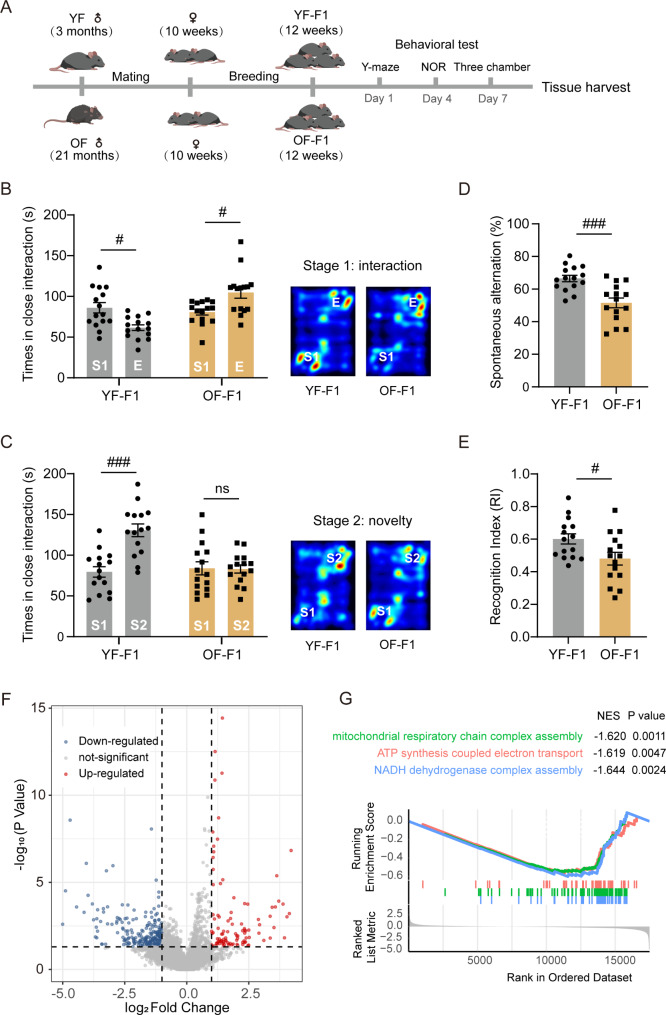
The trend of postponing childbearing age is prevalent worldwide. Advanced paternal age (APA) is associated with adverse pregnancy outcomes and offspring health. However, the underlying mechanism by which paternal aging affects the risk of offspring neuropsychiatric disorders is unclear. Our study aims to explore the behavioral phenotypes and the pathologic epigenetic alterations of APA offspring inherited from aging sperm.
Behavioral tests, ELISA assay, immunofluorescence and western blotting were performed on offspring mice. Methylated RNA immunoprecipitation sequencing (MeRIP-seq) and RNA immunoprecipitation sequencing (RIP-seq) were used to investigate the modified N6-methyladenosine (m6A) profiles of paternal sperm and offspring hippocampus. Intervention of gene expression by lentivirus and adeno-associated virus in both vivo and vitro examined the potential therapeutic targets of intergenerational inherited neuroinflammation.
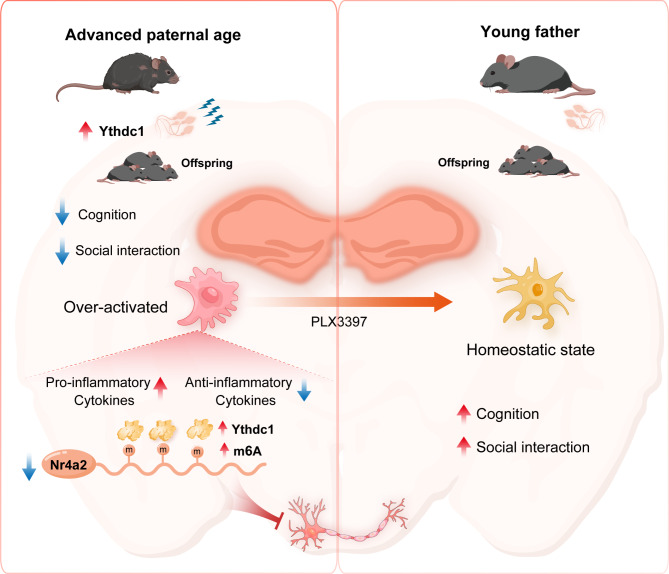
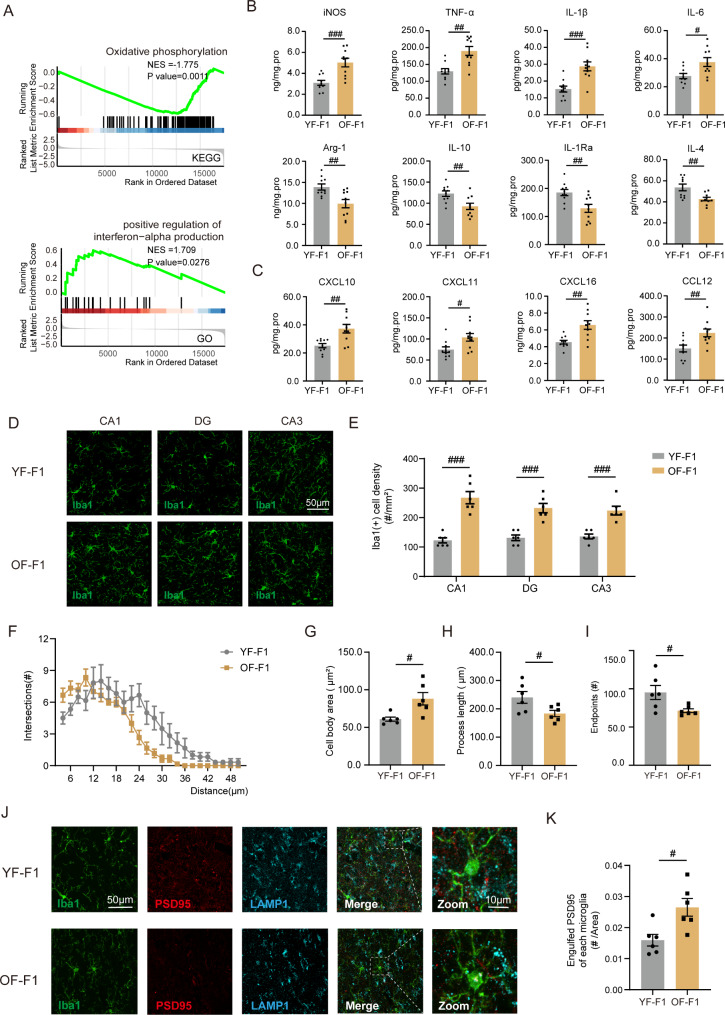
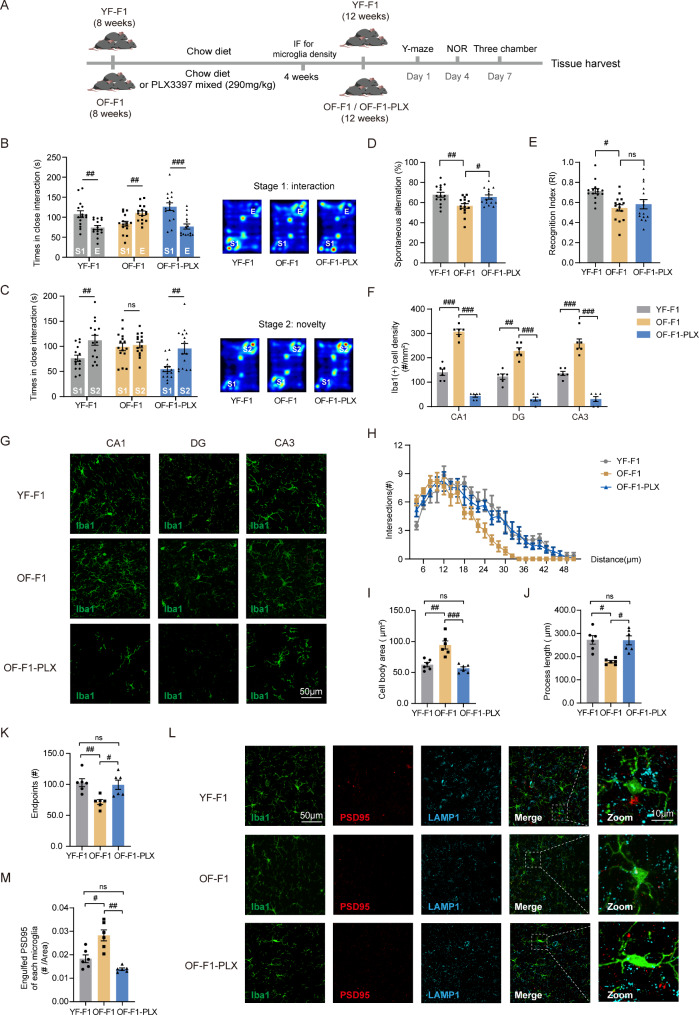
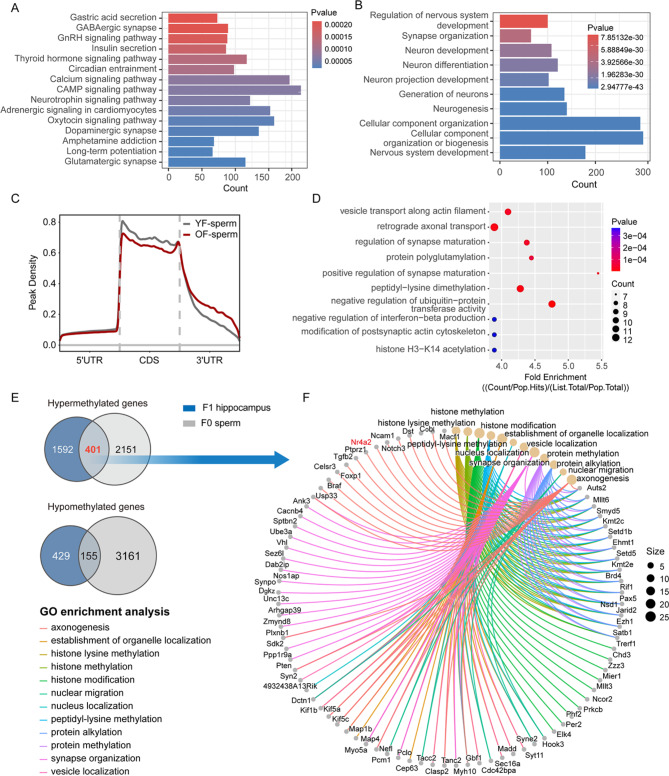
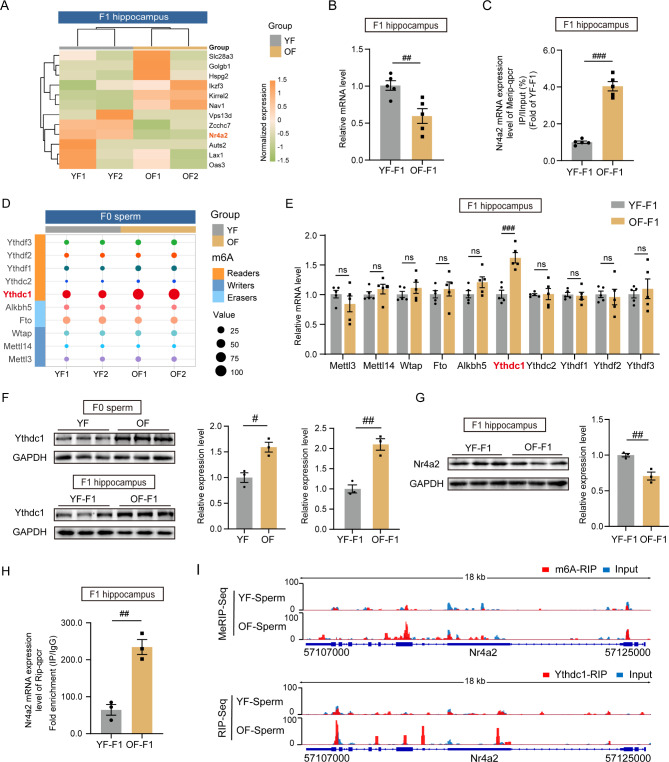
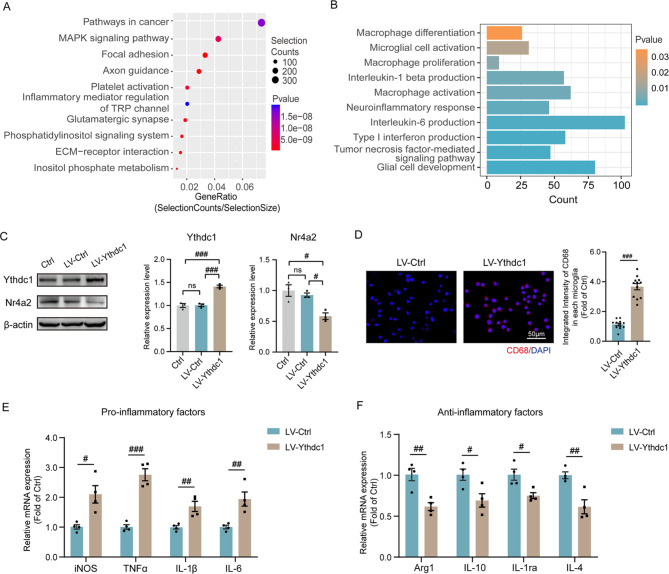
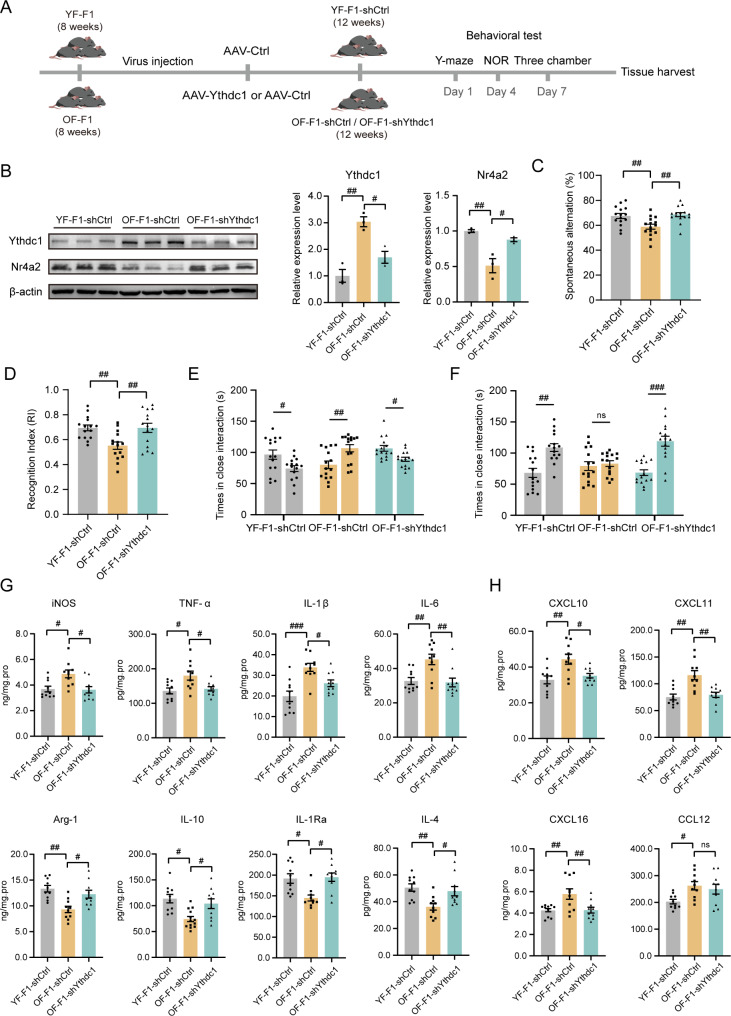
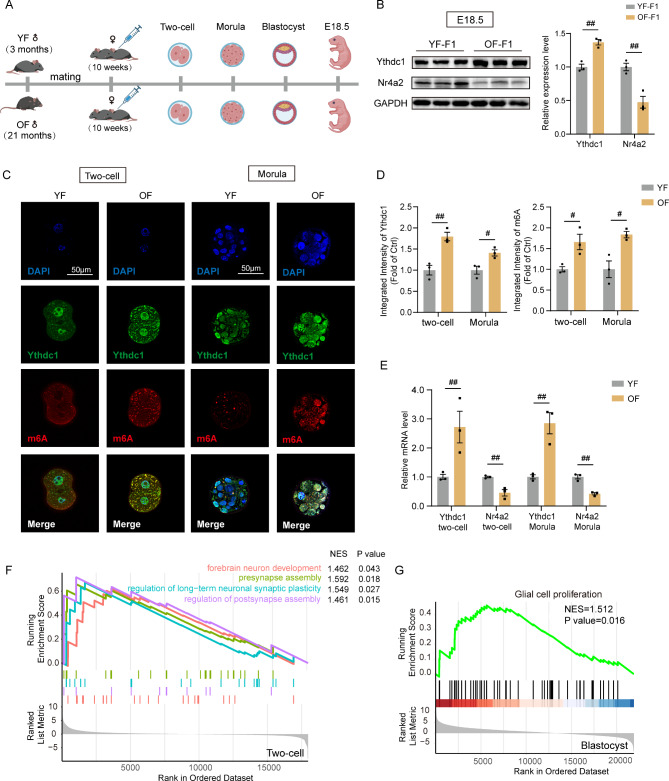
In our study, APA offspring exhibit cognitive impairment and autism-like behavior. An increase in neuroinflammation in APA offspring is associated with microglial overactivation, which manifests as abnormal morphology and augmented engulfment. MeRIP-seq of F0 sperm and F1 hippocampus reveal that Nr4a2 is hypermethylated with decreased expression in APA offspring involving in synaptic plasticity and microglial function. In addition, Ythdc1, an m6A reader protein, is markedly elevated in aging sperm and remains elevated in adult hippocampus of APA group. Enhanced Ythdc1 recognizes and suppresses the hypermethylated Nr4a2, thereby contributing to the abnormal phenotype in offspring. The overexpression of Ythdc1 triggers microglial activation in vitro and its suppression in the hippocampus of APA progeny alleviates behavioral aberrations and attenuates neuroinflammation.
Our study provides additional evidence of the abnormal behavioral phenotypes of APA offspring and reveals potential epigenetic inheritance signatures and targeted genes for future research.
推迟生育年龄的趋势在全球范围内普遍存在。高龄父亲(advanced paternal age,APA)与不良妊娠结局和后代健康有关。然而,父系衰老如何影响后代神经精神疾病风险的潜在机制尚不清楚。我们的研究旨在探索源于衰老精子的 APA 后代的行为表型和病理表观遗传改变。
对后代小鼠进行行为测试、ELISA 检测、免疫荧光和 Western blot 分析。采用甲基化 RNA 免疫沉淀测序(methylated RNA immunoprecipitation sequencing,MeRIP-seq)和 RNA 免疫沉淀测序(RNA immunoprecipitation sequencing,RIP-seq)检测父系精子和后代海马体中修饰的 N6-甲基腺苷(N6-methyladenosine,m6A)谱。通过体内和体外的慢病毒和腺相关病毒干预基因表达,研究了代际遗传神经炎症的潜在治疗靶点。
在本研究中,APA 后代表现出认知障碍和自闭症样行为。APA 后代的神经炎症增加与小胶质细胞过度激活有关,表现为形态异常和吞噬作用增强。F0 精子和 F1 海马体的 MeRIP-seq 显示,Nr4a2 超甲基化导致其表达下调,涉及突触可塑性和小胶质细胞功能。此外,衰老精子中 Ythdc1(一种 m6A 阅读蛋白)明显升高,而 APA 组成年海马体中仍保持高水平。增强的 Ythdc1 识别并抑制超甲基化的 Nr4a2,从而导致后代出现异常表型。Ythdc1 的过表达在体外引发小胶质细胞激活,而在 APA 后代海马体中抑制 Ythdc1 可减轻行为异常并减弱神经炎症。
本研究为 APA 后代异常行为表型提供了更多证据,并揭示了潜在的表观遗传遗传特征和潜在的靶基因,以供未来研究。