Department of Hypoxic States and Department of Movements Physiology, Bogomoletz Institute of Physiology, Bogomoletz Str. 4, 01024 Kyiv, Ukraine.
Department of Physical Education, Gdansk University of Physical Education and Sport, Kazimierza Gorskiego Str. 1, 80-336 Gdansk, Poland.
Int J Mol Sci. 2021 May 21;22(11):5444. doi: 10.3390/ijms22115444.
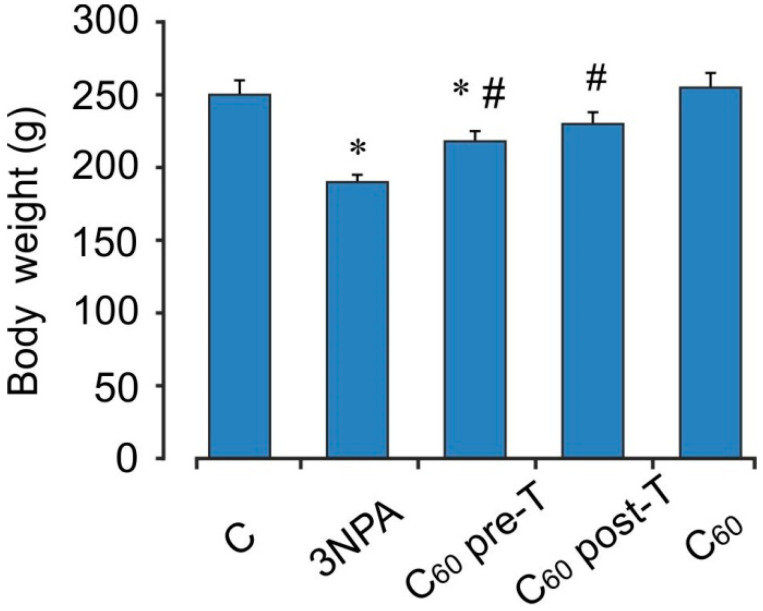
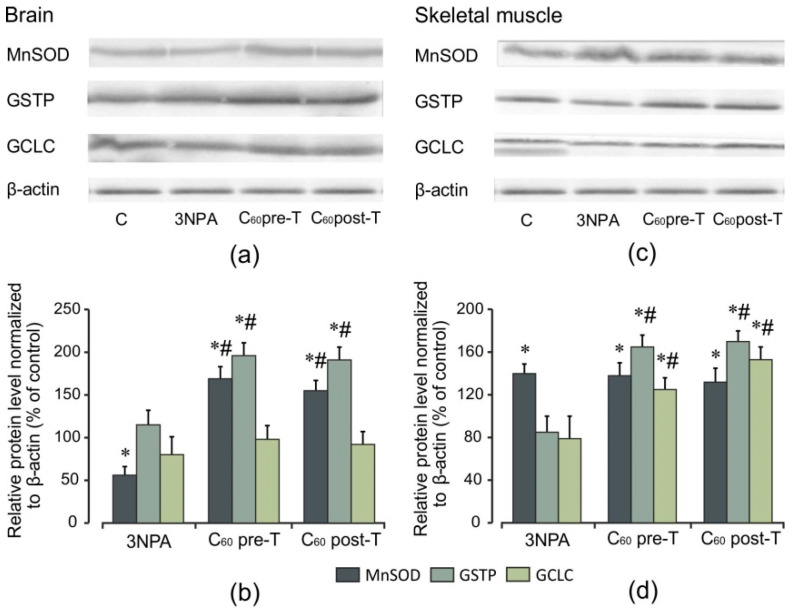
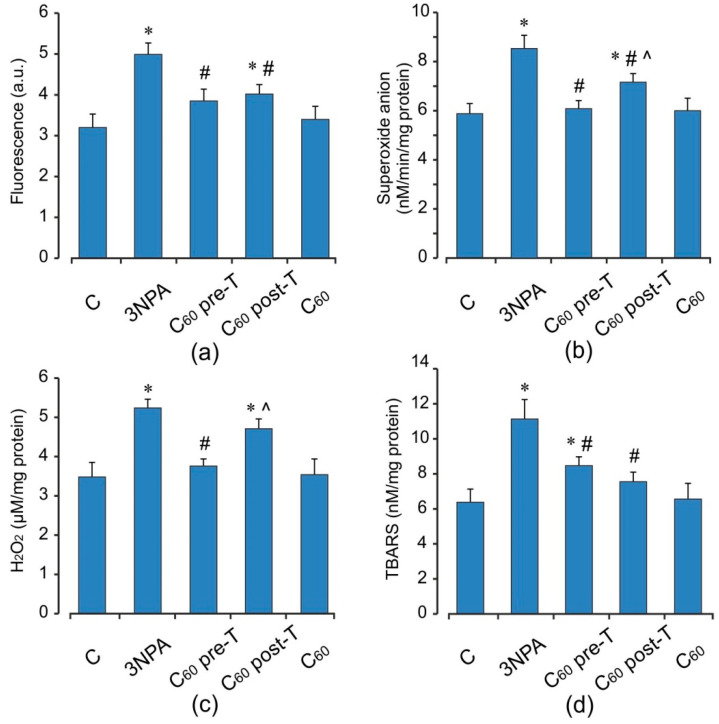
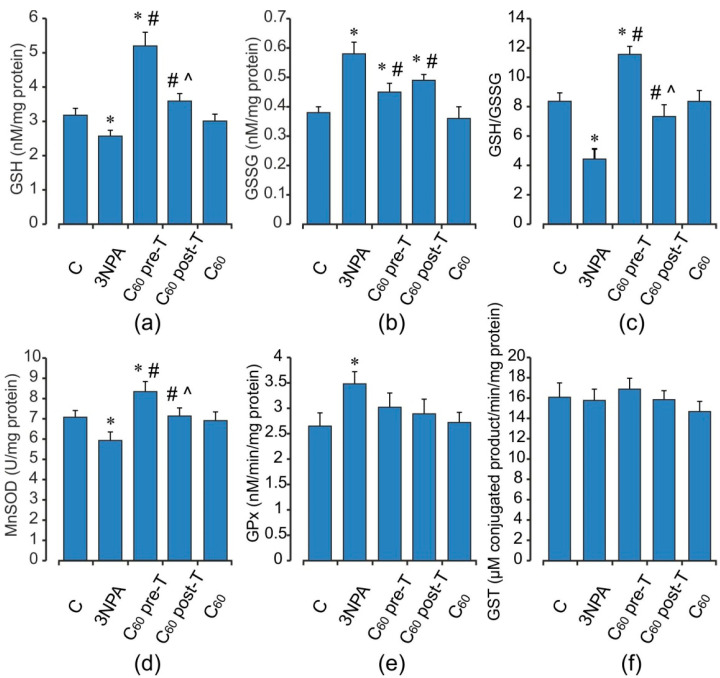
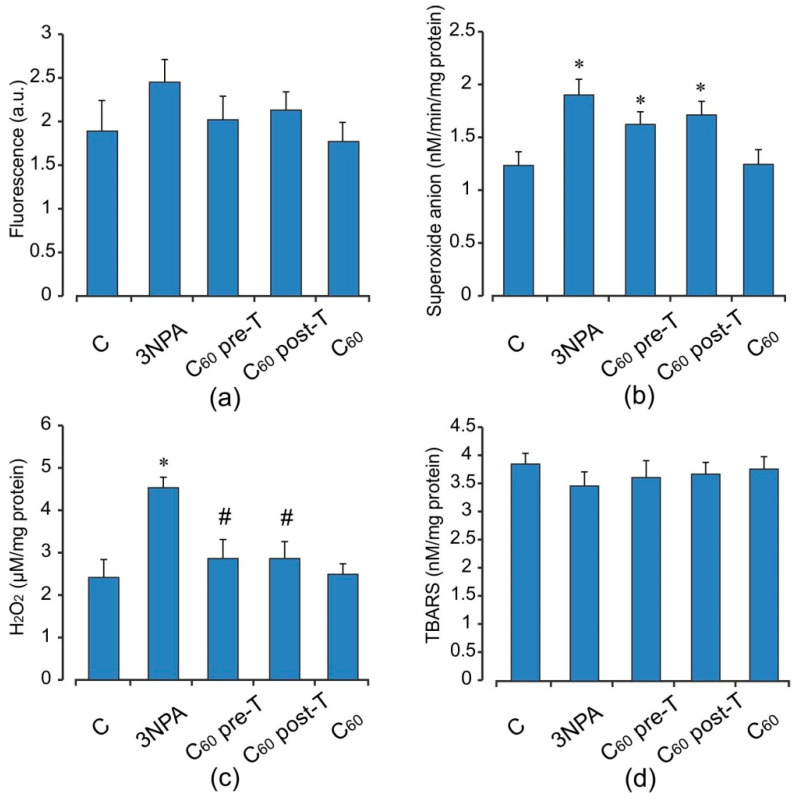
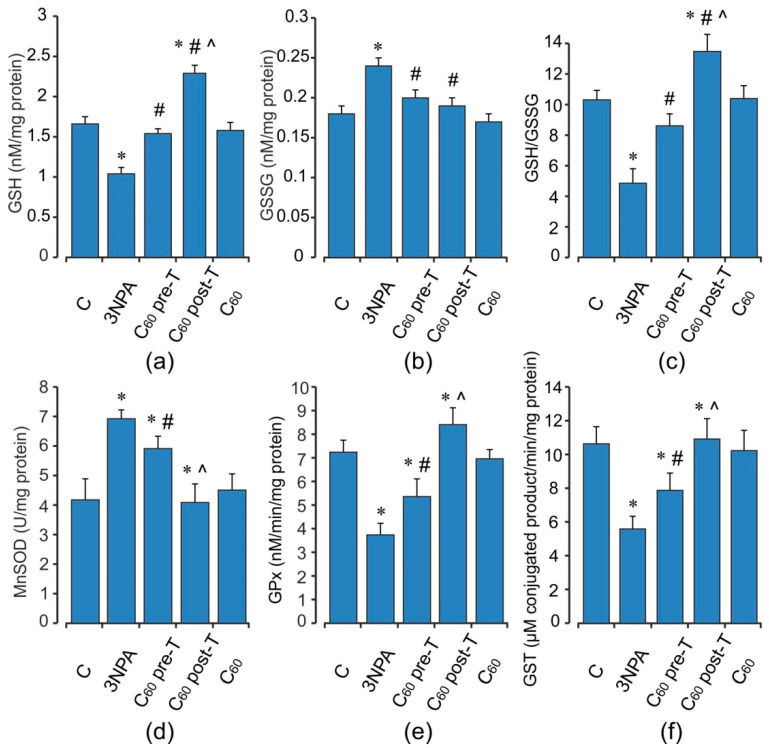
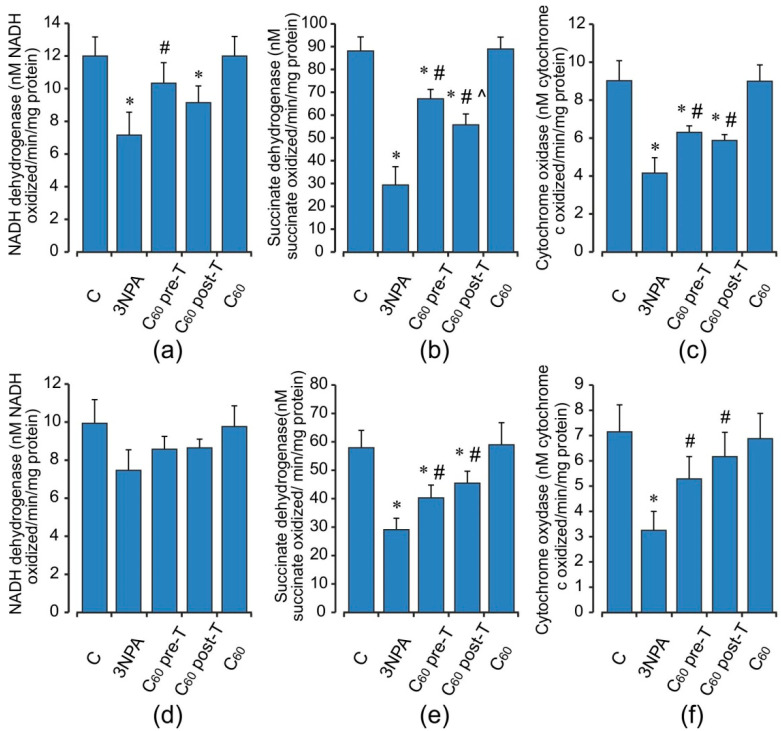
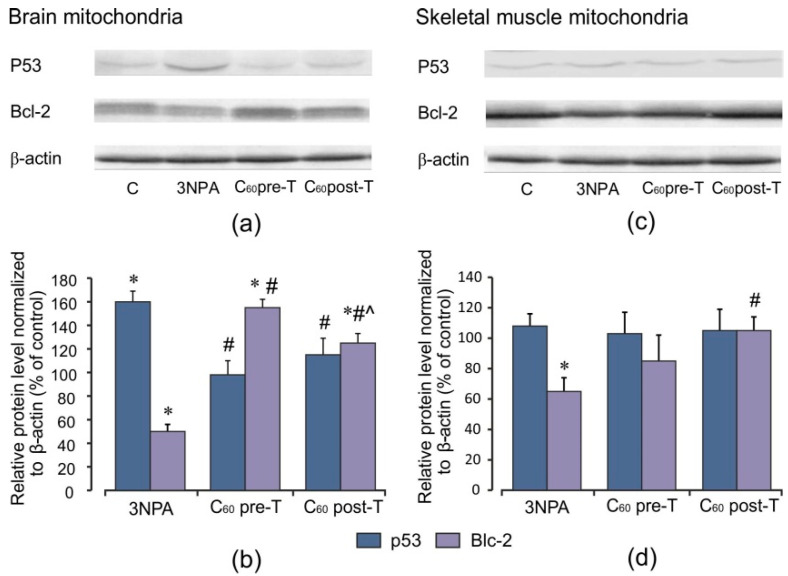
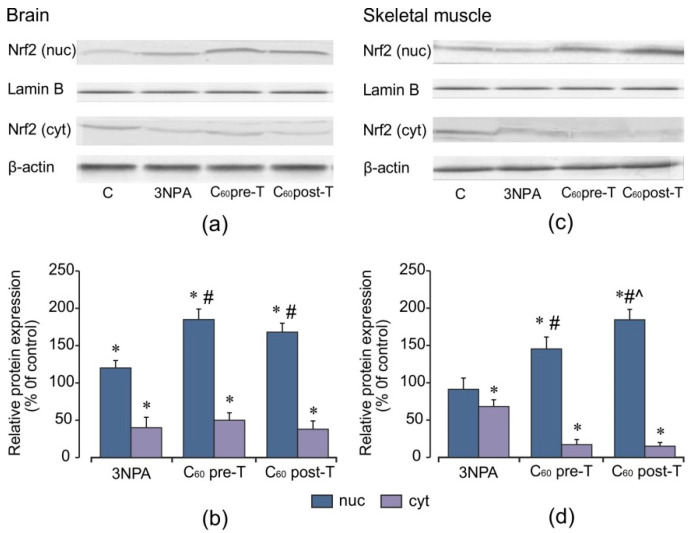
C fullerene as a potent free radical scavenger and antioxidant could be a beneficial means for neurodegenerative disease prevention or cure. The aim of the study was to define the effects of C administration on mitochondrial dysfunction and oxidative stress disorders in a 3-nitropropionic acid (3-NPA)-induced rat model of Huntington's disease. Animals received 3-NPA (30 mg/kg i.p.) once a day for 3 consecutive days. C was applied at a dose of 0.5 mg/kg of body weight, i.p. daily over 5 days before (C pre-treatment) and after 3-NPA exposure (C post-treatment). Oxidative stress biomarkers, the activity of respiratory chain enzymes, the level of antioxidant defense, and pro- and antiapoptotic markers were analyzed in the brain and skeletal muscle mitochondria. The nuclear and cytosol Nrf2 protein expression, protein level of MnSOD, γ-glutamate-cysteine ligase (γ-GCLC), and glutathione-S-transferase (GSTP) as Nrf2 targets were evaluated. Our results indicated that C can prevent 3-NPA-induced mitochondrial dysfunction through the restoring of mitochondrial complexes' enzyme activity, ROS scavenging, modulating of pro/antioxidant balance and GSH/GSSG ratio, as well as inhibition of mitochondria-dependent apoptosis through the limitation of p53 mitochondrial translocation and increase in Bcl-2 protein expression. C improved mitochondrial protection by strengthening the endogenous glutathione system via glutathione biosynthesis by up-regulating Nrf2 nuclear accumulation as well as GCLC and GSTP protein level.
C 富勒烯作为一种有效的自由基清除剂和抗氧化剂,可能是预防或治疗神经退行性疾病的有益手段。本研究的目的是定义 C 对三硝基丙酸(3-NPA)诱导的亨廷顿病大鼠模型中线粒体功能障碍和氧化应激障碍的影响。动物每天接受 3-NPA(30mg/kg,ip)一次,连续 3 天。C 以 0.5mg/kg 体重的剂量,ip 每天给药,在 3-NPA 暴露前(C 预处理)和暴露后(C 后处理)5 天内给药。在大脑和骨骼肌线粒体中分析氧化应激生物标志物、呼吸链酶的活性、抗氧化防御水平以及促凋亡和抗凋亡标志物。评估核和胞浆 Nrf2 蛋白表达、MnSOD 蛋白水平、γ-谷氨酰半胱氨酸连接酶(γ-GCLC)和谷胱甘肽-S-转移酶(GSTP)作为 Nrf2 靶点的蛋白水平。我们的结果表明,C 可以通过恢复线粒体复合物酶活性、清除 ROS、调节促/抗氧化平衡和 GSH/GSSG 比值,以及通过限制 p53 线粒体易位和增加 Bcl-2 蛋白表达来抑制线粒体依赖性凋亡,来预防 3-NPA 诱导的线粒体功能障碍。C 通过增强内源性谷胱甘肽系统来改善线粒体保护,通过上调 Nrf2 核积累以及 GCLC 和 GSTP 蛋白水平来促进谷胱甘肽的生物合成。