Abd-Elhakim Yasmina M, Moselhy Attia A A, Aldhahrani Adil, Beheiry Rasha R, Mohamed Wafaa A M, Soliman Mohamed Mohamed, Saffaf Bayan A, M El Deib Maha
Department of Forensic Medicine and Toxicology, Faculty of Veterinary Medicine, Zagazig University, Zagazig 44519, Egypt.
Department of Anatomy and Embryology, Faculty of Veterinary Medicine, Zagazig University, Zagazig 44519, Egypt.
Antioxidants (Basel). 2021 May 21;10(6):826. doi: 10.3390/antiox10060826.
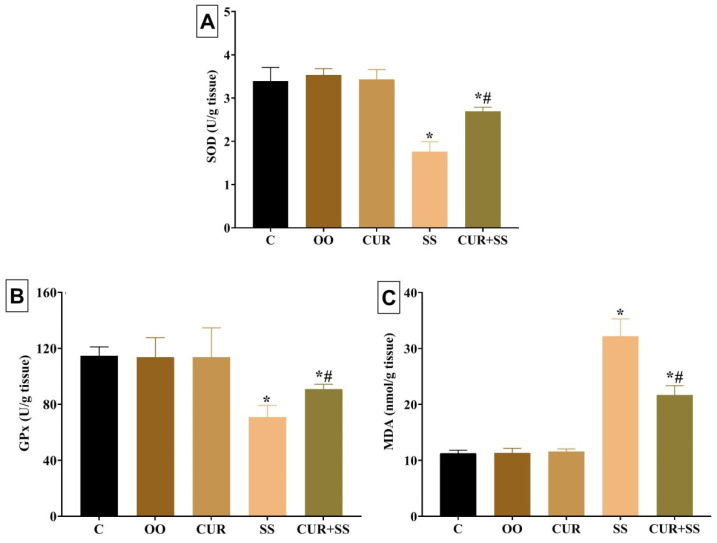
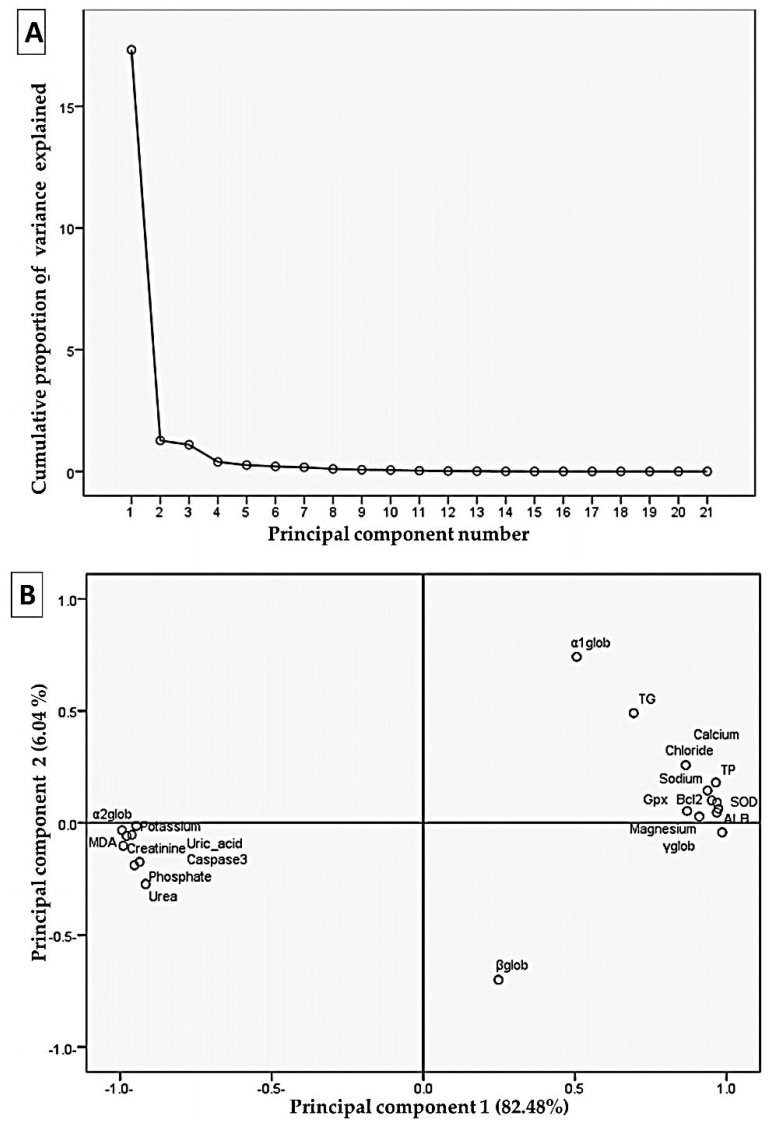
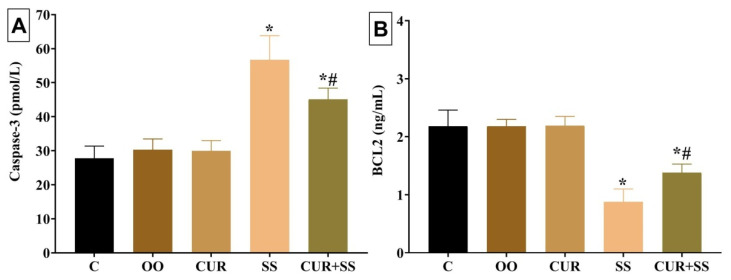
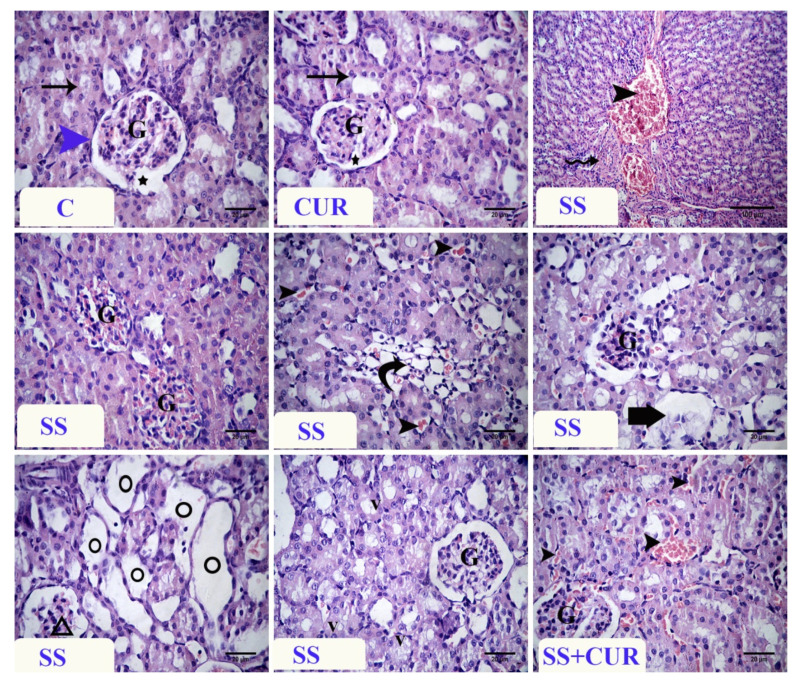
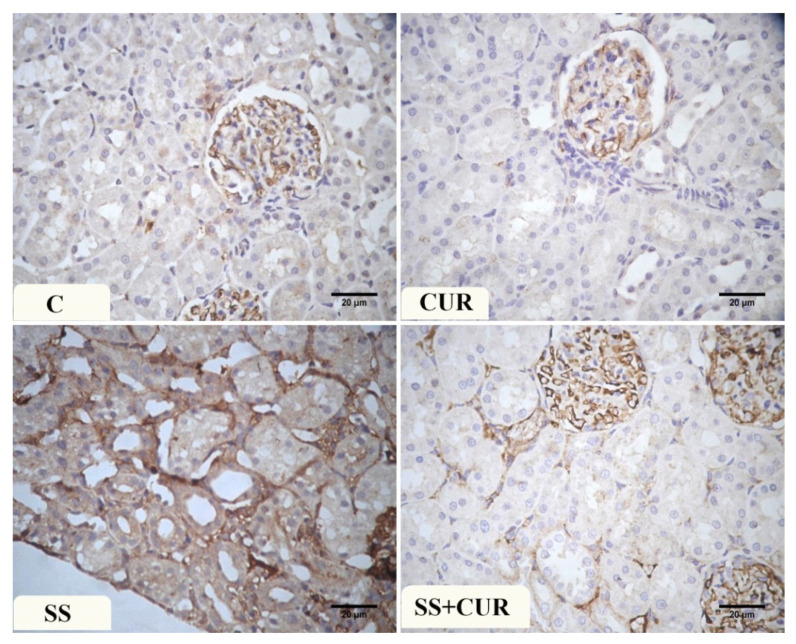
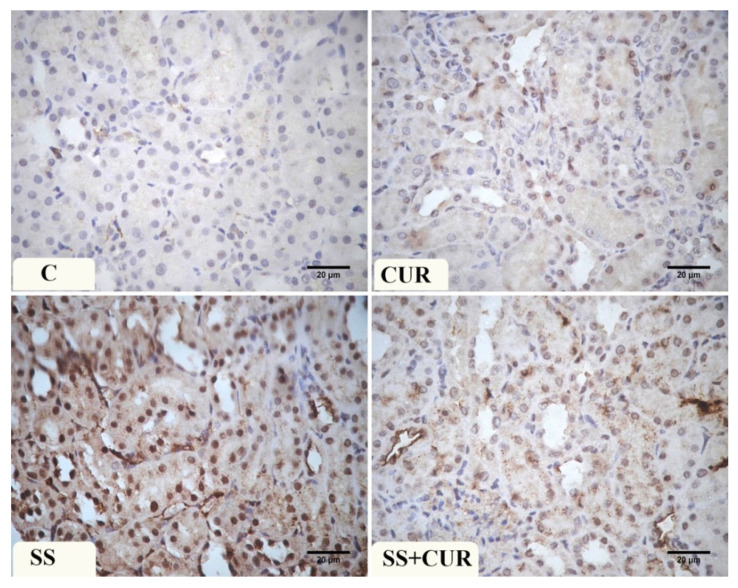
This study examined the effect of sodium salicylates (SS), alone and in combination with curcumin (CUR), on kidney function and architecture in rats. Five rat groups were given 1 mL physiological saline/rat orally, 1 mL olive oil/rat orally, 50 mg CUR/kg bwt orally, 300 mg SS/kg bwt intraperitoneally, or CUR+SS for 15 days. The hematological indices, serum protein profile, serum electrolytes balance, oxidative stress, and lipid peroxidation of kidney tissues were assessed. The histopathological examination and immune expression of Caspase-3 and nuclear factor kappa (NF-κB) were conducted. The findings showed that SS injection induced nephrotoxic activity, including increased serum urea, creatinine, and uric acid levels. It also caused apparent pathological alterations with increased Caspase-3 and NF-κB immuno-expression. In addition, thrombocytopenia, leukocytosis, neutrophilia, hyponatremia, hypochloremia, hypocalcemia, and hypomagnesemia but not hyperkalemia and hyperphosphatemia were evident in SS-injected rats. Moreover, SS exposure increased serum α1 globulin, renal tissue malondialdehyde, and Caspase-3 levels but superoxide dismutase, glutathione peroxidase, and Bcl-2 levels declined. Meanwhile, CUR significantly counteracted the SS harmful impacts on kidneys but SS+CUR co-administration induced an anemic condition. Overall, CUR has an evident protective role against SS-induced renal damage, but the disturbed hematological alterations should be carefully taken into consideration in their combined use.
本研究考察了水杨酸钠(SS)单独及与姜黄素(CUR)联合使用对大鼠肾功能和肾脏结构的影响。将大鼠分为五组,分别口服给予1 mL生理盐水/只、1 mL橄榄油/只、50 mg CUR/kg体重、腹腔注射300 mg SS/kg体重,或给予CUR+SS,持续15天。评估血液学指标、血清蛋白谱、血清电解质平衡、氧化应激及肾组织脂质过氧化情况。进行组织病理学检查以及Caspase-3和核因子κB(NF-κB)的免疫表达检测。结果显示,注射SS可诱导肾毒性活性,包括血清尿素、肌酐和尿酸水平升高。还导致明显的病理改变,Caspase-3和NF-κB免疫表达增加。此外,注射SS的大鼠出现血小板减少、白细胞增多、中性粒细胞增多、低钠血症、低氯血症、低钙血症和低镁血症,但未出现高钾血症和高磷血症。而且,暴露于SS会使血清α1球蛋白、肾组织丙二醛和Caspase-3水平升高,但超氧化物歧化酶、谷胱甘肽过氧化物酶和Bcl-2水平下降。同时,CUR显著抵消了SS对肾脏的有害影响,但SS与CUR联合给药会导致贫血状态。总体而言,CUR对SS诱导的肾损伤具有明显的保护作用,但在联合使用时应仔细考虑血液学改变紊乱的问题。