Centre of Molecular and Macromolecular Studies, Polish Academy of Sciences, Sienkiewicza 112, 90-363 Lodz, Poland.
Department of Inorganic, Analytical Chemistry and Electrochemistry, Faculty of Chemistry, Silesian University of Technology, Krzywoustego 6, 44-100 Gliwice, Poland.
Int J Mol Sci. 2021 May 4;22(9):4863. doi: 10.3390/ijms22094863.
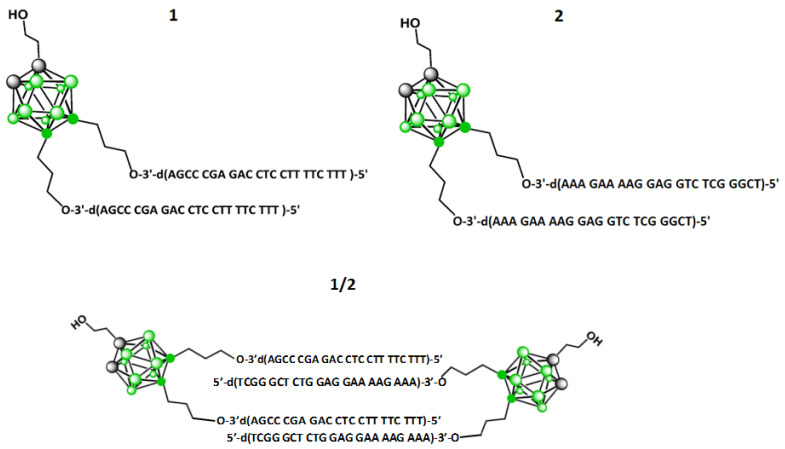
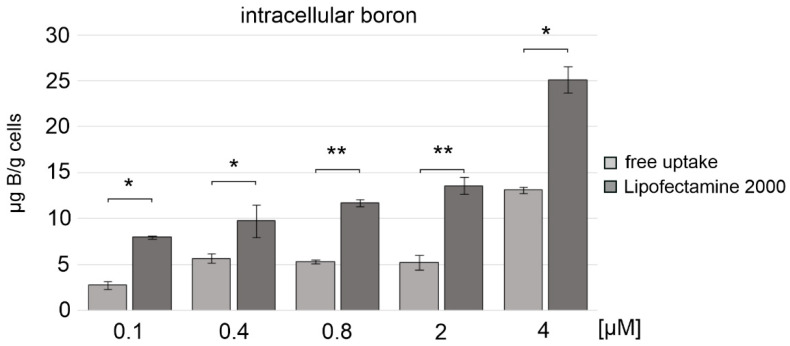
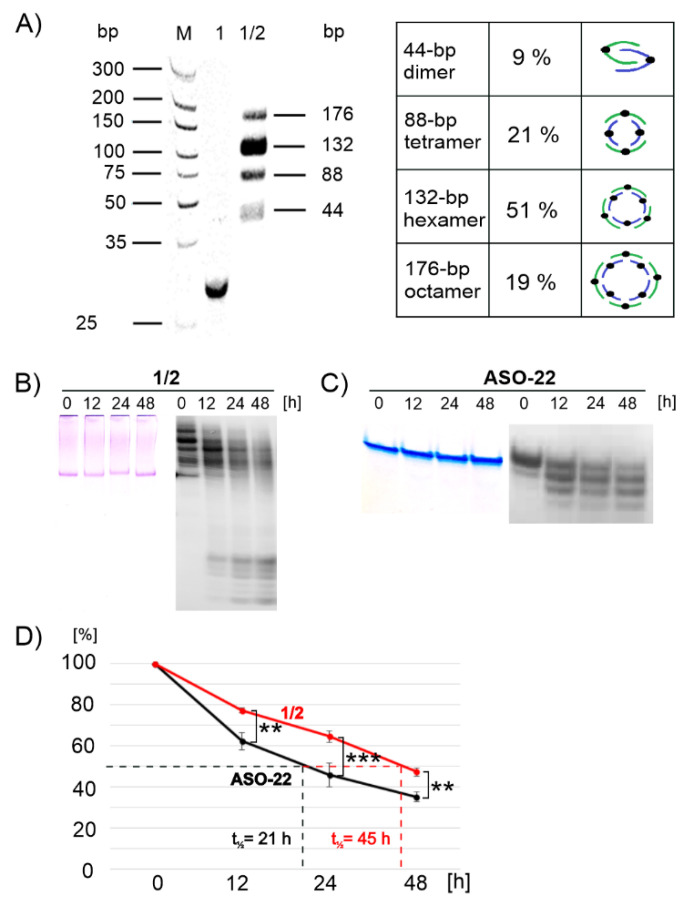
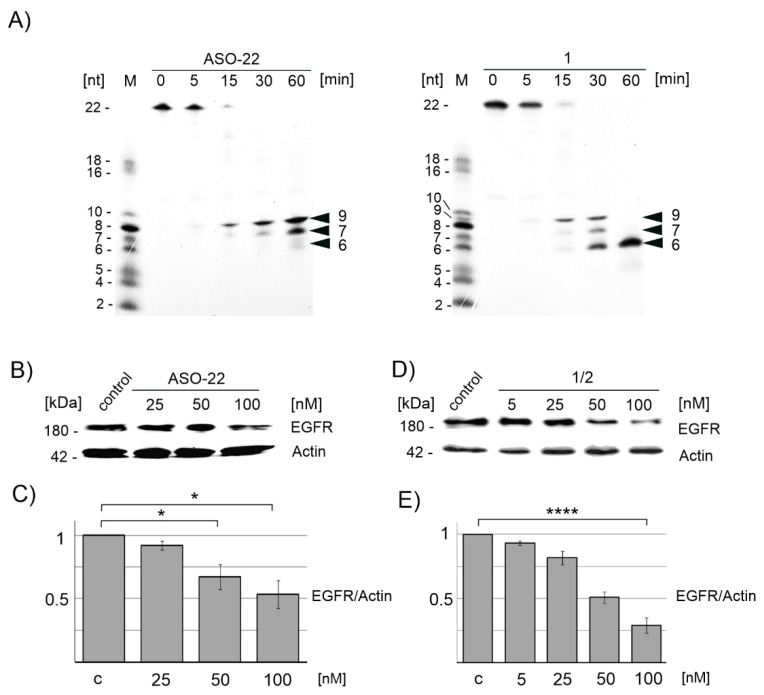
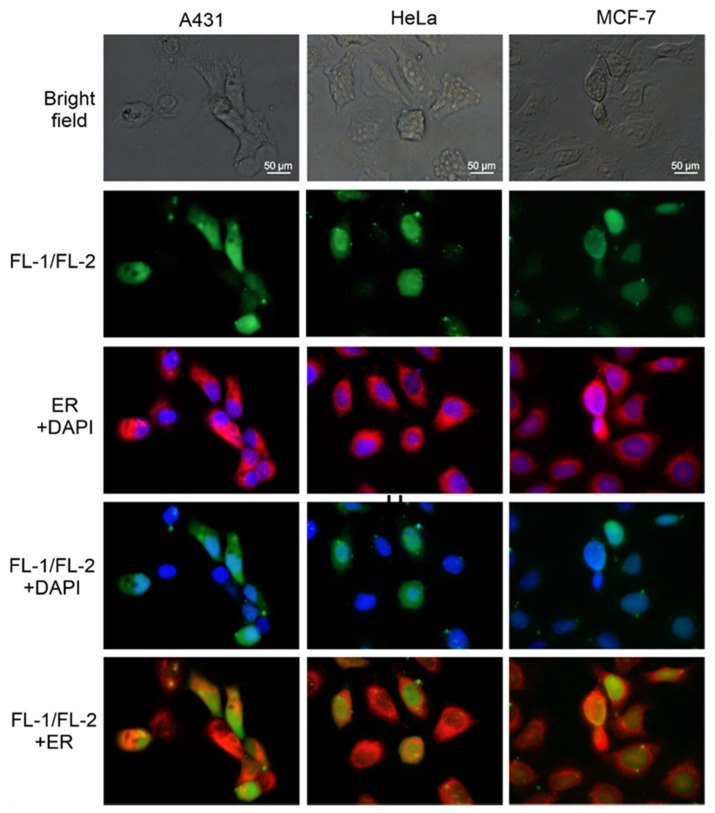
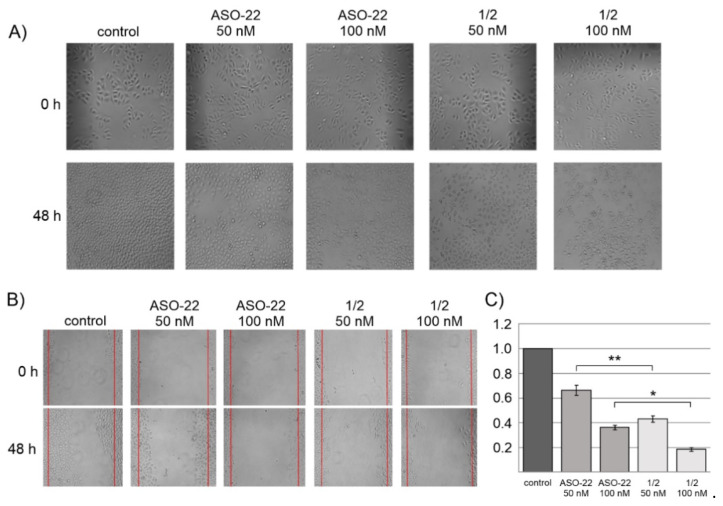
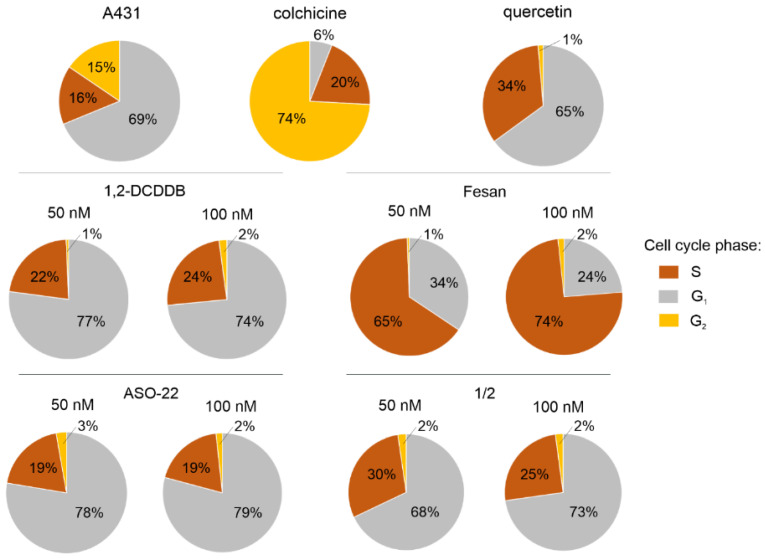
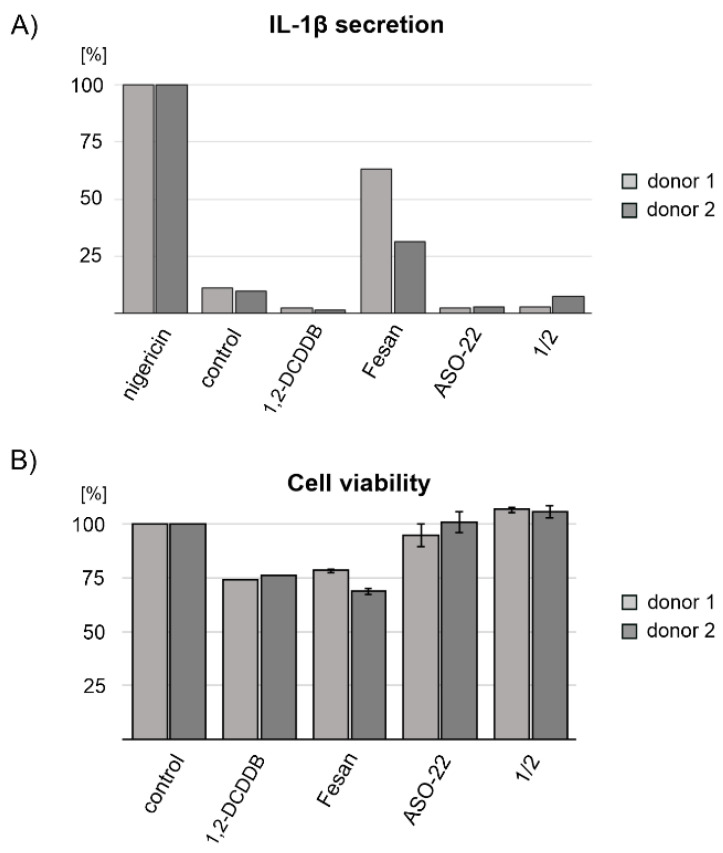
Epidermal growth factor receptor (EGFR) is one of the most promising molecular targets for anticancer therapy. We used boron clusters as a platform for generation of new materials. For this, functional DNA constructs conjugated with boron clusters (B-ASOs) were developed. These B-ASOs, built from 1,2-dicarba--dodecaborane linked with two anti-EGFR antisense oligonucleotides (ASOs), form with their complementary congeners torus-like nanostructures, as previously shown by atomic force microscope (AFM) and transmission electron cryo-microscopy (cryo-TEM) imaging. In the present work, deepened studies were carried out on B-ASO's properties. In solution, B-ASOs formed four dominant complexes as confirmed by non-denaturing polyacrylamide gel electrophoresis (PAGE). These complexes exhibited increased stability in cell lysate comparing to the non-modified ASO. Fluorescently labeled B-ASOs localized mostly in the cytoplasm and decreased EGFR expression by activating RNase H. Moreover, the B-ASO complexes altered the cancer cell phenotype, decreased cell migration rate, and arrested the cells in the S phase of cell cycle. The 1,2-dicarba--dodecaborane-containing nanostructures did not activate NLRP3 inflammasome in human macrophages. In addition, as shown by inductively coupled plasma mass spectrometry (ICP MS), these nanostructures effectively penetrated the human squamous carcinoma cells (A431), showing their potential applicability as anticancer agents.
表皮生长因子受体 (EGFR) 是癌症治疗中最有前途的分子靶标之一。我们使用硼簇作为平台来生成新材料。为此,开发了与硼簇偶联的功能性 DNA 构建体(B-ASO)。这些 B-ASO 由 1,2-二碳二硼烷与两个抗 EGFR 反义寡核苷酸 (ASO) 连接而成,如原子力显微镜 (AFM) 和透射电子 cryo-TEM 成像所示,形成了环形纳米结构。在本工作中,对 B-ASO 的性质进行了深入研究。在溶液中,B-ASO 形成了四个主要的复合物,这一点通过非变性聚丙烯酰胺凝胶电泳 (PAGE) 得到了证实。与未修饰的 ASO 相比,这些复合物在细胞裂解物中表现出更高的稳定性。荧光标记的 B-ASO 主要定位于细胞质中,并通过激活 RNase H 降低 EGFR 表达。此外,B-ASO 复合物改变了癌细胞表型,降低了细胞迁移率,并将细胞周期停滞在 S 期。含 1,2-二碳二硼烷的纳米结构不会在人巨噬细胞中激活 NLRP3 炎症小体。此外,如电感耦合等离子体质谱 (ICP MS) 所示,这些纳米结构有效地穿透了人鳞状癌细胞 (A431),表明它们作为抗癌剂的潜在适用性。