Department of Biomedical Sciences, Dong-A University, Busan 49315, Korea.
Biomolecules. 2021 May 11;11(5):715. doi: 10.3390/biom11050715.
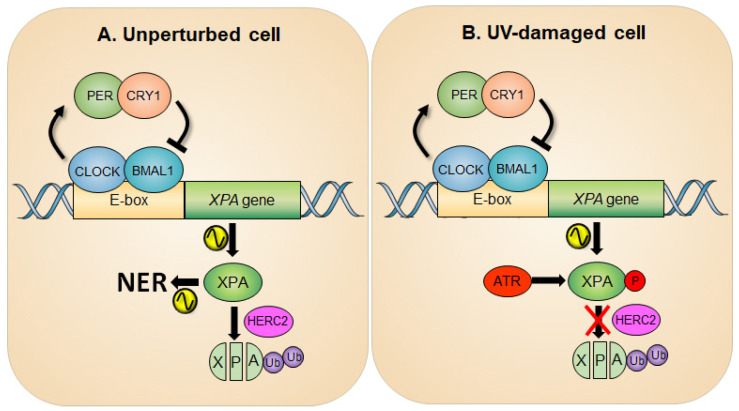
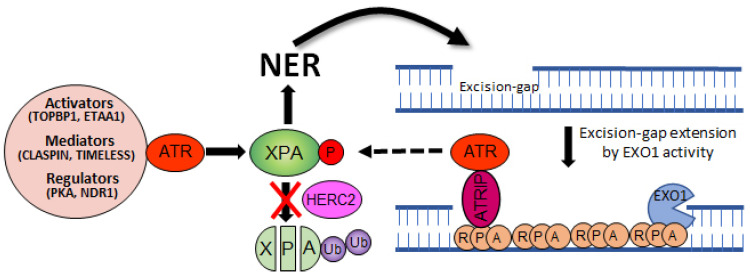
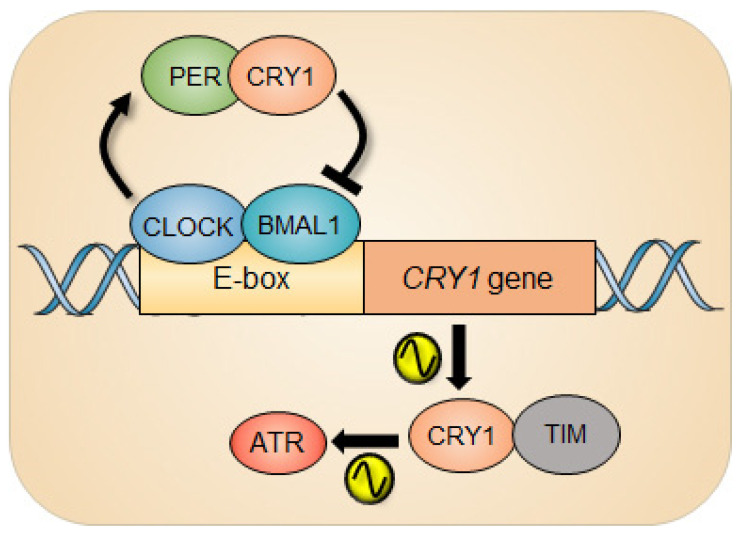
Genomic integrity is constantly insulted by solar ultraviolet (UV) radiation. Adaptative cellular mechanisms called DNA damage responses comprising DNA repair, cell cycle checkpoint, and apoptosis, are believed to be evolved to limit genomic instability according to the photoperiod during a day. As seen in many other key cellular metabolisms, genome surveillance mechanisms against genotoxic UV radiation are under the control of circadian clock systems, thereby exhibiting daily oscillations in their catalytic activities. Indeed, it has been demonstrated that nucleotide excision repair (NER), the sole DNA repair mechanism correcting UV-induced DNA photolesions, and ataxia-telangiectasia-mutated and Rad3-related (ATR)-mediated cell cycle checkpoint kinase are subjected to the robust control of the circadian clock. The molecular foundation for the circadian rhythm of UV-induced DNA damage responses in mammalian cells will be discussed.
基因组完整性经常受到太阳紫外线 (UV) 辐射的侵害。适应性细胞机制称为 DNA 损伤反应,包括 DNA 修复、细胞周期检查点和细胞凋亡,据信是为了根据一天中的光周期限制基因组不稳定性而进化而来的。正如在许多其他关键细胞代谢中一样,针对遗传毒性 UV 辐射的基因组监测机制受昼夜节律钟系统的控制,从而表现出其催化活性的每日波动。事实上,已经证明核苷酸切除修复 (NER),唯一纠正 UV 诱导的 DNA 光损伤的 DNA 修复机制,以及共济失调毛细血管扩张突变和 Rad3 相关 (ATR) 介导的细胞周期检查点激酶,受到昼夜节律钟的强大控制。将讨论哺乳动物细胞中 UV 诱导的 DNA 损伤反应的昼夜节律的分子基础。