Rossig Claudia, Gray John, Valdes Oscar, Springer Armin, Rustgi Sachin, von Wettstein Diter, Reinbothe Christiane, Rassow Joachim, Reinbothe Steffen
Laboratoire de Génétique Moléculaire des Plantes, Université Grenoble-Alpes, BP53F, 38041 Grenoble, France.
Department of Biological Sciences, University of Toledo, 2801 West Bancroft Street, Toledo, OH 43606, USA.
Plants (Basel). 2021 May 11;10(5):958. doi: 10.3390/plants10050958.
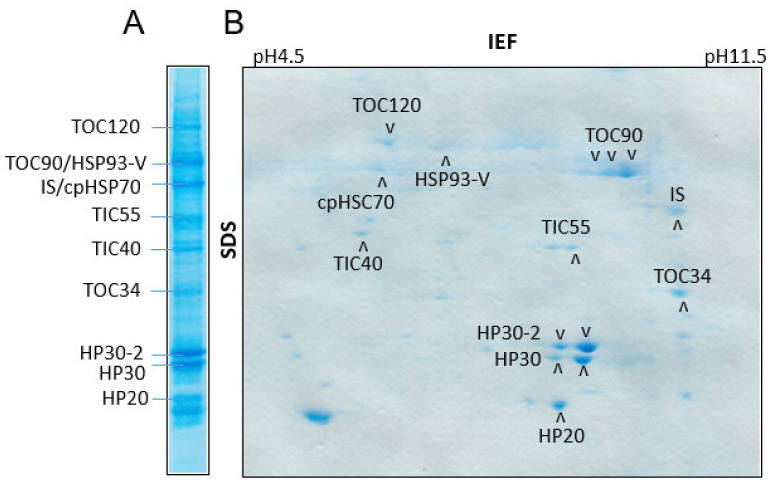
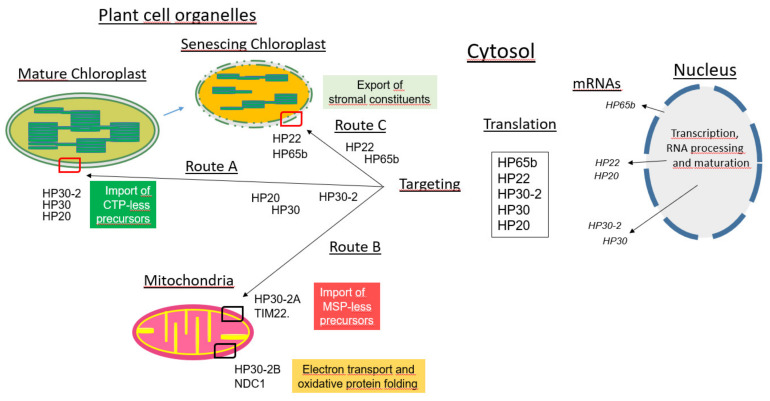
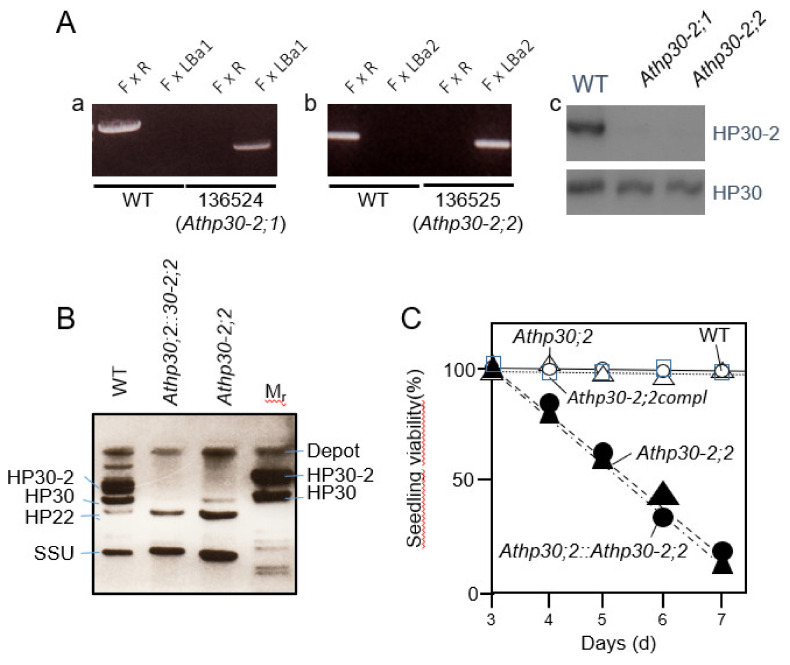
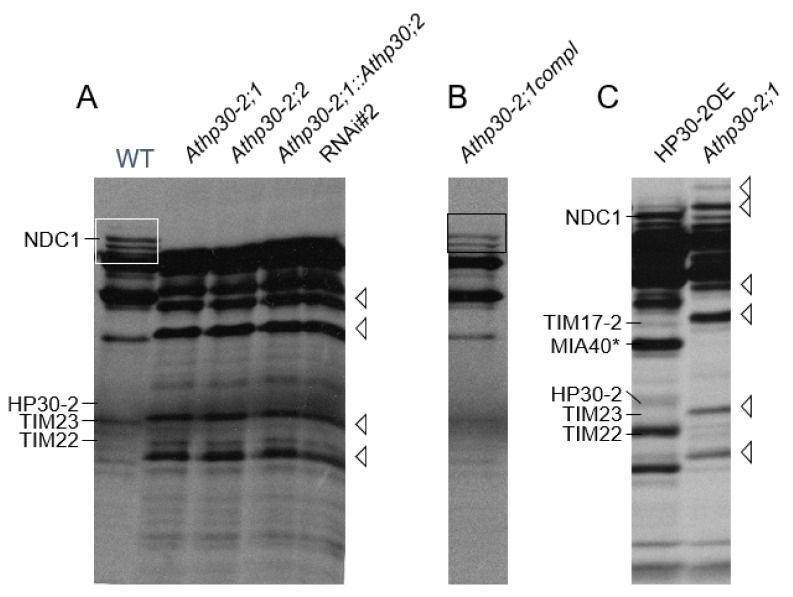
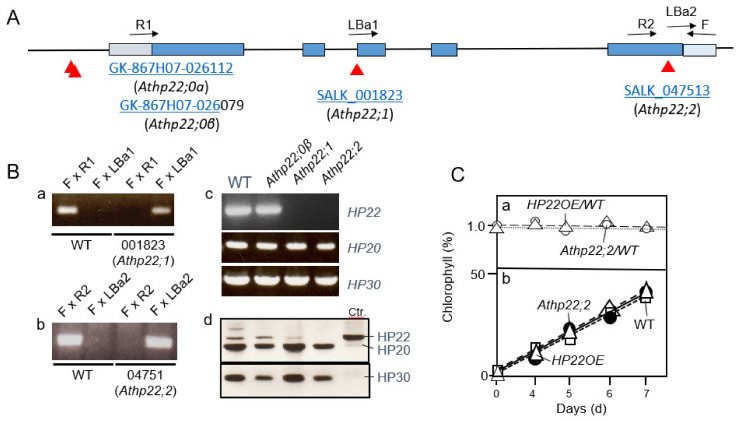
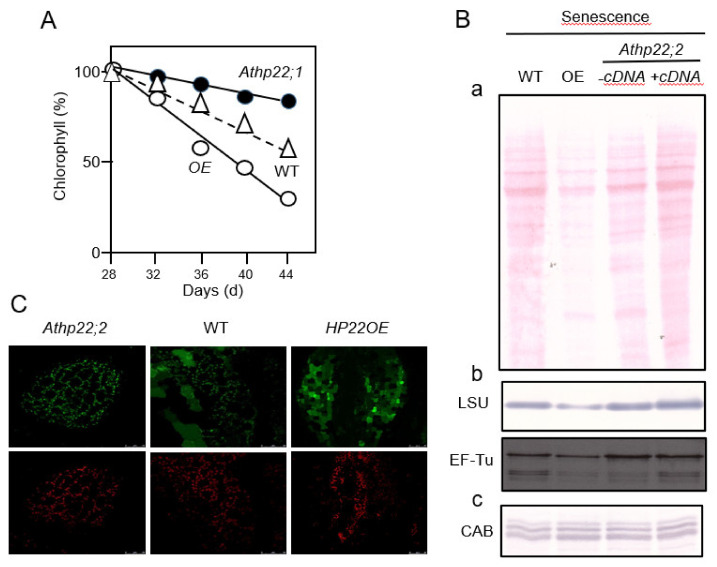
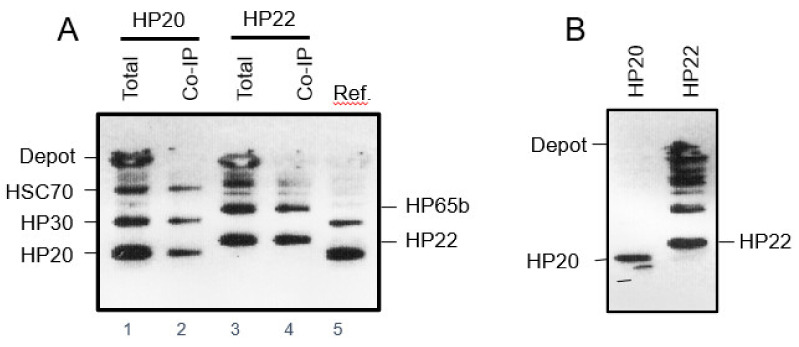
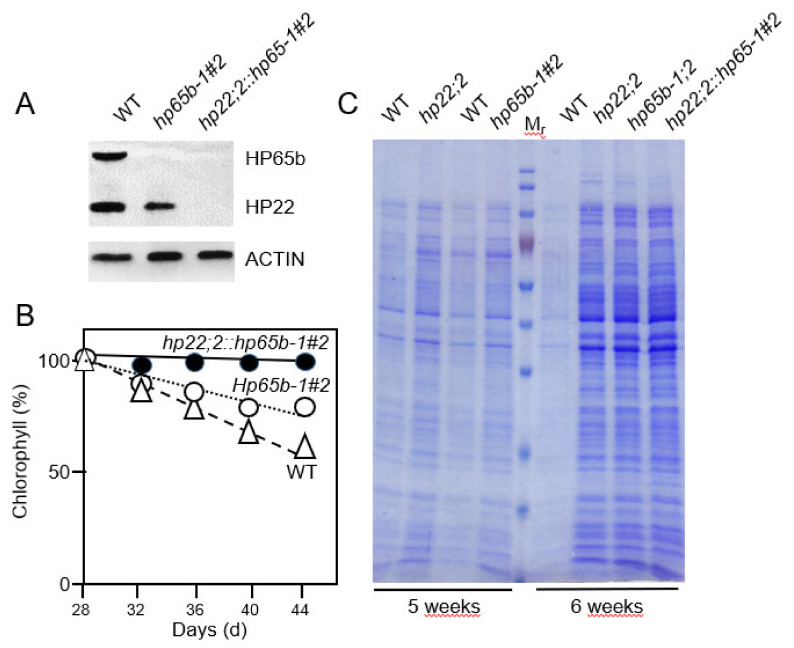
Chloroplasts need to import preproteins and amino acids from the cytosol during their light-induced differentiation. Similarly, chloroplasts have to export organic matter including proteins and amino acids during leaf senescence. Members of the PRAT (preprotein and amino acid transporter) family are candidate transporters for both processes. Here, we defined the role of two small PRAT gene families, At4g26670 and At5g55510 (HP20 subfamily) versus At3g49560 and At5g24650 (HP30 subfamily) during greening of etiolated plants and during leaf senescence. Using a combination of reverse genetics, protein biochemistry and physiological tools, evidence was obtained for a role of chloroplast HP20, HP30 and HP30-2 in protein, but not amino acid, import into chloroplasts. HP20, HP30 and HP30-2 form larger complexes involved in the uptake of transit sequence-less cytosolic precursors. In addition, we identified a fraction of HP30-2 in mitochondria where it served a similar function as found for chloroplasts and operated in the uptake of transit sequence-less cytosolic precursor proteins. By contrast, HP22 was found to act in the export of proteins from chloroplasts during leaf senescence, and thus its role is entirely different from that of its orthologue, HP20. HP22 is part of a unique protein complex in the envelope of senescing chloroplasts that comprises at least 11 proteins and contains with HP65b (At5g55220) a protein that is related to the bacterial trigger factor chaperone. An ortholog of HP65b exists in the cyanobacterium and has previously been implicated in protein secretion. Whereas plants depleted of either HP22 or HP65b or even both were increasingly delayed in leaf senescence and retained much longer stromal chloroplast constituents than wild-type plants, HP22 overexpressors showed premature leaf senescence that was associated with accelerated losses of stromal chloroplast proteins. Together, our results identify the PRAT protein family as a unique system for importing and exporting proteins from chloroplasts.
叶绿体在光诱导分化过程中需要从细胞质中导入前体蛋白和氨基酸。同样,叶绿体在叶片衰老期间必须输出包括蛋白质和氨基酸在内的有机物。PRAT(前体蛋白和氨基酸转运蛋白)家族成员是这两个过程的候选转运蛋白。在这里,我们确定了两个小的PRAT基因家族,即At4g26670和At5g55510(HP20亚家族)与At3g49560和At5g24650(HP30亚家族)在黄化植物变绿过程和叶片衰老过程中的作用。通过结合反向遗传学、蛋白质生物化学和生理学工具,获得了叶绿体HP20、HP30和HP30 - 2在蛋白质而非氨基酸导入叶绿体过程中起作用的证据。HP20、HP30和HP30 - 2形成更大的复合物,参与无转运肽细胞质前体的摄取。此外,我们在线粒体中鉴定出一部分HP30 - 2,它在那里发挥与叶绿体中类似的功能,参与无转运肽细胞质前体蛋白的摄取。相比之下,发现HP22在叶片衰老期间作用于叶绿体蛋白质的输出,因此其作用与它的同源物HP20完全不同。HP22是衰老叶绿体包膜中一个独特蛋白质复合物的一部分,该复合物至少包含11种蛋白质,并且与HP65b(At5g55220)一起包含一种与细菌触发因子伴侣相关的蛋白质。HP65b的直系同源物存在于蓝细菌中,并且先前已涉及蛋白质分泌。与野生型植物相比,缺失HP22或HP65b甚至两者的植物叶片衰老越来越延迟,并且基质叶绿体成分保留的时间长得多,而HP22过表达植株表现出过早的叶片衰老,这与基质叶绿体蛋白质的加速损失有关。总之,我们的结果确定PRAT蛋白家族是一个从叶绿体中导入和输出蛋白质的独特系统。