Werner Siemens Imaging Center, Department of Preclinical Imaging and Radiopharmacy, Eberhard Karls University, Tübingen, Germany.
iFIT-Cluster of Excellence, Eberhard Karls University, Tuebingen, Germany.
Sci Rep. 2019 Aug 6;9(1):11370. doi: 10.1038/s41598-019-47846-6.
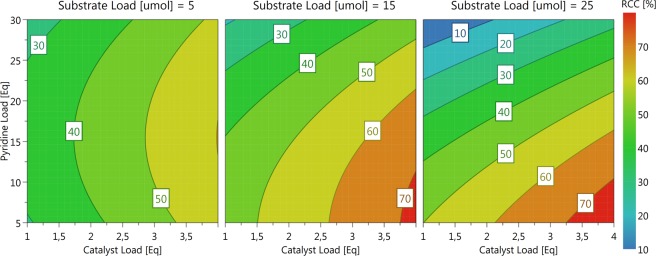
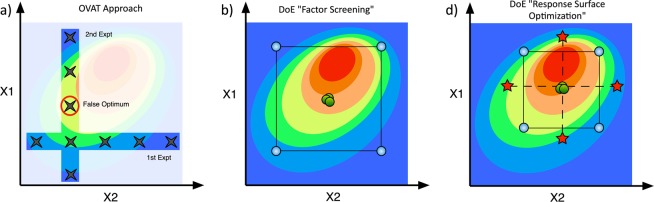
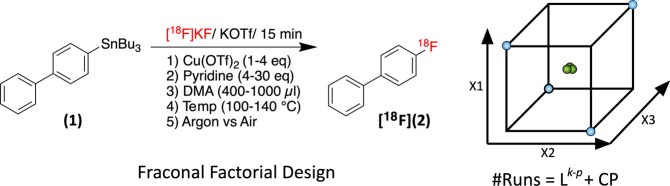
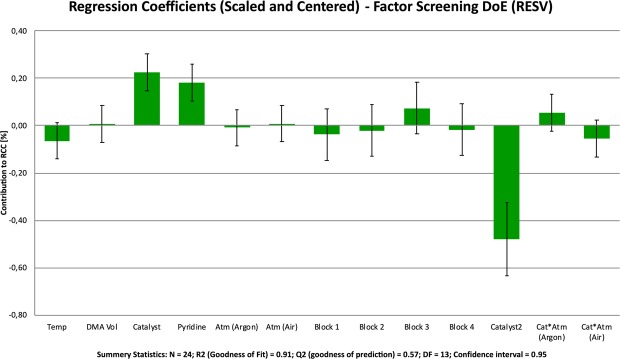
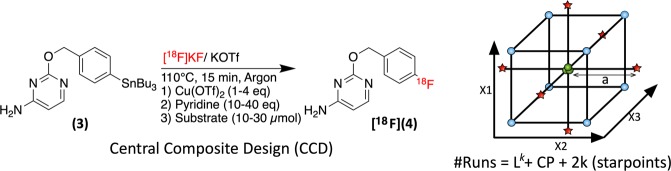
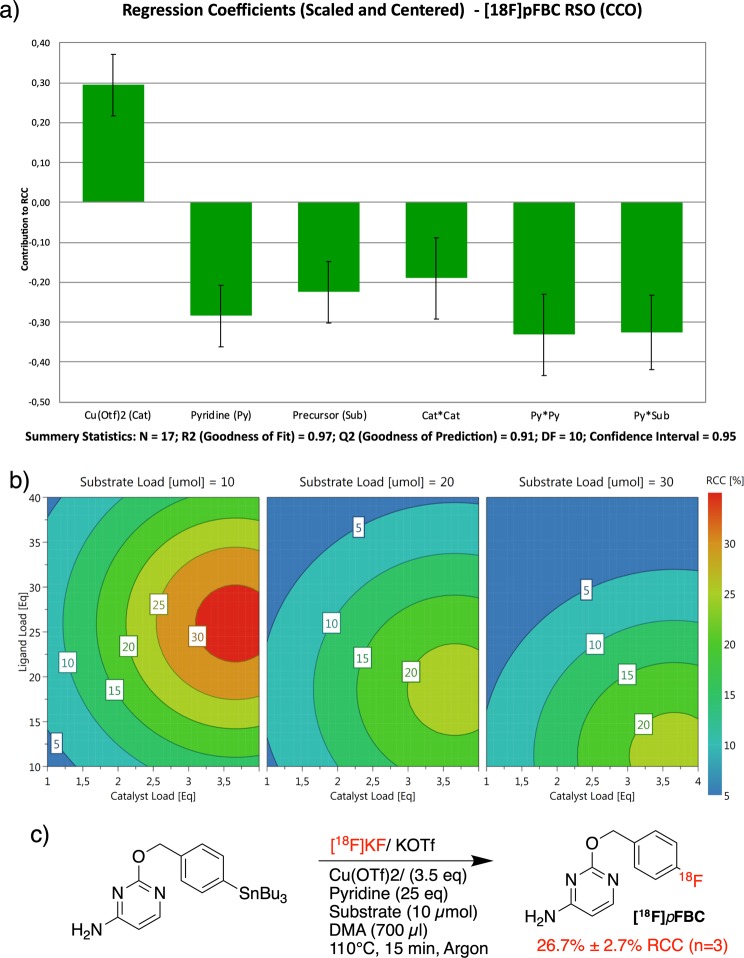
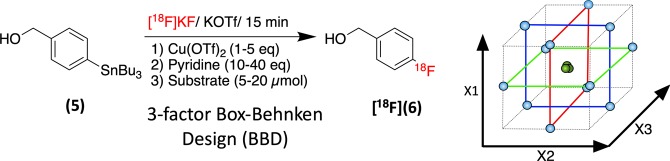
Recent advancements in F radiochemistry, such as the advent of copper-mediated radiofluorination (CMRF) chemistry, have provided unprecedented access to novel chemically diverse PET probes; however, these multicomponent reactions have come with a new set of complex optimization problems. Design of experiments (DoE) is a statistical approach to process optimization that is used across a variety of industries. It possesses a number of advantages over the traditionally employed "one variable at a time" (OVAT) approach, such as increased experimental efficiency as well as an ability to resolve factor interactions and provide detailed maps of a process's behavior. Here we demonstrate the utility of DoE to the development and optimization of new radiochemical methodologies and novel PET tracer synthesis. Using DoE to construct experimentally efficient factor screening and optimization studies, we were able to identify critical factors and model their behavior with more than two-fold greater experimental efficiency than the traditional OVAT approach. Additionally, the use of DoE allowed us to glean new insights into the behavior of the CMRF of a number of arylstannane precursors. This information has guided our decision-making efforts while developing efficient reaction conditions that suit the unique process requirements of F PET tracer synthesis.
近年来,氟放射化学取得了一些进展,例如铜介导的放射性氟化(CMRF)化学的出现,为新型化学多样性的 PET 探针提供了前所未有的途径;然而,这些多组分反应带来了一系列新的复杂优化问题。实验设计(DoE)是一种跨多个行业使用的过程优化的统计方法。与传统的“逐个变量”(OVAT)方法相比,它具有许多优势,例如提高实验效率以及解决因子相互作用并提供过程行为详细图的能力。在这里,我们展示了 DoE 在开发和优化新的放射化学方法和新型 PET 示踪剂合成中的应用。使用 DoE 构建实验效率高的因子筛选和优化研究,我们能够识别关键因素,并以比传统 OVAT 方法高两倍以上的实验效率来模拟它们的行为。此外,DoE 的使用还使我们能够深入了解许多芳基锡烷前体的 CMRF 行为。这些信息指导了我们的决策制定工作,同时开发了适合 F PET 示踪剂合成独特工艺要求的高效反应条件。