Kim Min, Jee Seung-Cheol, Kim Kyeong-Seok, Kim Hyung-Sik, Yu Kyoung-Nae, Sung Jung-Suk
Department of Life Science, Dongguk University-Seoul, Biomedi Campus, 32 Dongguk-ro, Ilsandong-gu, Goyang 10326, Gyeonggi-do, Korea.
Division of Toxicology, School of Pharmacy, Sungkyunkwan University-Suwon, Suwon 16419, Gyeonggi-do, Korea.
Antioxidants (Basel). 2021 May 16;10(5):787. doi: 10.3390/antiox10050787.
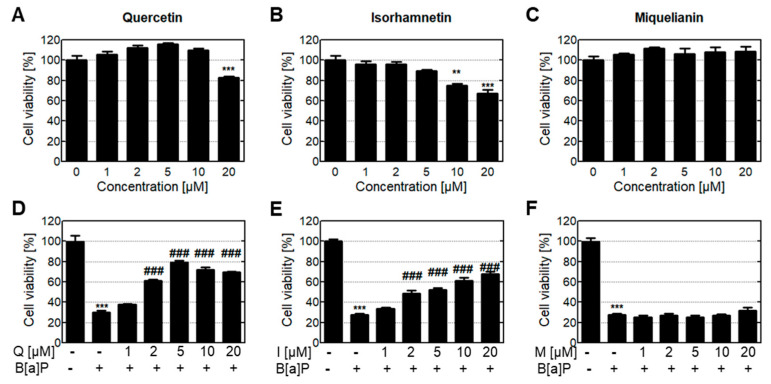
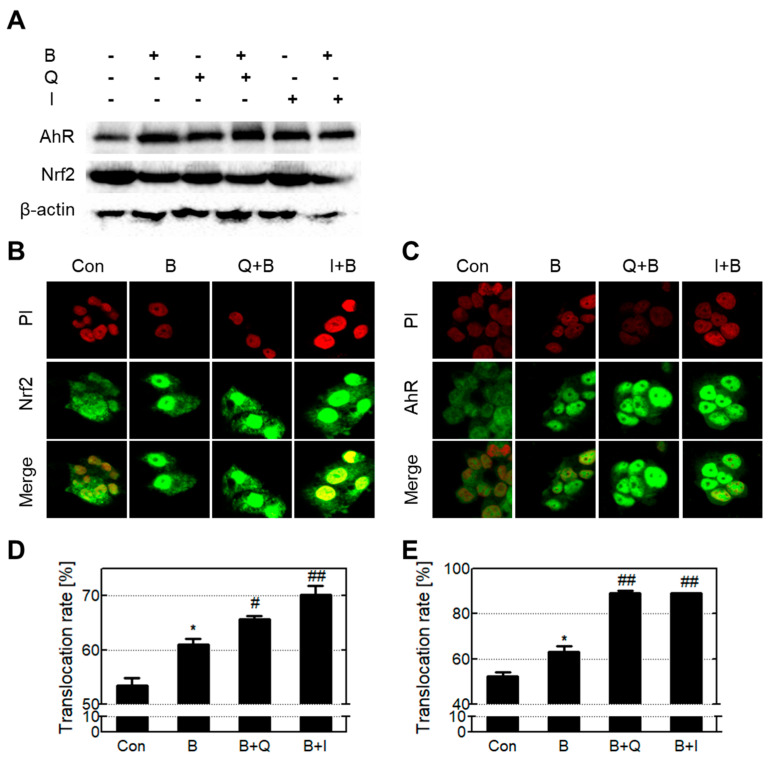
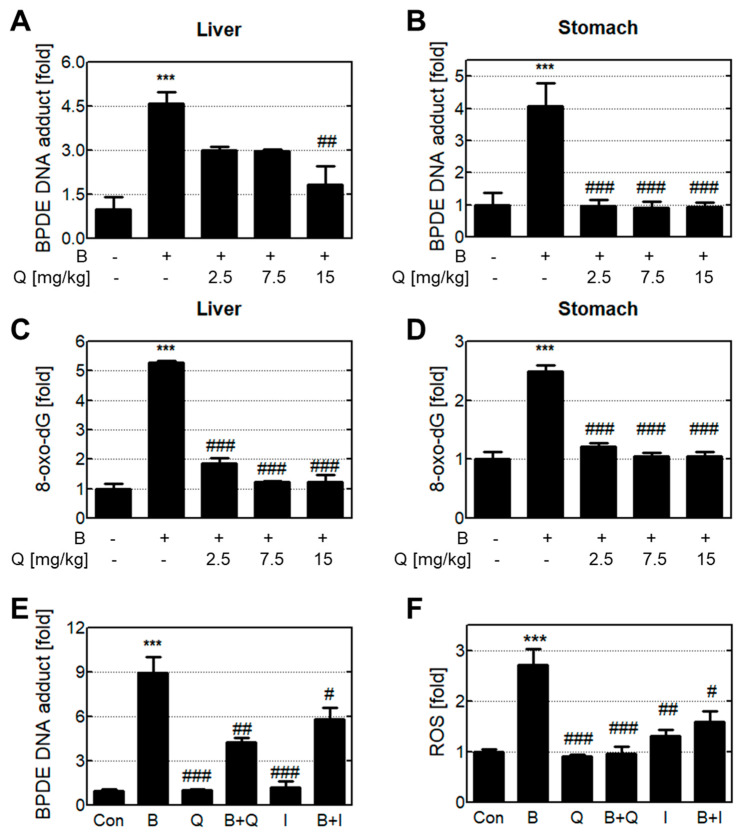
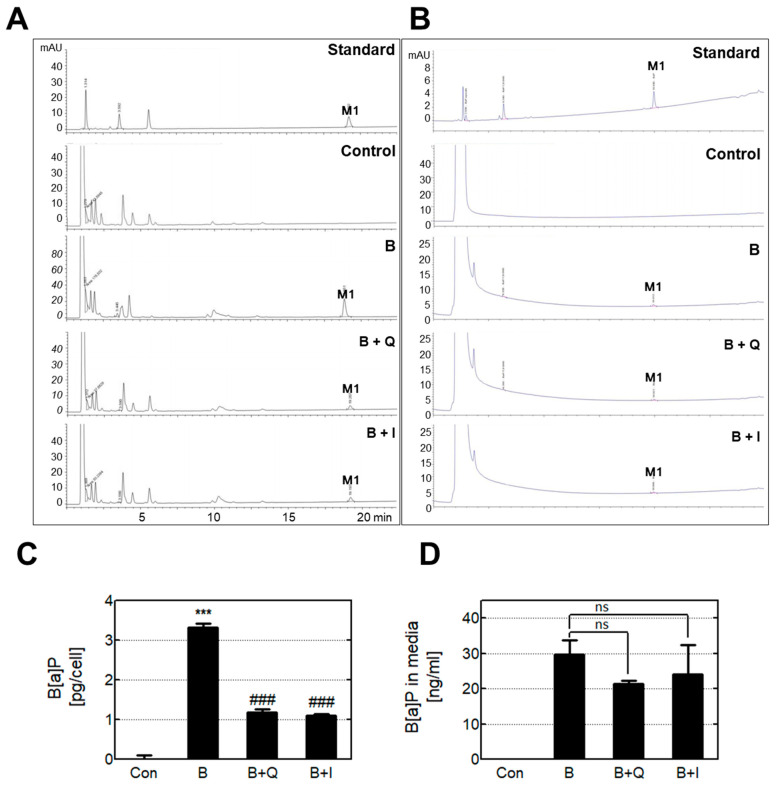
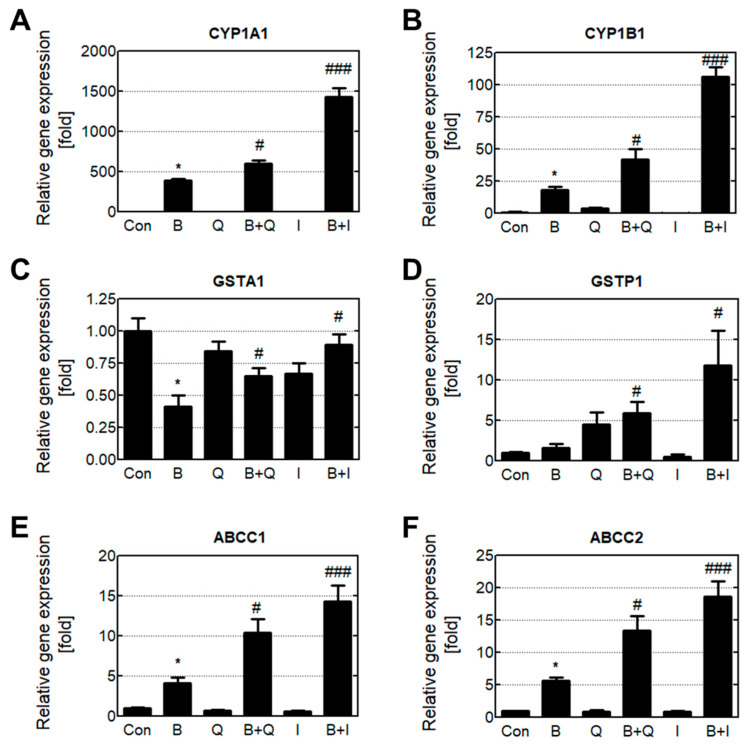
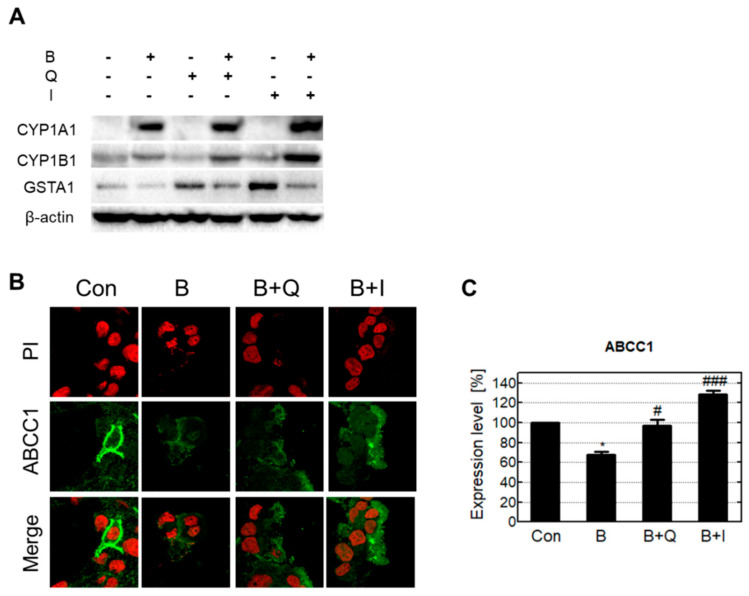
Benzo[a]pyrene, classified as a Group 1 carcinogen, is metabolized to B[a]P-7,8-dihydrodiol-9,10-epoxide (BPDE), causing DNA mutations and eventually cancer. Quercetin is a dietary flavonoid abundant in fruits and vegetables. After quercetin intake, quercetin's metabolites isorhamnetin and miquelianin are more highly concentrated than quercetin in the human plasma. In this study, we investigated the molecular mechanisms associated with the cytoprotective effect of quercetin and its metabolites against benzo[a]pyrene from a detoxification perspective. Quercetin and its metabolite isorhamnetin reduced benzo[a]pyrene-induced cytotoxicity, whereas the metabolite miquelianin did not mitigate benzo[a]pyrene-induced cytotoxicity. Moreover, quercetin and isorhamnetin reduced intracellular levels of BPDE-DNA adducts. The formation and elimination of BPDE is mediated by the xenobiotic detoxification process. Quercetin and isorhamnetin increased the gene and protein expression levels of phase I, II, and III enzymes involved in xenobiotic detoxification. Furthermore, quercetin and isorhamnetin induced the translocation of aryl hydrocarbon receptor (AhR) and nuclear factor erythroid 2-related factor 2 (NRF2), which regulate the expression level of phase enzymes. Our results suggest that quercetin and isorhamnetin promote the metabolism, detoxification, and elimination of B[a]P, thereby increasing anti-genotoxic effects and protecting against B[a]P-induced cytotoxicity.
苯并[a]芘被归类为1类致癌物,它会代谢为苯并[a]芘-7,8-二氢二醇-9,10-环氧化物(BPDE),导致DNA突变并最终引发癌症。槲皮素是一种在水果和蔬菜中含量丰富的膳食类黄酮。摄入槲皮素后,其代谢产物异鼠李素和杨梅素在人体血浆中的浓度比槲皮素更高。在本研究中,我们从解毒的角度研究了槲皮素及其代谢产物对苯并[a]芘的细胞保护作用相关的分子机制。槲皮素及其代谢产物异鼠李素降低了苯并[a]芘诱导的细胞毒性,而代谢产物杨梅素并未减轻苯并[a]芘诱导的细胞毒性。此外,槲皮素和异鼠李素降低了细胞内BPDE-DNA加合物的水平。BPDE的形成和消除由外源性解毒过程介导。槲皮素和异鼠李素提高了参与外源性解毒的I、II和III期酶的基因和蛋白质表达水平。此外,槲皮素和异鼠李素诱导了芳烃受体(AhR)和核因子红细胞2相关因子2(NRF2)的转位,这两种因子调节I期酶的表达水平。我们的结果表明,槲皮素和异鼠李素促进了苯并[a]芘的代谢、解毒和消除,从而增强了抗基因毒性作用并保护细胞免受苯并[a]芘诱导的细胞毒性。