Sun Daojin, Zhang Luyao, Yu Qi, Zhang Jiali, Li Peiling, Zhang Yu, Xing Xiaojuan, Ding Lian, Fang Weimin, Chen Fadi, Song Aiping
State Key Laboratory of Crop Genetics and Germplasm Enhancement, Key Laboratory of Landscaping, Ministry of Agriculture and Rural Affairs, College of Horticulture, Nanjing Agricultural University, Nanjing 210095, China.
Henan Key Laboratory of Tea Comprehensive Utilization in South Henan, Xinyang Agriculture and Forestry University, Xinyang 464000, China.
Biology (Basel). 2021 May 16;10(5):440. doi: 10.3390/biology10050440.
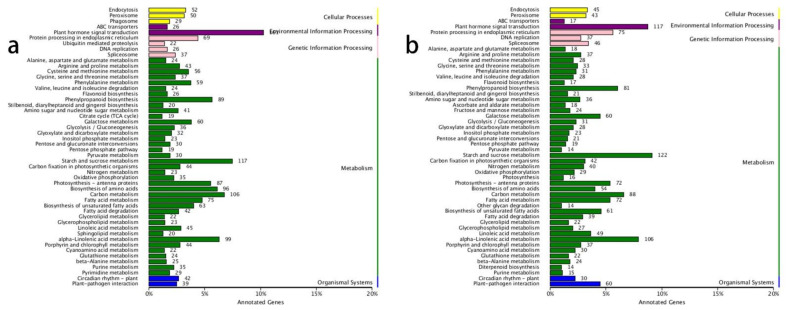
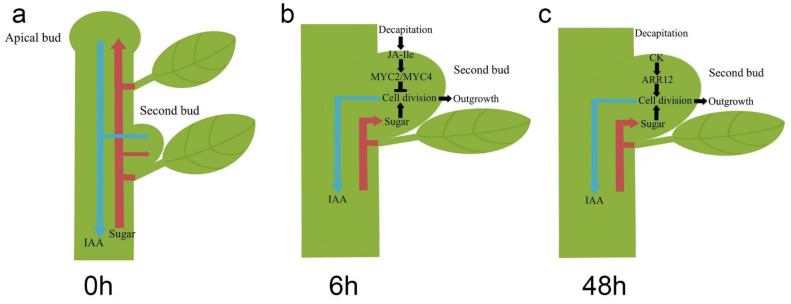
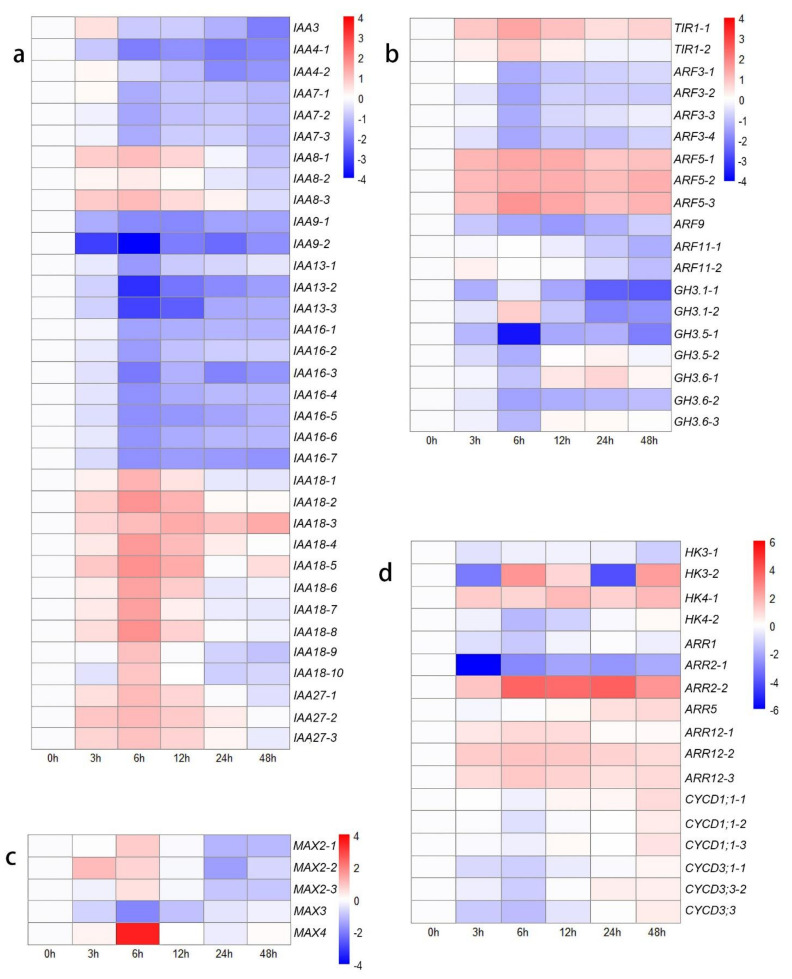
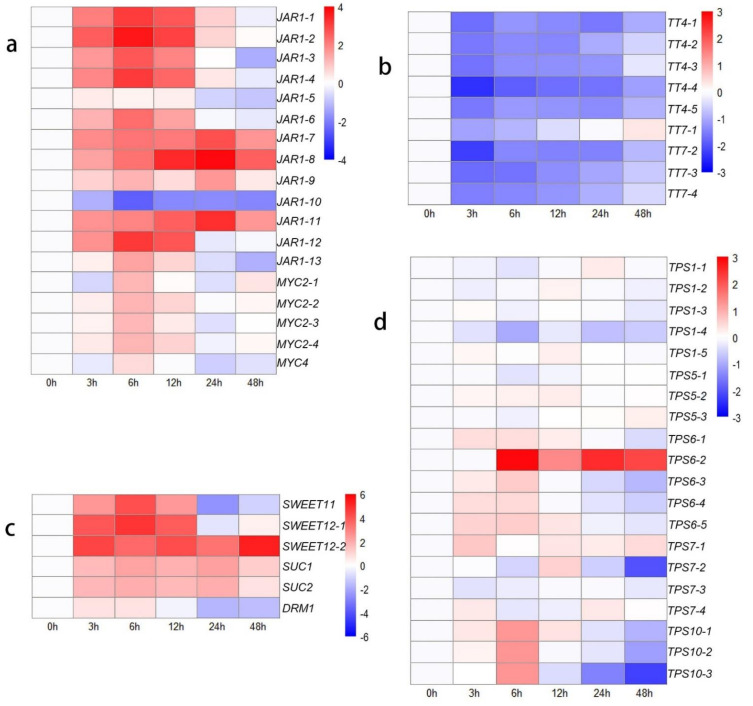
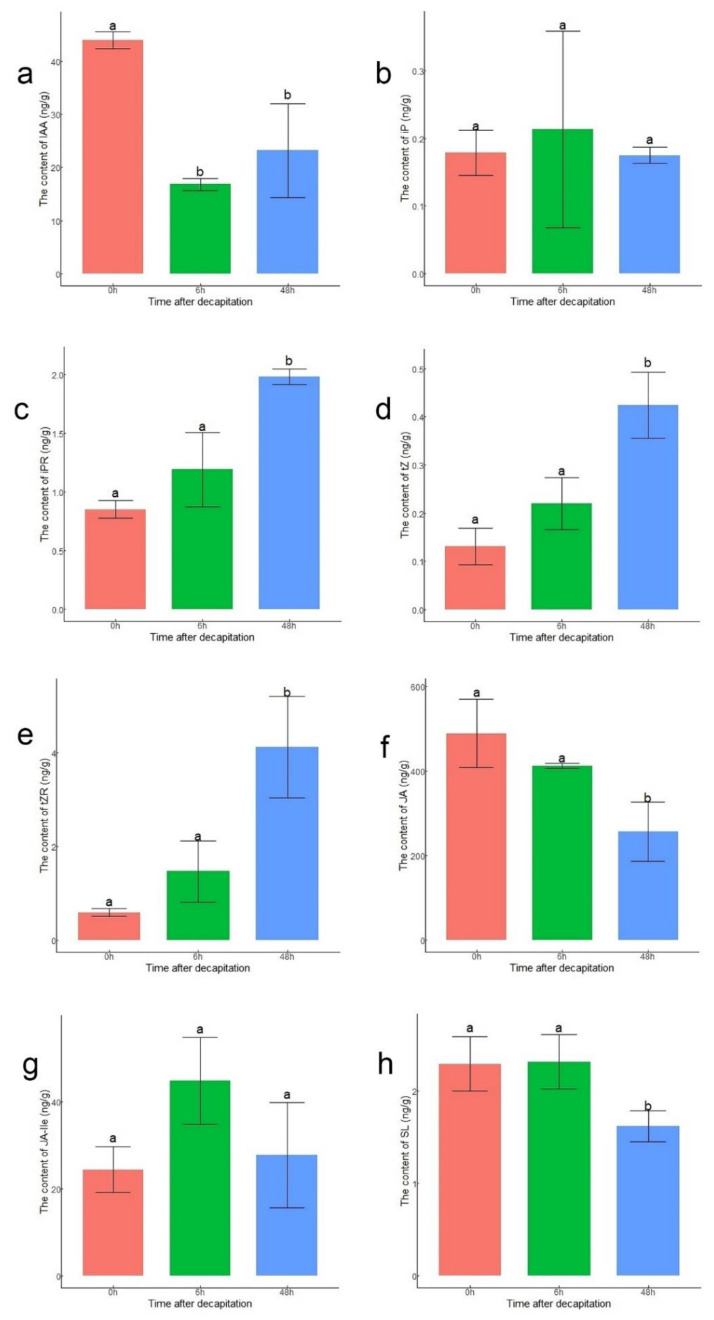
Decapitation is common in horticulture for altering plant architecture. The decapitation of chrysanthemum plants breaks apical dominance and leads to more flowers on lateral branches, resulting in landscape flowers with good coverage. We performed both third- and second-generation transcriptome sequencing of the second buds of chrysanthemum. This third-generation transcriptome is the first sequenced third-generation transcriptome of chrysanthemum, revealing alternative splicing events, lncRNAs, and transcription factors. Aside from the classic hormones, the expression of jasmonate-related genes changed because of this process. Sugars also played an important role in this process, with upregulated expression of sucrose transport-related and genes. We constructed a model of the initial growth of the second buds after decapitation. Auxin export and sugar influx activated the growth of these buds, while the JA-Ile caused by wounding inhibited the expression of genes from 0 h to 6 h. After wound recovery, cytokinins accumulated in the second buds and might have induced expression to upregulate gene expression from 6 h to 48 h, together with sugars. Therefore, jasmonates, cytokinins, sugars, and auxin work together to determine the fate of the buds of plants with short internodes, such as chrysanthemum.
在园艺中,摘心是改变植物形态的常见操作。菊花植株摘心可打破顶端优势,使侧枝上产生更多花朵,从而形成覆盖良好的景观花卉。我们对菊花的二次芽进行了第三代和第二代转录组测序。这个第三代转录组是首个测序的菊花第三代转录组,揭示了可变剪接事件、长链非编码RNA和转录因子。除了经典激素外,茉莉酸相关基因的表达因这一过程而发生变化。糖类在这一过程中也发挥了重要作用,蔗糖转运相关基因和其他基因的表达上调。我们构建了摘心后二次芽初始生长的模型。生长素输出和糖类流入激活了这些芽的生长,而伤口产生的茉莉酸异亮氨酸在0小时至6小时抑制了某些基因的表达。伤口恢复后,细胞分裂素在二次芽中积累,并可能与糖类一起在6小时至48小时诱导某些基因的表达上调。因此,茉莉酸、细胞分裂素、糖类和生长素共同作用,决定了节间短的植物(如菊花)芽的命运。