Zhang Yalin, He Xuzhao, Cao Miao, Shen Xiaojun, Yang Yaru, Yi Jie, Guan Jipeng, Shen Jianxiang, Xi Man, Zhang Yuanjie, Tang Bolin
Key Laboratory of Yarn Materials Forming and Composite Processing Technology of Zhejiang Province, Jiaxing University, Jiaxing 314001, China.
Nanotechnology Research Institute, Jiaxing University, Jiaxing 314001, China.
Materials (Basel). 2021 May 12;14(10):2509. doi: 10.3390/ma14102509.
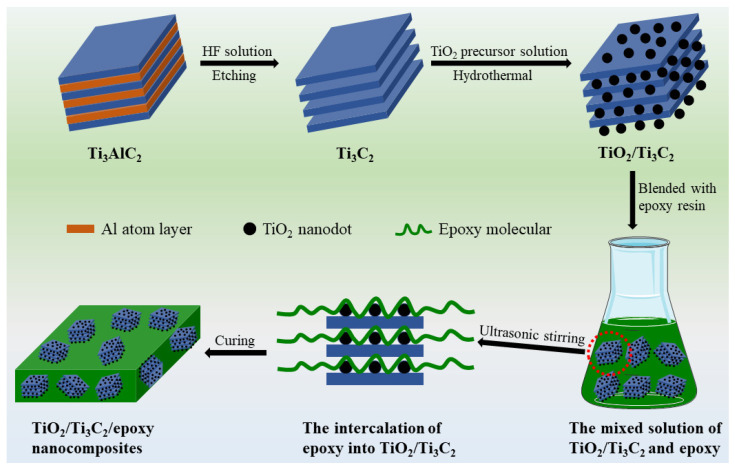
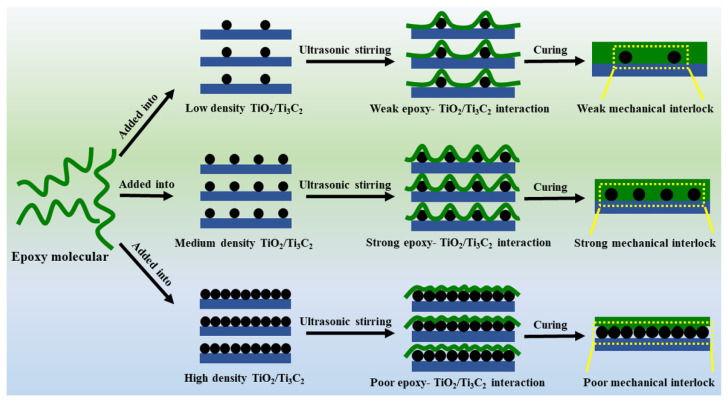
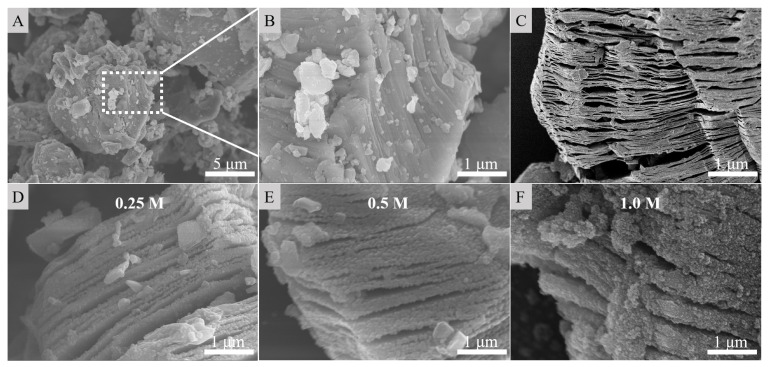
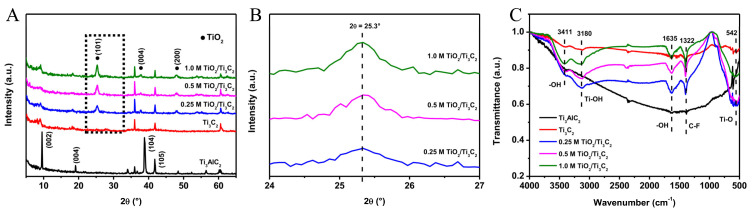
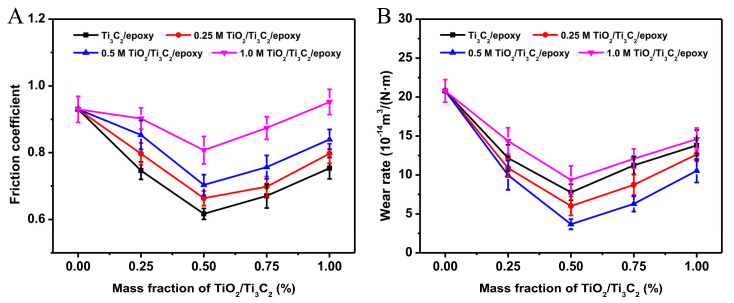
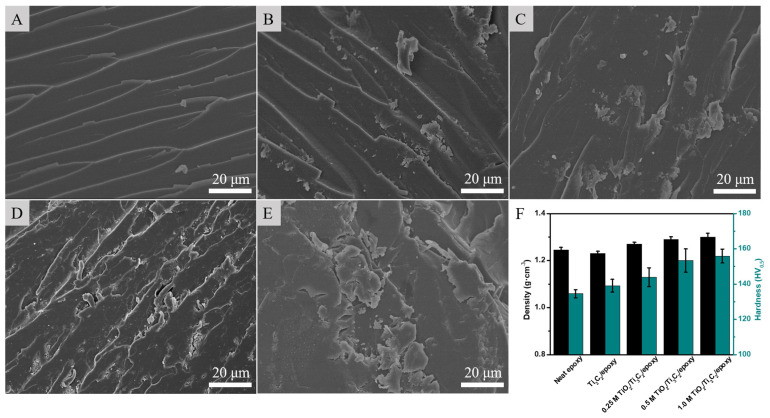
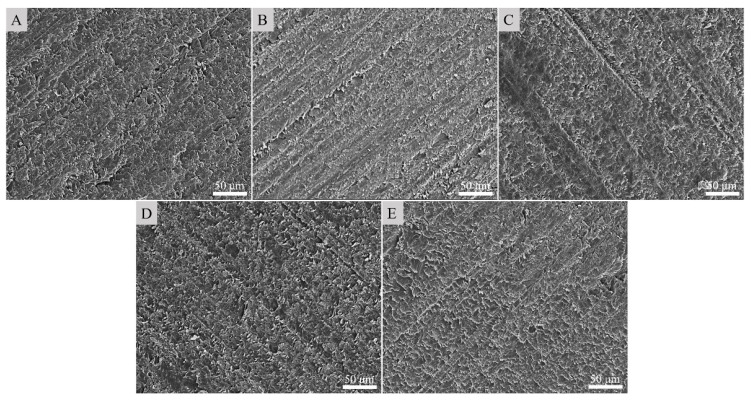
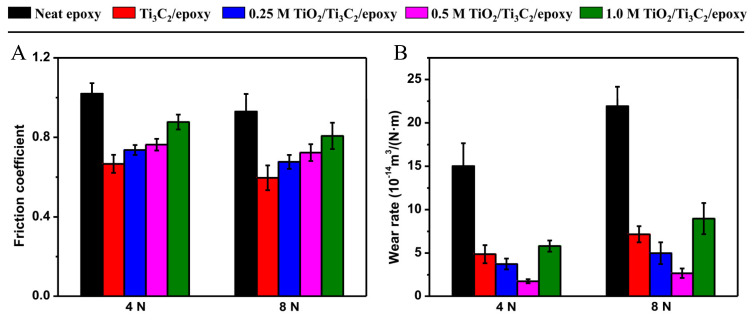
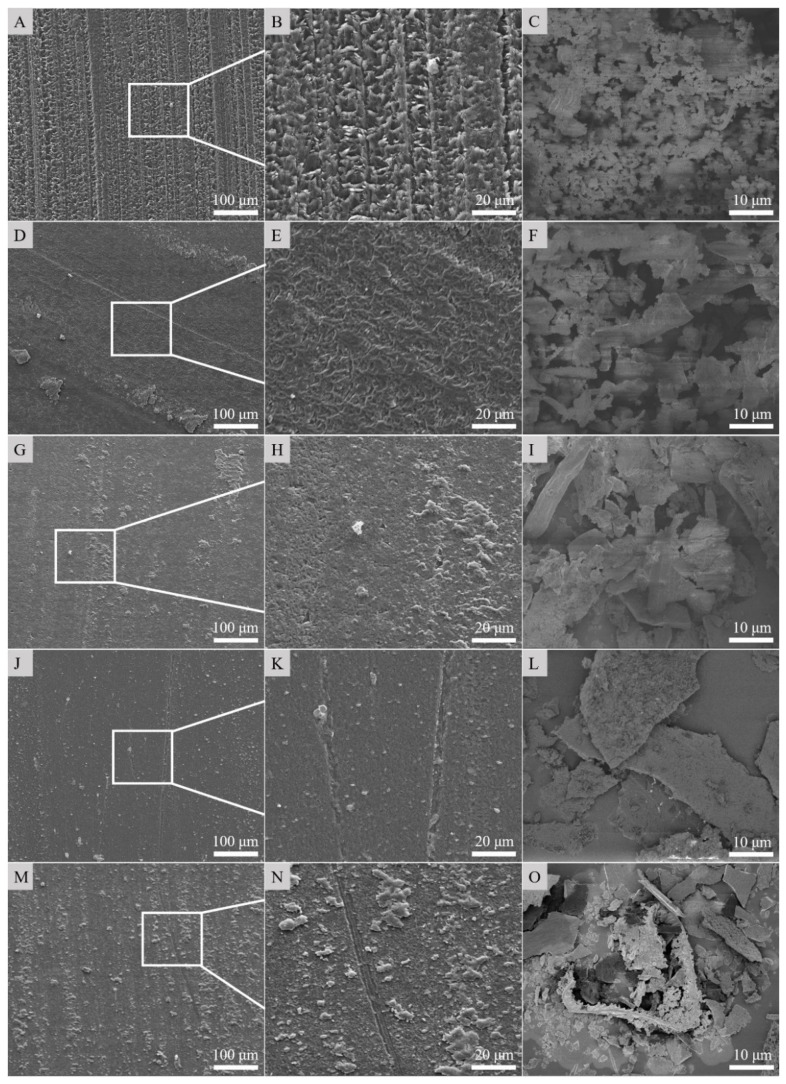
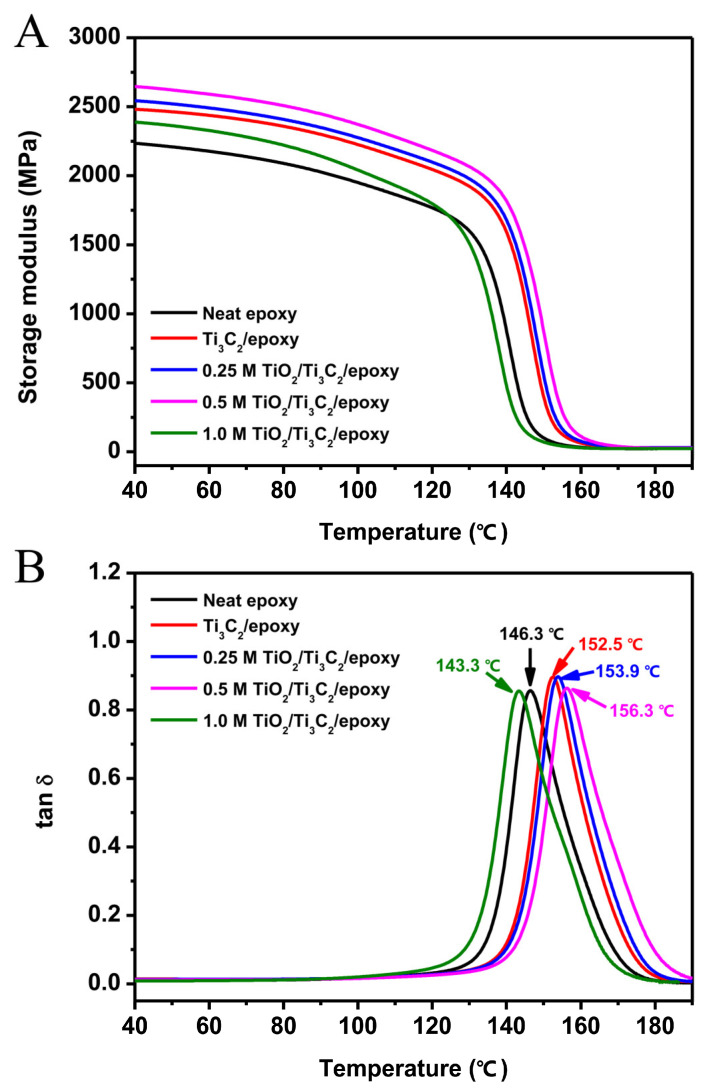
The micromorphology of fillers plays an important role in tribological and mechanical properties of polymer matrices. In this work, a TiO-decorated TiC (TiO/TiC) composite particle with unique micro-nano morphology was engineered to improve the tribological and thermo-mechanical properties of epoxy resin. The TiO/TiC were synthesized by hydrothermal growth of TiO nanodots onto the surface of accordion-like TiC microparticles, and three different decoration degrees (low, medium, high density) of TiO/TiC were prepared by regulating the concentration of TiO precursor solution. Tribological test results indicated that the incorporation of TiO/TiC can effectively improve the wear rate of epoxy resin. Among them, the medium density TiO/TiC/epoxy nanocomposites gained a minimum wear rate. This may be ascribed by the moderate TiO nanodot protuberances on the TiC surface induced a strong mechanical interlock effect between medium-density TiO/TiC and the epoxy matrix, which can bear a higher normal shear stress during sliding friction. The morphologies of worn surfaces and wear debris revealed that the wear form was gradually transformed from fatigue wear in neat epoxy to abrasive wear in TiO/TiC/epoxy nanocomposites. Moreover, the results of thermo-mechanical property indicated that incorporation of TiO/TiC also effectively improved the storage modulus and glass transition temperature of epoxy resin.
填料的微观形态对聚合物基复合材料的摩擦学和力学性能起着重要作用。在本研究中,通过制备具有独特微纳结构的TiO修饰TiC(TiO/TiC)复合颗粒,以改善环氧树脂的摩擦学和热机械性能。采用水热法在褶皱状TiC微粒表面生长TiO纳米点合成了TiO/TiC,并通过调节TiO前驱体溶液的浓度制备了三种不同修饰程度(低密度、中密度、高密度)的TiO/TiC。摩擦学测试结果表明,TiO/TiC的加入能有效降低环氧树脂的磨损率。其中,中密度TiO/TiC/环氧树脂纳米复合材料的磨损率最低。这可能是由于TiC表面适度的TiO纳米点凸起在中密度TiO/TiC与环氧树脂基体之间产生了强烈的机械互锁效应,使其在滑动摩擦过程中能够承受更高的法向剪切应力。磨损表面和磨屑的形貌表明,磨损形式从纯环氧树脂中的疲劳磨损逐渐转变为TiO/TiC/环氧树脂纳米复合材料中的磨粒磨损。此外,热机械性能测试结果表明,TiO/TiC的加入也有效提高了环氧树脂的储能模量和玻璃化转变温度。