Division of Gastroenterology, Department of Translational Research and New Technologies in Medicine and Surgery, University of Pisa, 56124 Pisa, Italy.
Division of Gastroenterology, Department of Surgery, Oncology and Gastroenterology, University of Padua, 35128 Padua, Italy.
Nutrients. 2021 May 12;13(5):1630. doi: 10.3390/nu13051630.
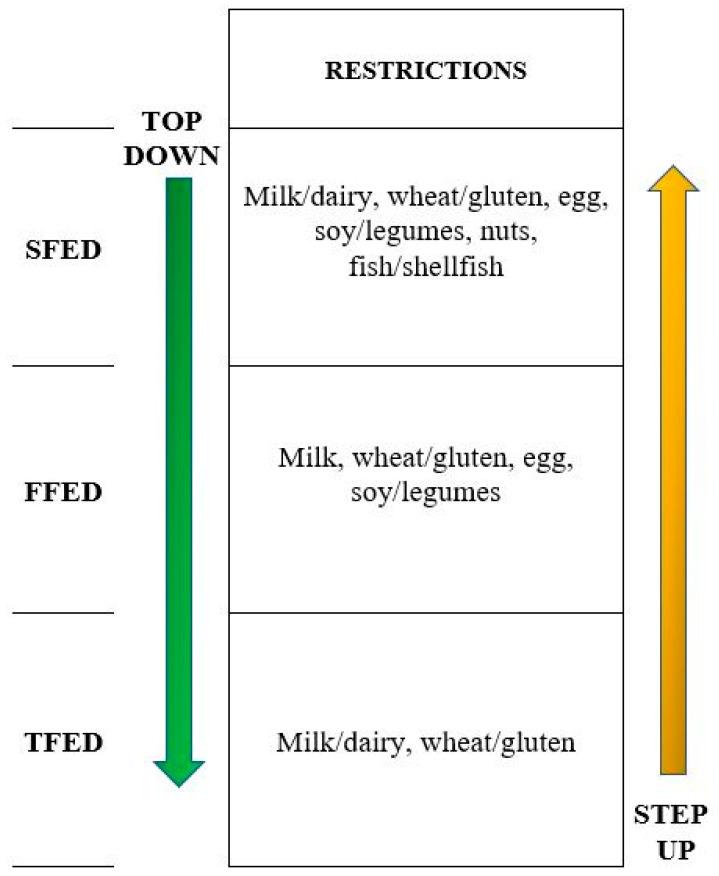
Eosinophilic esophagitis (EoE) is a unique form of non-immunoglobulin E-mediated food allergy, restricted to the esophagus, characterized by esophageal eosinophil-predominant inflammation and dysfunction. The diagnosis requires an esophago-gastroduodenoscopy with esophageal biopsies demonstrating active eosinophilic inflammation with 15 or more eosinophils/high-power field, following the exclusion of alternative causes of eosinophilia. Food allergens trigger the disease, withdairy/milk, wheat/gluten, egg, soy/legumes, and seafood the most common. Therapeutic strategies comprise dietary restrictions, proton pump inhibitors, topical corticosteroids, biologic agents, and esophageal dilation when strictures are present. However, avoidance of trigger foods remains the only option targeting the cause, and not the effect, of the disease. Because EoE relapses when treatment is withdrawn, dietary therapy offers a long-term, drug-free alternative to patients who wish to remain off drugs and still be in remission. There are currently multiple dietary management strategies to choose from, each having its specific efficacy, advantages, and disadvantages that both clinicians and patients should acknowledge. In addition, dietary regimens should be tailored around each individual patient to increase the chance of tolerability and long-term adherence. In general, liquid elemental diets devoid of antigens and elimination diets restricting causative foods are valuable options. Designing diets on the basis of food allergy skin tests results is not reliable and should be avoided. This review summarizes the most recent knowledge regarding the clinical use of dietary measures in EoE. We discussed endpoints, rationale, advantages and disadvantages, and tailoring of diets, as well as currently available dietary regimens for EoE.
嗜酸性食管炎(EoE)是一种独特的非免疫球蛋白 E 介导的食物过敏形式,局限于食管,其特征是食管嗜酸性粒细胞为主的炎症和功能障碍。诊断需要食管胃十二指肠镜检查,并进行食管活检,显示活跃的嗜酸性粒细胞炎症,每高倍视野有 15 个或更多嗜酸性粒细胞,排除嗜酸性粒细胞增多的其他原因。食物过敏原引发疾病,最常见的食物过敏原包括牛奶/奶制品、小麦/麸质、鸡蛋、大豆/豆类和海鲜。治疗策略包括饮食限制、质子泵抑制剂、局部皮质类固醇、生物制剂和存在狭窄时的食管扩张。然而,避免触发食物仍然是针对疾病原因而不是疾病后果的唯一选择。由于 EoE 在停止治疗后会复发,因此饮食疗法为希望避免药物治疗且仍处于缓解期的患者提供了一种长期、无药物的替代方案。目前有多种饮食管理策略可供选择,每种策略都有其特定的疗效、优点和缺点,临床医生和患者都应该了解。此外,应根据每个患者的具体情况制定饮食方案,以增加耐受性和长期依从性的机会。一般来说,不含抗原的液体元素饮食和限制致病食物的消除饮食是有价值的选择。基于食物过敏皮肤试验结果设计饮食不可靠,应予以避免。本文综述了饮食措施在 EoE 中的临床应用的最新知识。我们讨论了终点、原理、优点和缺点以及饮食的调整,以及目前用于 EoE 的饮食方案。