Alberoni Daniele, Baffoni Loredana, Braglia Chiara, Gaggìa Francesca, Di Gioia Diana
Department of Agricultural and Food Sciences (DISTAL), University of Bologna, Viale Fanin 44, 40127 Bologna, Italy.
Microorganisms. 2021 May 7;9(5):1009. doi: 10.3390/microorganisms9051009.
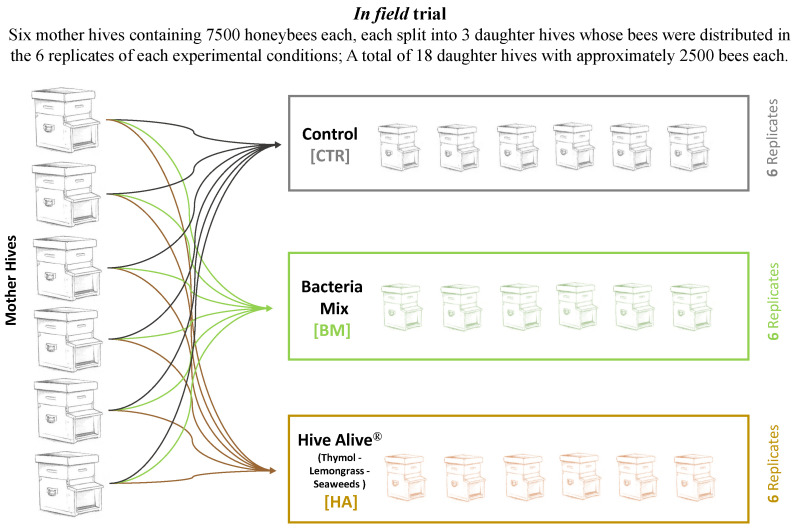
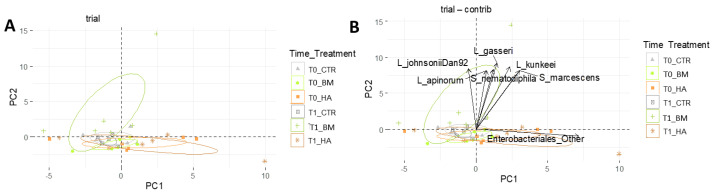
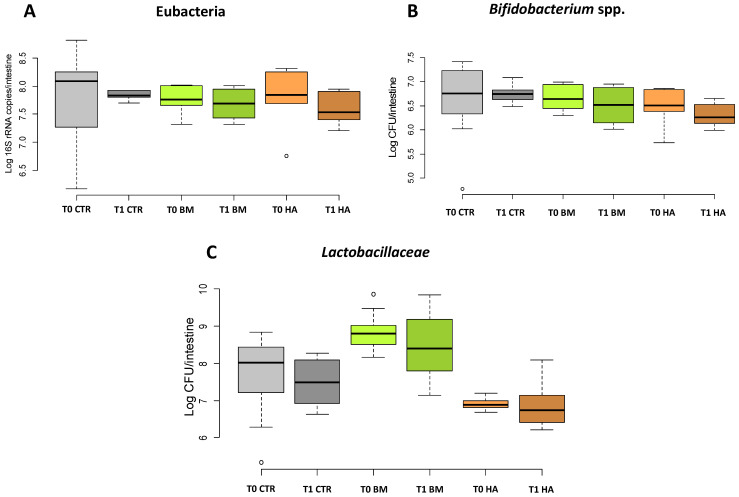
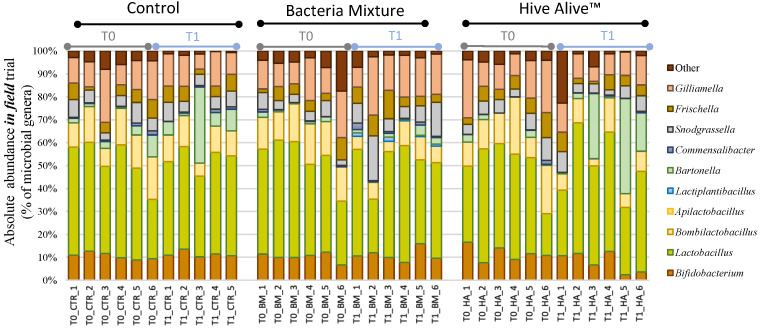
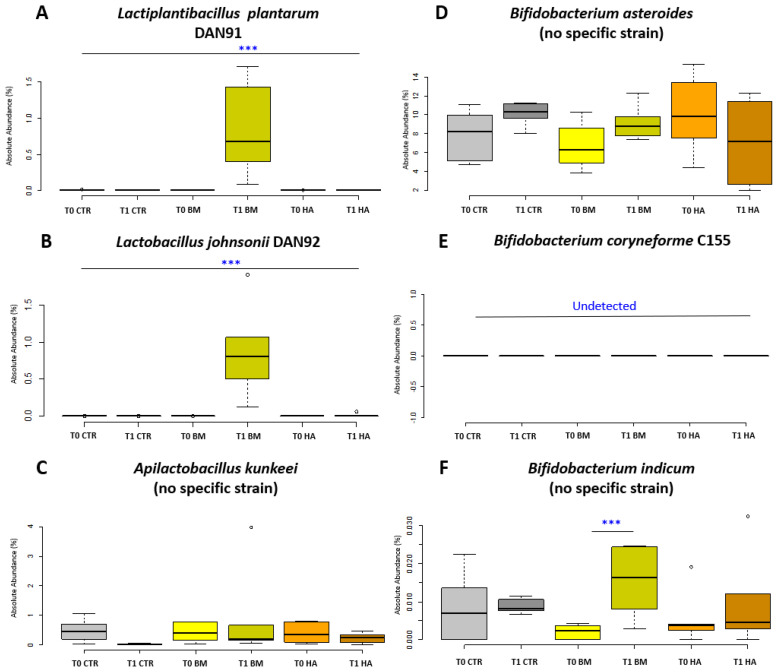
The role of a balanced gut microbiota to maintain health and prevent diseases is largely established in humans and livestock. Conversely, in honeybees, studies on gut microbiota perturbations by external factors have started only recently. Natural methods alternative to chemical products to preserve honeybee health have been proposed, but their effect on the gut microbiota has not been examined in detail. This study aims to investigate the effect of the administration of a bacterial mixture of bifidobacteria and Lactobacillaceae and a commercial product HiveAlive on honeybee gut microbiota. The study was developed in 18 hives of about 2500 bees, with six replicates for each experimental condition for a total of three experimental groups. The absolute abundance of main microbial taxa was studied using qPCR and NGS. The results showed that the majority of the administered strains were detected in the gut. On the whole, great perturbations upon the administration of the bacterial mixture and the plant-based commercial product were not observed in the gut microbiota. Significant variations with respect to the untreated control were only observed for sp. for the bacterial mixture, sp. in HiveAlive and sp. for both. Therefore, the studied approaches are respectful of the honeybee microbiota composition, conceivably without compromising the bee nutritional, social and ecological functions.
平衡的肠道微生物群在维持人类和家畜健康及预防疾病方面的作用已基本明确。相反,在蜜蜂中,关于外部因素对肠道微生物群扰动的研究直到最近才开始。人们提出了替代化学产品的天然方法来保护蜜蜂健康,但它们对肠道微生物群的影响尚未得到详细研究。本研究旨在调查给予双歧杆菌和乳杆菌科细菌混合物以及商业产品HiveAlive对蜜蜂肠道微生物群的影响。该研究在18个蜂箱中进行,每个蜂箱约有2500只蜜蜂,每个实验条件设置6个重复,共三个实验组。使用qPCR和NGS研究主要微生物类群的绝对丰度。结果表明,所施用的大多数菌株在肠道中被检测到。总体而言,在肠道微生物群中未观察到施用细菌混合物和植物基商业产品后有很大的扰动。仅在细菌混合物中的[具体菌种1]、HiveAlive中的[具体菌种2]以及两者中的[具体菌种3]中观察到与未处理对照相比有显著差异。因此,所研究的方法尊重蜜蜂微生物群的组成,可以想象不会损害蜜蜂的营养、社会和生态功能。