Gerner Bettina, Scherf-Clavel Oliver
Institute for Pharmacy and Food Chemistry, University of Würzburg, 97074 Würzburg, Germany.
Pharmaceutics. 2021 May 22;13(6):778. doi: 10.3390/pharmaceutics13060778.
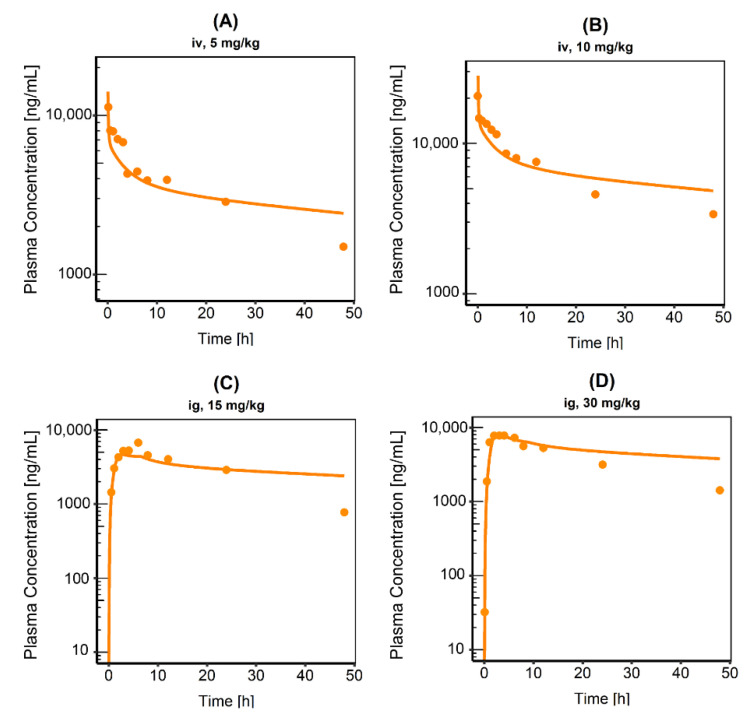
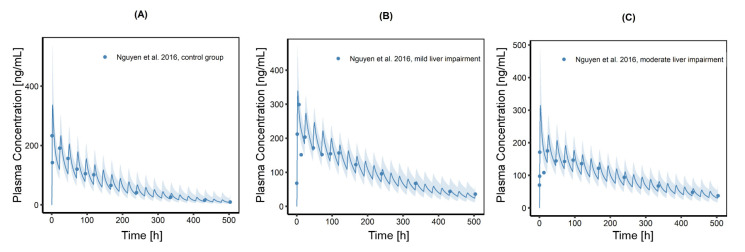
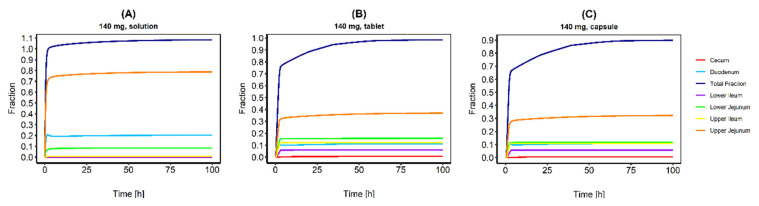
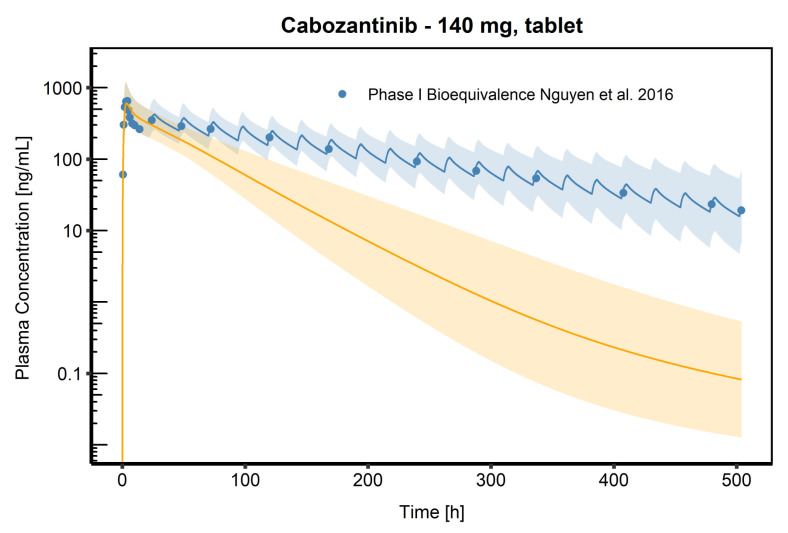
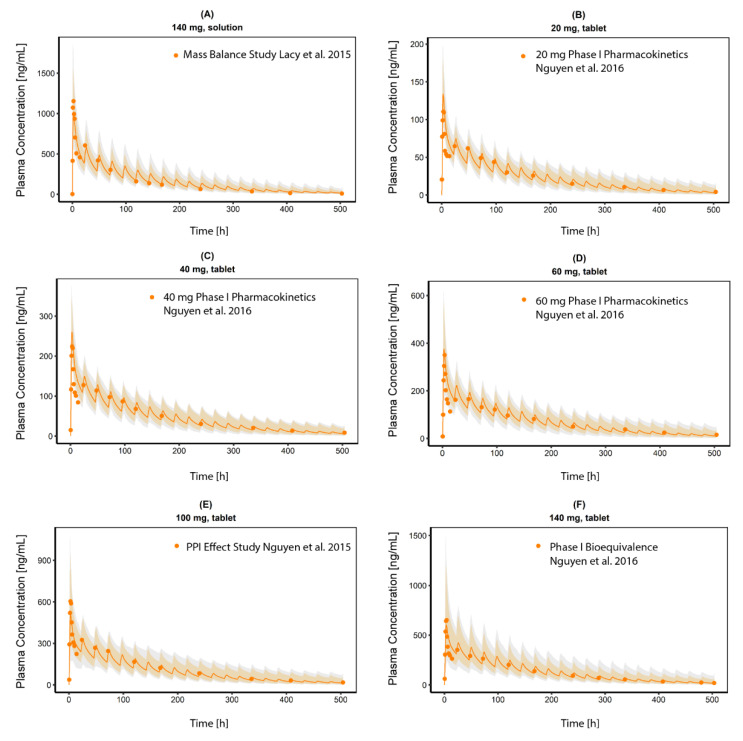
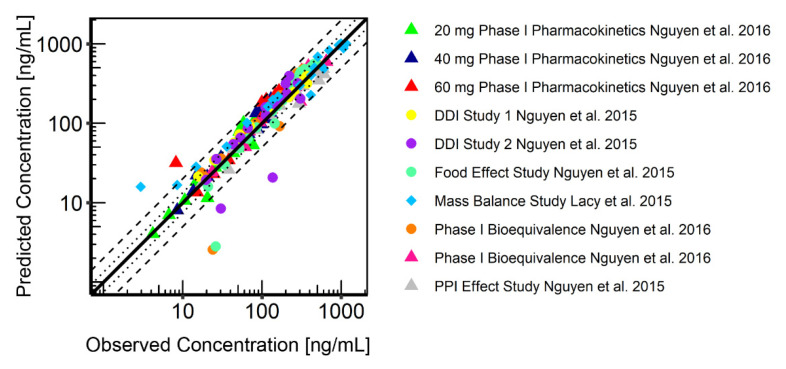
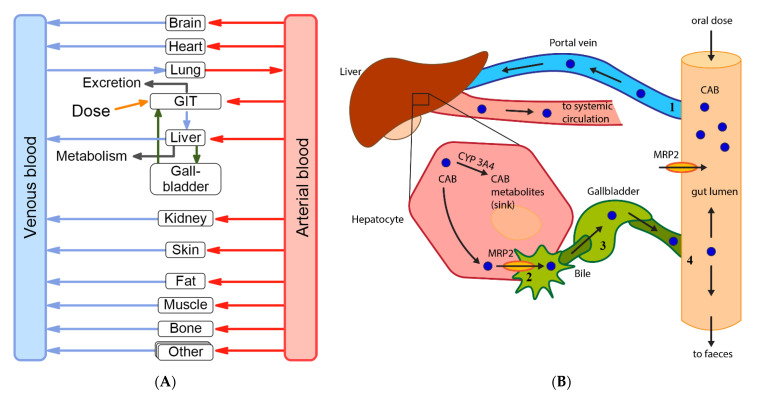
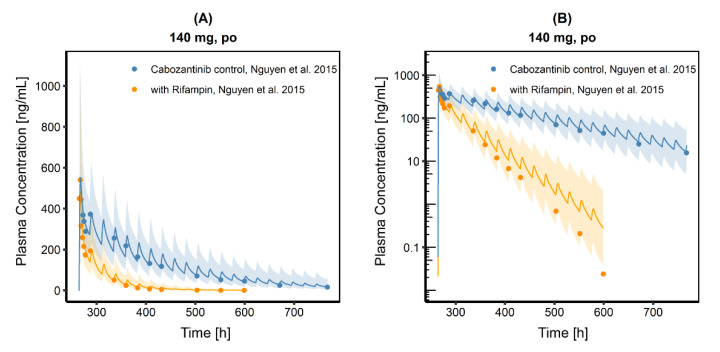
Cabozantinib (CAB) is a receptor tyrosine kinase inhibitor approved for the treatment of several cancer types. Enterohepatic recirculation (EHC) of the substance is assumed but has not been further investigated yet. CAB is mainly metabolized via CYP3A4 and is susceptible for drug-drug interactions (DDI). The goal of this work was to develop a physiologically based pharmacokinetic (PBPK) model to investigate EHC, to simulate DDI with Rifampin and to simulate subjects with hepatic impairment. The model was established using PK-Sim and six human clinical studies. The inclusion of an EHC process into the model led to the most accurate description of the pharmacokinetic behavior of CAB. The model was able to predict plasma concentrations with low bias and good precision. Ninety-seven percent of all simulated plasma concentrations fell within 2-fold of the corresponding concentration observed. Maximum plasma concentration (C) and area under the curve (AUC) were predicted correctly (predicted/observed ratio of 0.9-1.2 for AUC and 0.8-1.1 for C). DDI with Rifampin led to a reduction in predicted AUC by 77%. Several physiological parameters were adapted to simulate hepatic impairment correctly. This is the first CAB model used to simulate DDI with Rifampin and hepatic impairment including EHC, which can serve as a starting point for further simulations with regard to special populations.
卡博替尼(CAB)是一种受体酪氨酸激酶抑制剂,已被批准用于治疗多种癌症类型。该物质存在肠肝循环(EHC),不过尚未得到进一步研究。CAB主要通过CYP3A4代谢,且易发生药物相互作用(DDI)。本研究的目的是建立一个基于生理的药代动力学(PBPK)模型,以研究EHC、模拟与利福平的DDI以及模拟肝功能受损的受试者。该模型使用PK-Sim和六项人体临床研究建立。将EHC过程纳入模型能够最准确地描述CAB的药代动力学行为。该模型能够以低偏差和高精度预测血浆浓度。所有模拟血浆浓度的97%落在相应观察浓度的2倍范围内。最大血浆浓度(C)和曲线下面积(AUC)预测正确(AUC的预测/观察比值为0.9 - 1.2,C的预测/观察比值为0.8 - 1.1)。与利福平的DDI导致预测的AUC降低77%。调整了几个生理参数以正确模拟肝功能受损。这是首个用于模拟与利福平的DDI以及包括EHC在内的肝功能受损的CAB模型,可作为针对特殊人群进行进一步模拟的起点。