Oscar-Langendorff-Institute of Physiology, Rostock University Medical Center, 18057 Rostock, Germany.
Center for Transdisciplinary Neurosciences Rostock, University of Rostock, 18147 Rostock, Germany.
Cells. 2021 May 17;10(5):1226. doi: 10.3390/cells10051226.
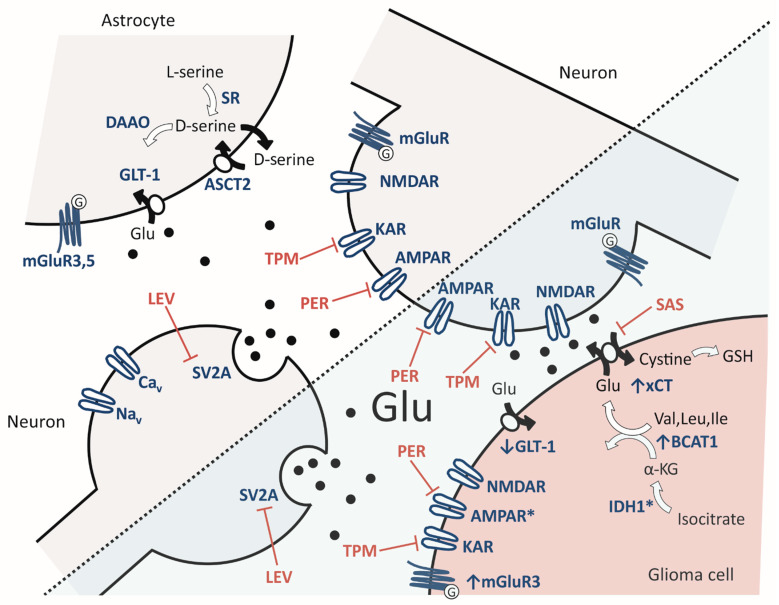
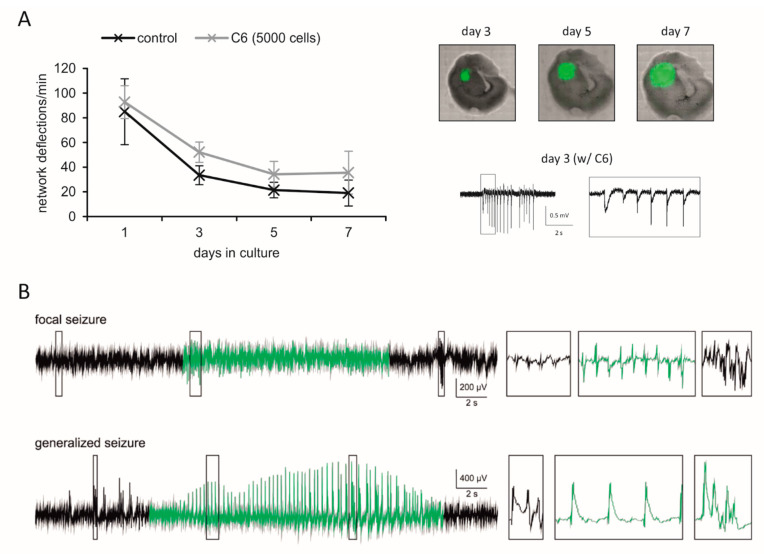
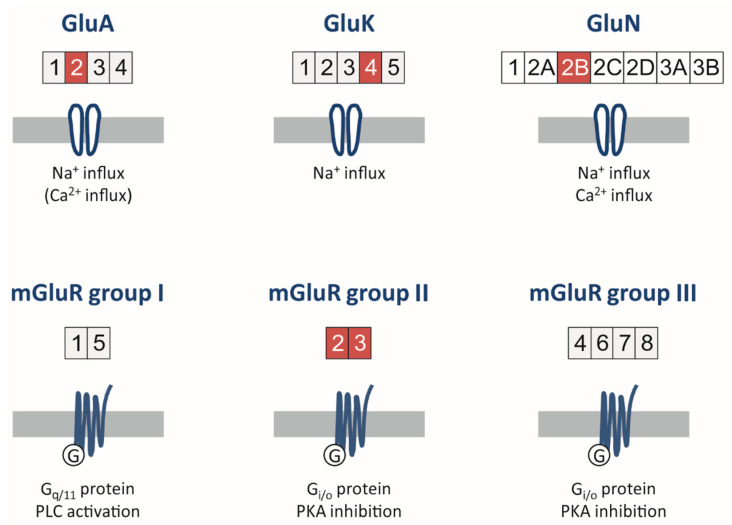
The progression of glioblastomas is associated with a variety of neurological impairments, such as tumor-related epileptic seizures. Seizures are not only a common comorbidity of glioblastoma but often an initial clinical symptom of this cancer entity. Both, glioblastoma and tumor-associated epilepsy are closely linked to one another through several pathophysiological mechanisms, with the neurotransmitter glutamate playing a key role. Glutamate interacts with its ionotropic and metabotropic receptors to promote both tumor progression and excitotoxicity. In this review, based on its physiological functions, our current understanding of glutamate receptors and glutamatergic signaling will be discussed in detail. Furthermore, preclinical models to study glutamatergic interactions between glioma cells and the tumor-surrounding microenvironment will be presented. Finally, current studies addressing glutamate receptors in glioma and tumor-related epilepsy will be highlighted and future approaches to interfere with the glutamatergic network are discussed.
胶质母细胞瘤的进展与多种神经功能障碍有关,例如与肿瘤相关的癫痫发作。癫痫发作不仅是胶质母细胞瘤的常见合并症,而且常常是这种癌症实体的初始临床症状。胶质母细胞瘤和肿瘤相关性癫痫通过多种病理生理机制密切相关,其中神经递质谷氨酸起着关键作用。谷氨酸通过其离子型和代谢型受体相互作用,促进肿瘤进展和兴奋毒性。在这篇综述中,根据其生理功能,我们将详细讨论谷氨酸受体和谷氨酸能信号转导的现有认识。此外,还将介绍研究神经胶质瘤细胞与肿瘤周围微环境之间谷氨酸能相互作用的临床前模型。最后,将重点介绍目前关于神经胶质瘤和肿瘤相关性癫痫中谷氨酸受体的研究,并讨论干扰谷氨酸能网络的未来方法。