National Institute of Biomedical Imaging and Bioengineering (NIBIB), National Institutes of Health, Bethesda, MD 20892, USA.
Department of Immunology and Microbiology, School of Medicine, University of Texas Rio Grande Valley, McAllen, TX 78504, USA.
Int J Mol Sci. 2021 May 17;22(10):5278. doi: 10.3390/ijms22105278.
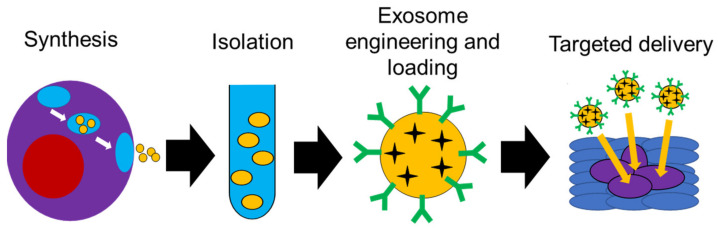
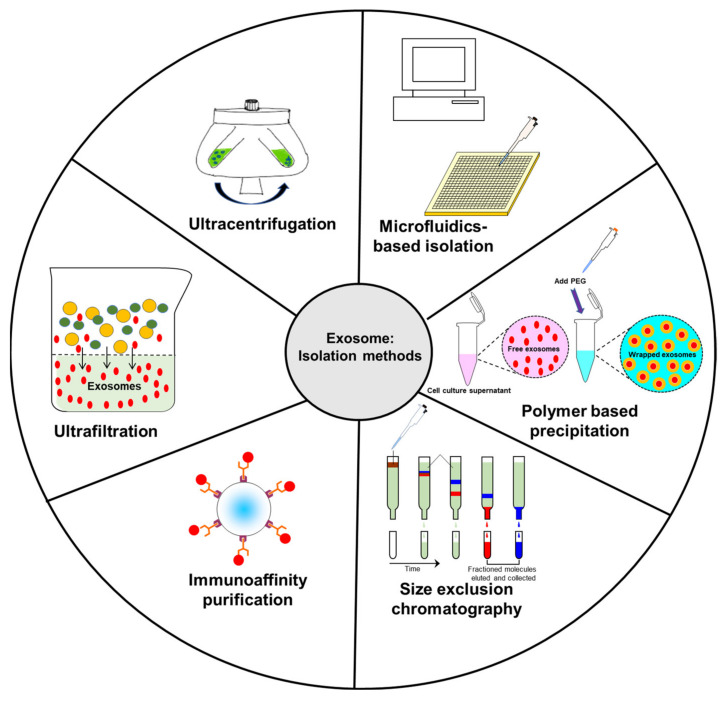
Exosomes are nanoscale vesicles generated by cells for intercellular communication. Due to their composition, significant research has been conducted to transform these particles into specific delivery systems for various disease states. In this review, we discuss the common isolation and loading methods of exosomes, some of the major roles of exosomes in the tumor microenvironment, as well as discuss recent applications of exosomes as drug delivery vessels and the resulting clinical implications.
外泌体是细胞为细胞间通讯而产生的纳米级囊泡。由于其组成,已经进行了大量研究,将这些颗粒转化为各种疾病状态的特定递药系统。在这篇综述中,我们讨论了外泌体的常见分离和加载方法,外泌体在肿瘤微环境中的一些主要作用,以及外泌体作为药物递送载体的最新应用及其带来的临床意义。