Zuo Ling, Tao Hongyu, Xu Huanli, Li Cong, Qiao Gan, Guo Mingyue, Cao Shousong, Liu Minghua, Lin Xiukun
Department of Pharmacology, School of Pharmacy, Southwest Medical University, Luzhou, Sichuan 646000, People's Republic of China.
Department of Pharmacology, School of Basic Medicine, Capital Medical University, Beijing 100069, People's Republic of China.
Drug Des Devel Ther. 2020 Aug 25;14:3495-3507. doi: 10.2147/DDDT.S265423. eCollection 2020.
MiR-34a, which acts as an important tumor suppressor gene, plays an important role in pancreatic cancer. However, the therapeutic application of miR-34a is limited by the lack of an effective delivery system. In the present study, we synthesize exosomes-coated miR-34a (exomiR-34a), and the anticancer effect of exomiR-34a was evaluated in pancreatic cancer.
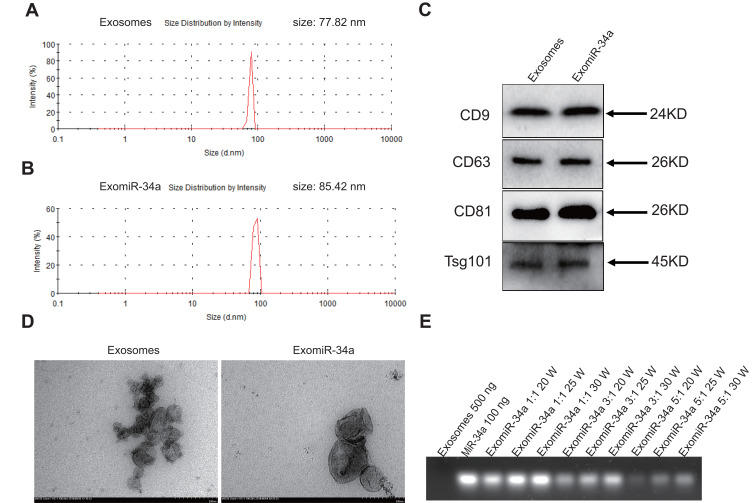
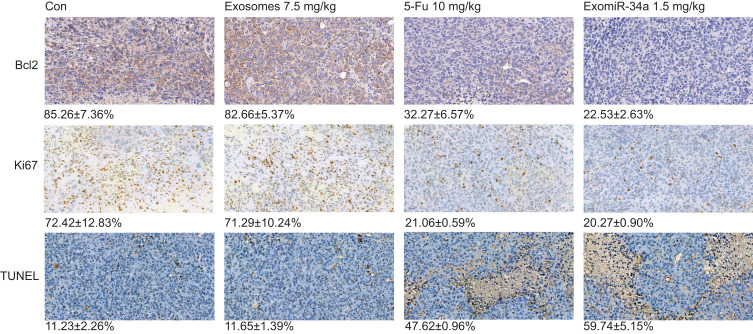
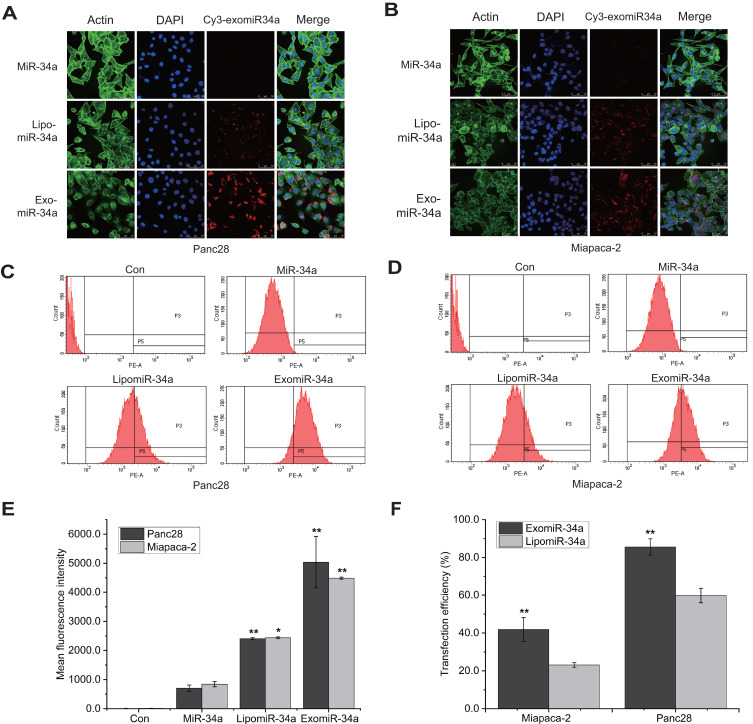
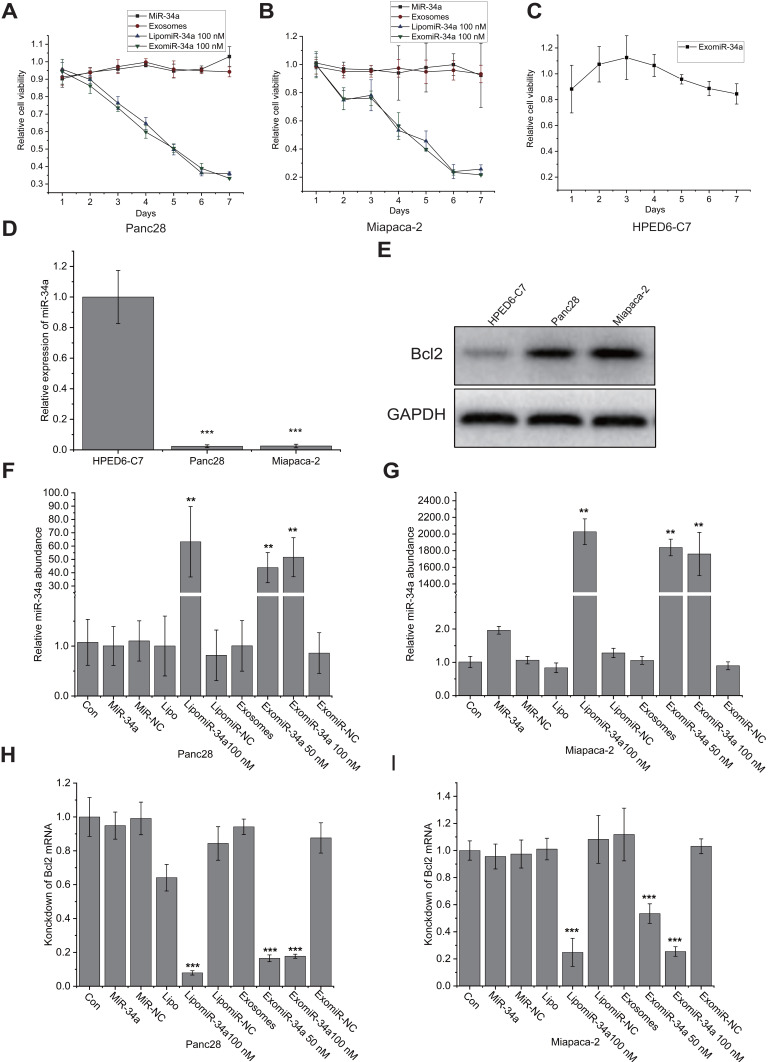
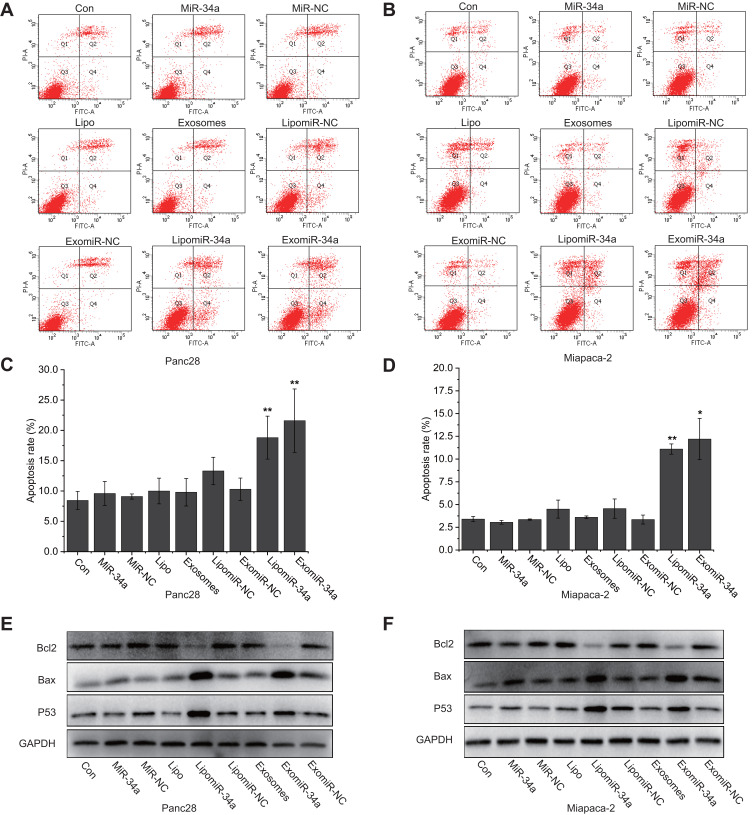
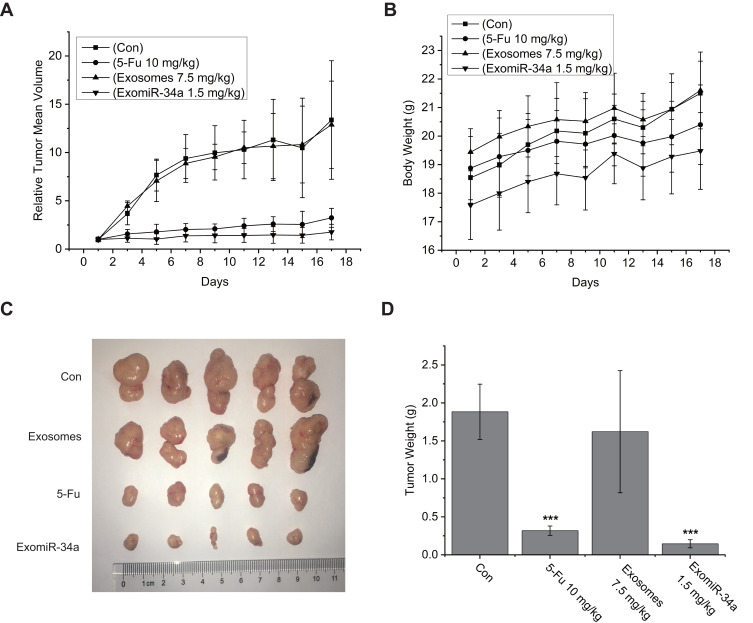
An ultrasound approach was used to synthesize exomiR-34a, and its transfection efficiency was examined by confocal microscopy and flow cytometry. The level of miR-34a and its targeted gene Bcl-2 was detected by real-time quantitative PCR (qRT-PCR). MTT analysis was performed to determine the effect of exomiR-34a on the growth of pancreatic cancer cells. Annexin-V/PI double staining and Western blot analysis were carried out to determine the apoptosis of the pancreatic cancer cells. The xenograft nude mice model bearing human pancreatic cancer Panc28 cells was used to determine the antitumor effect of exomiR-34a in vivo.
The exomiR-34a could cross the cell membrane efficiently, and downregulated the expression of the targeted gene Bcl-2. Treatment with exomiR-34a inhibited the growth of the pancreatic cancer cells significantly and the nanoparticles also induced apoptosis in cancer cells via affecting the expression of apoptotic-related genes. In vivo study using xenograft nude mice bearing Panc28 cancer cells revealed that exomiR-34a suppressed the growth of tumors significantly.
ExomiR-34a can inhibit the growth of pancreatic cancer both in vitro and in vivo. Targeting miR-34a is a promising strategy for the treatment of pancreatic cancer. ExomiR-34a has the potential to be developed as a novel anticancer agent for the treatment of human pancreatic malignancy.
miR-34a作为一种重要的肿瘤抑制基因,在胰腺癌中发挥着重要作用。然而,miR-34a的治疗应用受到缺乏有效递送系统的限制。在本研究中,我们合成了包裹miR-34a的外泌体(exomiR-34a),并在胰腺癌中评估了exomiR-34a的抗癌作用。
采用超声方法合成exomiR-34a,并通过共聚焦显微镜和流式细胞术检测其转染效率。通过实时定量PCR(qRT-PCR)检测miR-34a及其靶向基因Bcl-2的水平。进行MTT分析以确定exomiR-34a对胰腺癌细胞生长的影响。进行Annexin-V/PI双染和Western印迹分析以确定胰腺癌细胞的凋亡情况。使用携带人胰腺癌Panc28细胞的异种移植裸鼠模型来确定exomiR-34a在体内的抗肿瘤作用。
exomiR-34a能够有效地穿过细胞膜,并下调靶向基因Bcl-2的表达。exomiR-34a处理显著抑制了胰腺癌细胞的生长,并且纳米颗粒还通过影响凋亡相关基因的表达诱导癌细胞凋亡。使用携带Panc28癌细胞的异种移植裸鼠进行的体内研究表明,exomiR-34a显著抑制了肿瘤的生长。
ExomiR-34a在体外和体内均可抑制胰腺癌的生长。靶向miR-34a是治疗胰腺癌的一种有前景的策略。ExomiR-34a有潜力被开发为一种治疗人类胰腺恶性肿瘤的新型抗癌药物。