Department of Neonate and Infant Pathology, Medical University of Lublin, 20-093 Lublin, Poland.
Department of Organic Chemistry, Medical University of Lublin, 20-093 Lublin, Poland.
Int J Mol Sci. 2021 May 13;22(10):5140. doi: 10.3390/ijms22105140.
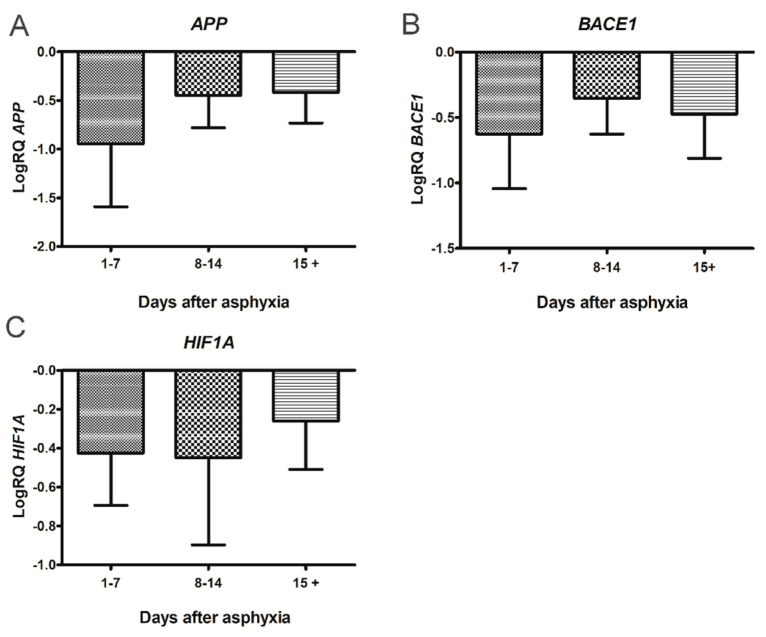
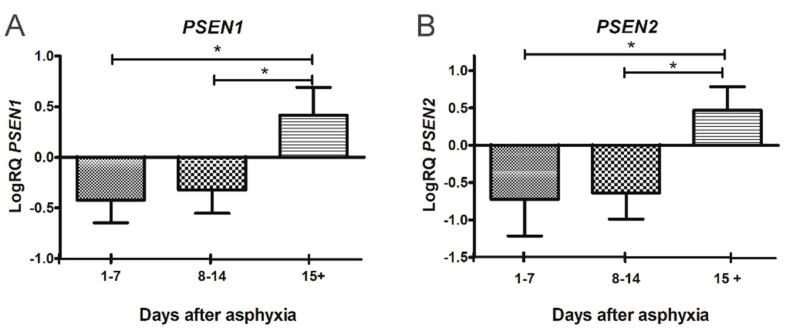
Perinatal asphyxia is mainly a brain disease leading to the development of neurodegeneration, in which a number of peripheral lesions have been identified; however, little is known about the expression of key genes involved in amyloid production by peripheral cells, such as lymphocytes, during the development of hypoxic-ischemic encephalopathy. We analyzed the gene expression of the , , and and by RT-PCR in the lymphocytes of post-asphyxia and control neonates. In all examined periods after asphyxia, decreased expression of the genes of the , and was noted in lymphocytes. Conversely, expression of and genes decreased on days 1-7 and 8-14 but increased after survival for more than 15 days. We believe that the expression of genes in lymphocytes could be a potential biomarker to determine the severity of the post-asphyxia neurodegeneration or to identify the underlying factors for brain neurodegeneration and get information about the time they occurred. This appears to be the first worldwide data on the role of the and genes associated with Alzheimer's disease in the dysregulation of neonatal lymphocytes after perinatal asphyxia.
围产期窒息主要是一种导致神经退行性变的脑部疾病,其中已经确定了一些周围病变;然而,对于缺氧缺血性脑病发生过程中周围细胞(如淋巴细胞)中参与淀粉样蛋白产生的关键基因的表达知之甚少。我们通过 RT-PCR 分析了窒息后和对照组新生儿淋巴细胞中 、 、 和 基因的表达。在窒息后所有检查的时期,均观察到淋巴细胞中 、 和 基因的表达减少。相反, 基因的表达在 1-7 天和 8-14 天减少,但在存活超过 15 天后增加。我们认为,淋巴细胞中 基因的表达可能是确定窒息后神经退行性变严重程度或识别脑神经退行性变潜在因素并获取其发生时间的潜在生物标志物。这似乎是全球范围内有关与阿尔茨海默病相关的 和 基因在围产期窒息后新生儿淋巴细胞失调中的作用的首批数据。