Department of Crop Sciences, Division Quality of Plant Products, University of Göttingen, Carl-Sprengel-Weg 1, 37075 Göttingen, Germany.
Department of Genomic and Applied Microbiology, Institute of Microbiology and Genetics, University of Göttingen, Grisebachstraße 8, 37077 Göttingen, Germany.
Int J Mol Sci. 2021 May 13;22(10):5162. doi: 10.3390/ijms22105162.
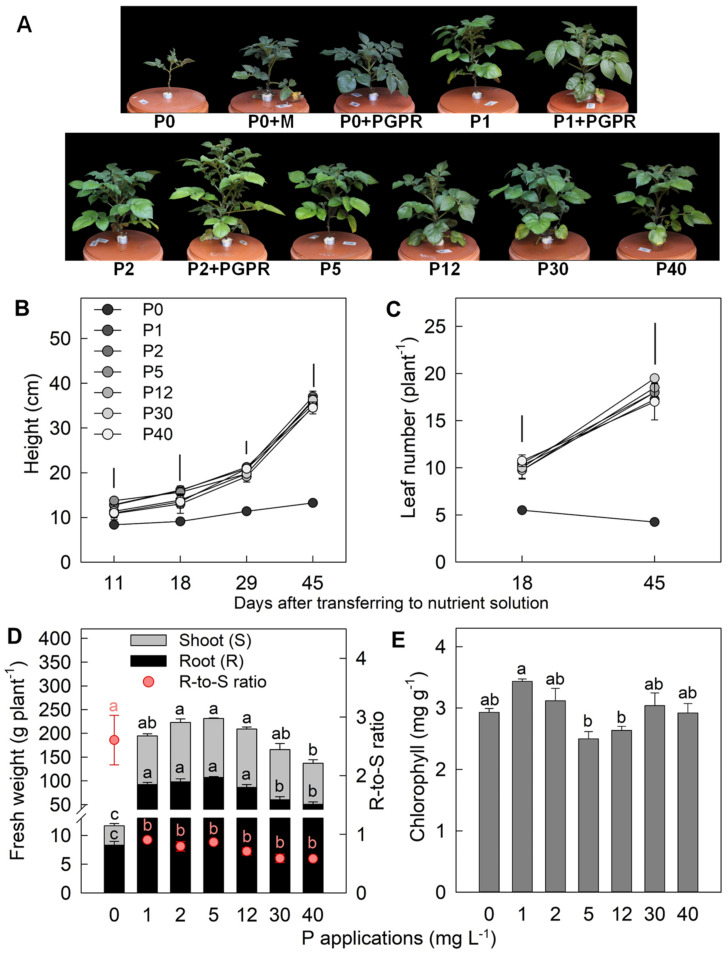
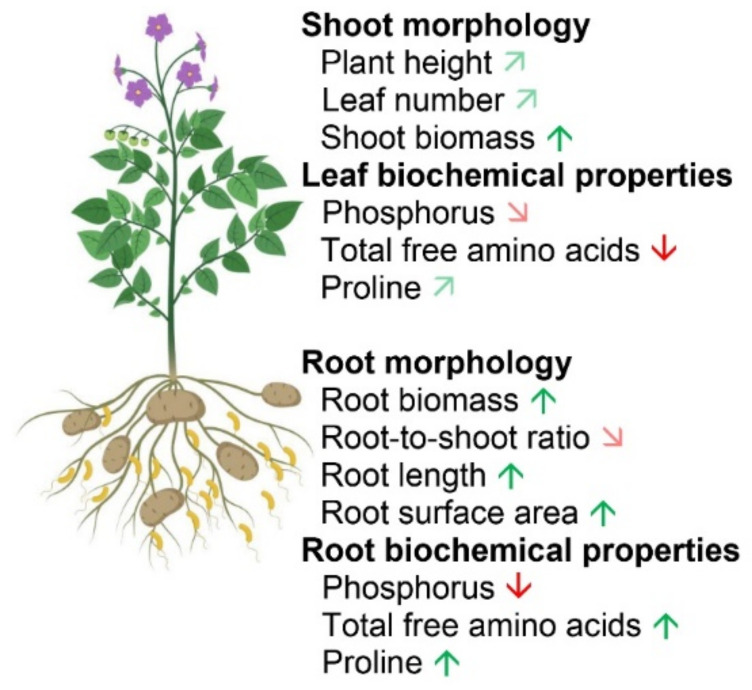
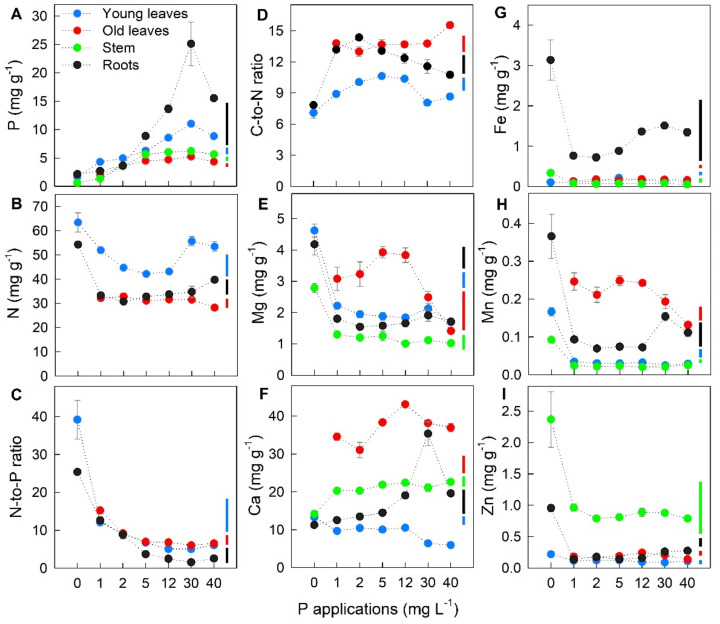
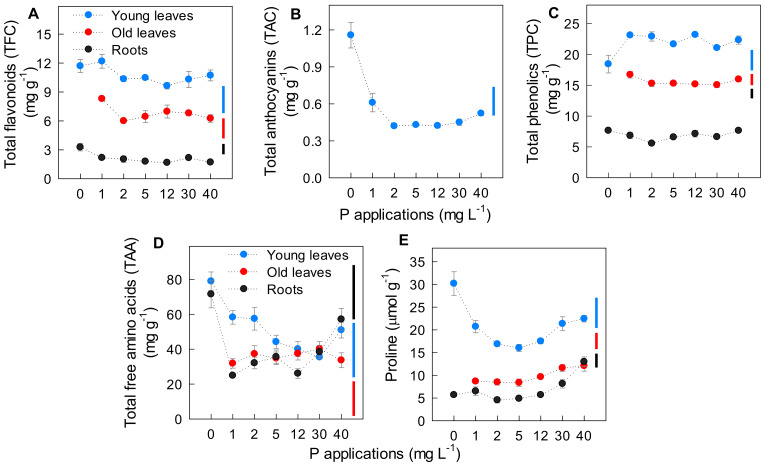
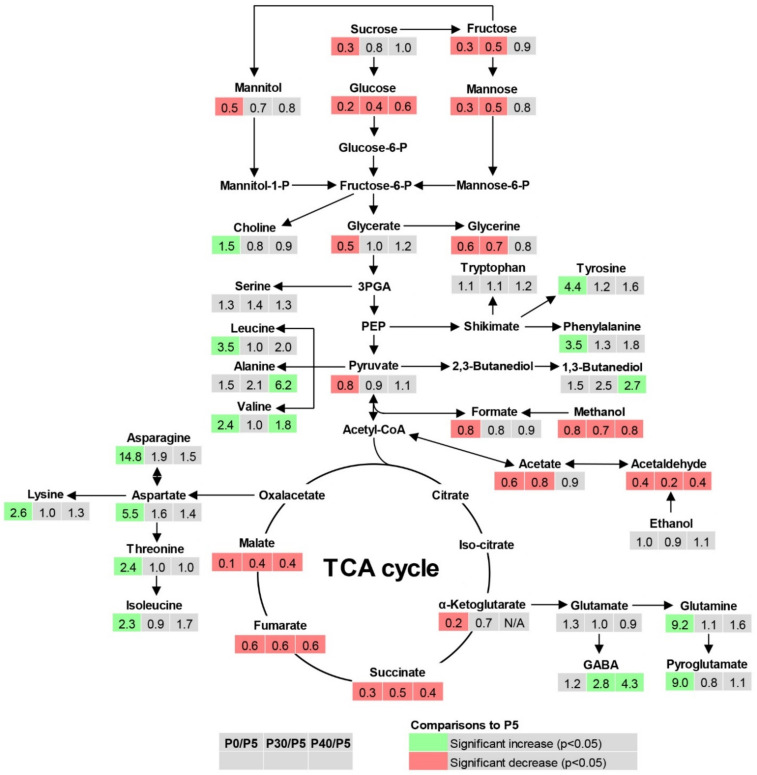
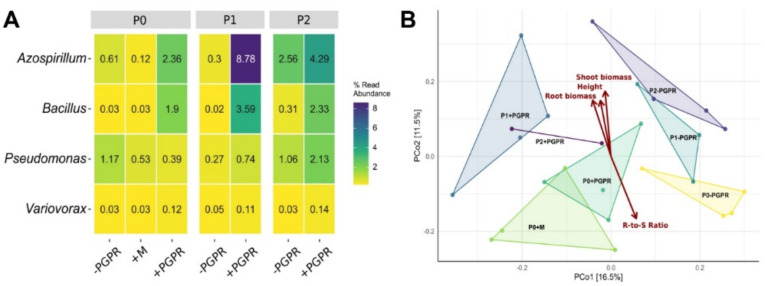
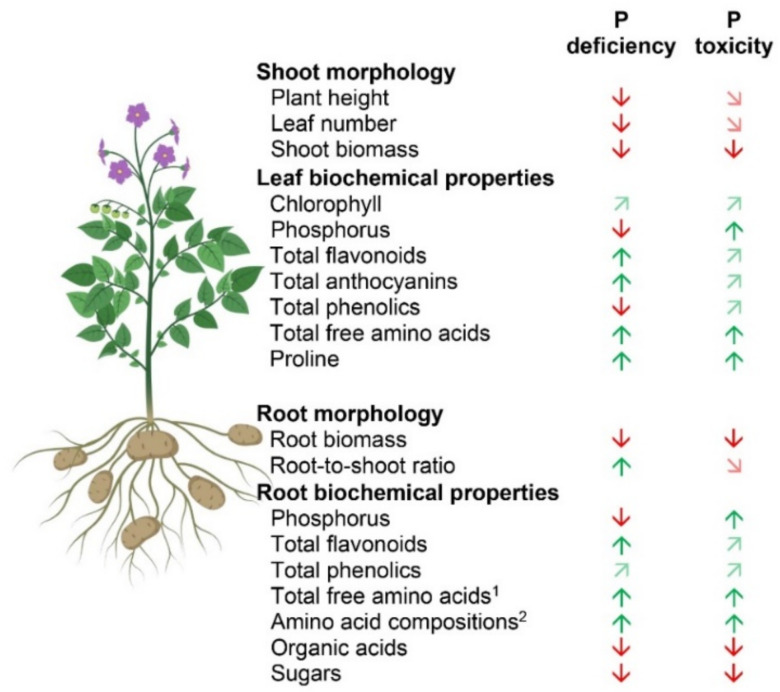
Low phosphorus (P) availability is a major limiting factor for potatoes. P fertilizer is applied to enhance P availability; however, it may become toxic when plants accumulate at high concentrations. Therefore, it is necessary to gain more knowledge of the morphological and biochemical processes associated with P deficiency and toxicity for potatoes, as well as to explore an alternative approach to ameliorate the P deficiency condition. A comprehensive study was conducted (I) to assess plant morphology, mineral allocation, and metabolites of potatoes in response to P deficiency and toxicity; and (II) to evaluate the potency of plant growth-promoting rhizobacteria (PGPR) in improving plant biomass, P uptake, and metabolites at low P levels. The results revealed a reduction in plant height and biomass by 60-80% under P deficiency compared to P optimum. P deficiency and toxicity conditions also altered the mineral concentration and allocation in plants due to nutrient imbalance. The stress induced by both P deficiency and toxicity was evident from an accumulation of proline and total free amino acids in young leaves and roots. Furthermore, root metabolite profiling revealed that P deficiency reduced sugars by 50-80% and organic acids by 20-90%, but increased amino acids by 1.5-14.8 times. However, the effect of P toxicity on metabolic changes in roots was less pronounced. Under P deficiency, PGPR significantly improved the root and shoot biomass, total root length, and root surface area by 32-45%. This finding suggests the potency of PGPR inoculation to increase potato plant tolerance under P deficiency.
低磷(P)供应是马铃薯的主要限制因素。施用磷肥可提高磷的有效性,但当植物积累到高浓度时,可能会变得有毒。因此,有必要深入了解与马铃薯缺磷和磷中毒相关的形态和生化过程,并探索改善缺磷状况的替代方法。本研究全面评估了(I)植物形态、矿质分配和磷缺乏和毒性下马铃薯的代谢物;(II)植物促生菌(PGPR)在低磷水平下提高植物生物量、磷吸收和代谢物的能力。结果表明,与磷最适条件相比,缺磷条件下植物高度和生物量降低了 60-80%。由于养分失衡,缺磷和磷中毒条件也改变了植物的矿质浓度和分配。缺磷和磷中毒引起的胁迫在幼叶和根中积累脯氨酸和总游离氨基酸中表现明显。此外,根代谢物分析表明,缺磷降低了 50-80%的还原糖和 20-90%的有机酸,但增加了 1.5-14.8 倍的氨基酸。然而,磷中毒对根代谢变化的影响不太明显。在缺磷条件下,PGPR 可显著提高根和地上部生物量、总根长和根表面积 32-45%。这一发现表明 PGPR 接种可提高马铃薯植物对缺磷的耐受性。