Plant Cell and Developmental Biology, Biological and Environmental Sciences and Engineering (BESE), King Abdullah University of Science and Technology (KAUST), Thuwal 23955-6900, Saudi Arabia.
Genes (Basel). 2021 May 10;12(5):709. doi: 10.3390/genes12050709.
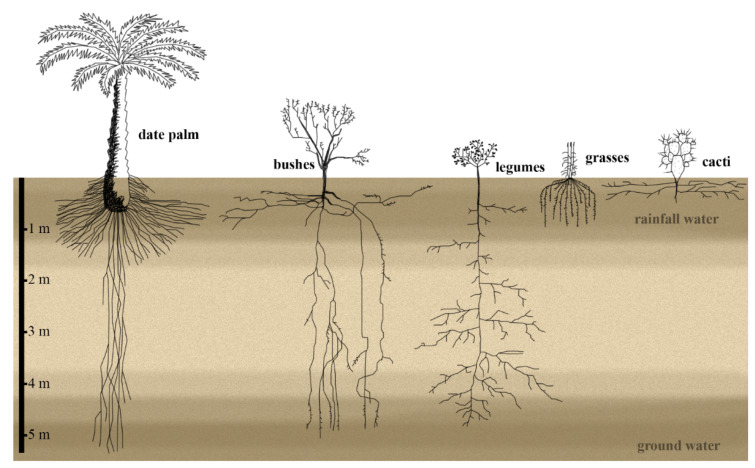
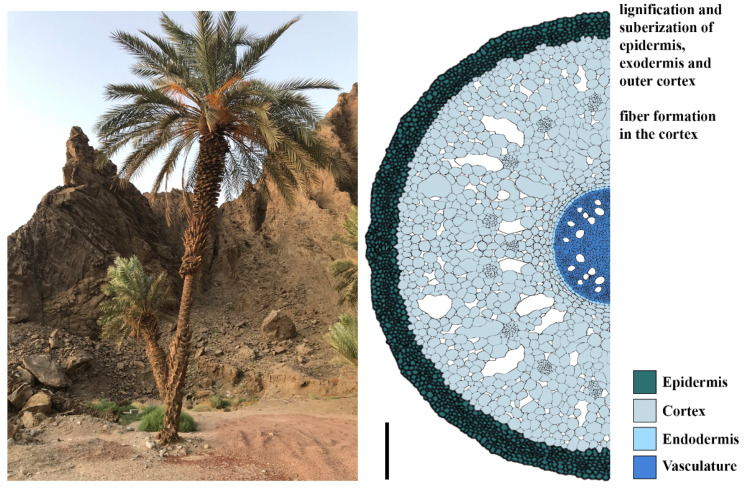
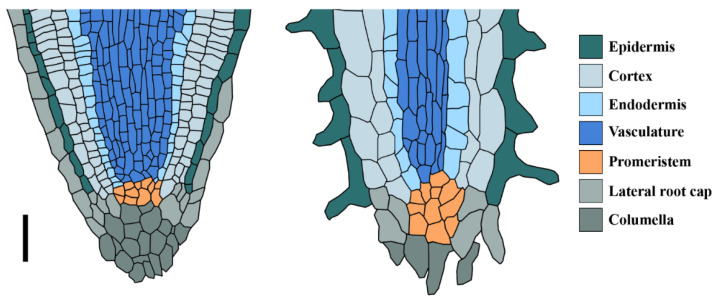
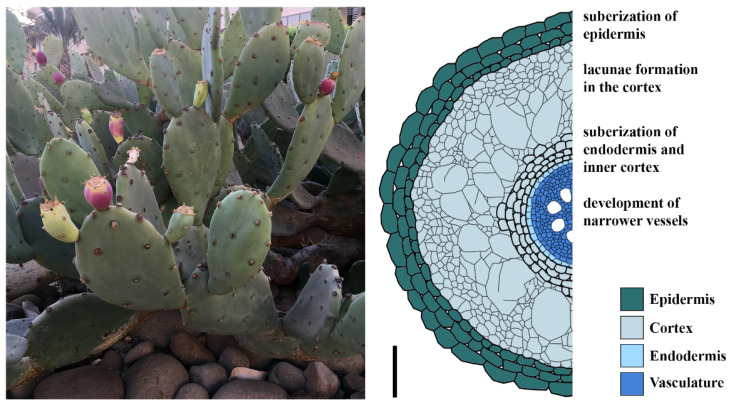
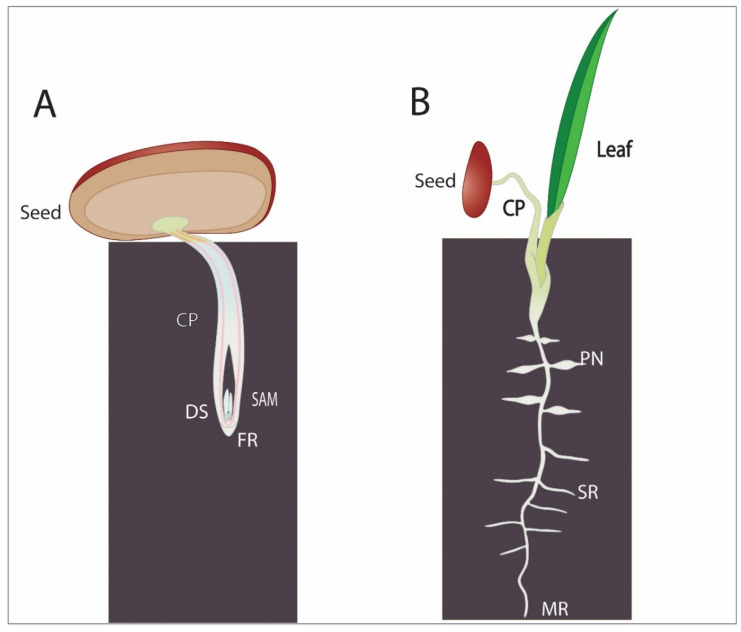
Plants, as sessile organisms, have evolved a remarkable developmental plasticity to cope with their changing environment. When growing in hostile desert conditions, plants have to grow and thrive in heat and drought. This review discusses how desert plants have adapted their root system architecture (RSA) to cope with scarce water availability and poor nutrient availability in the desert soil. First, we describe how some species can survive by developing deep tap roots to access the groundwater while others produce shallow roots to exploit the short rain seasons and unpredictable rainfalls. Then, we discuss how desert plants have evolved unique developmental programs like having determinate meristems in the case of cacti while forming a branched and compact root system that allows efficient water uptake during wet periods. The remote germination mechanism in date palms is another example of developmental adaptation to survive in the dry and hot desert surface. Date palms have also designed non-gravitropic secondary roots, termed pneumatophores, to maximize water and nutrient uptake. Next, we highlight the distinct anatomical features developed by desert species in response to drought like narrow vessels, high tissue suberization, and air spaces within the root cortex tissue. Finally, we discuss the beneficial impact of the microbiome in promoting root growth in desert conditions and how these characteristics can be exploited to engineer resilient crops with a greater ability to deal with salinity induced by irrigation and with the increasing drought caused by global warming.
植物作为固着生物,已经进化出了非凡的发育可塑性,以适应不断变化的环境。当在恶劣的沙漠环境中生长时,植物必须在高温和干旱条件下生长和茁壮生长。这篇综述讨论了沙漠植物如何调整其根系结构 (RSA) 以适应沙漠土壤中有限的水分和养分供应。首先,我们描述了一些物种如何通过开发深根系来获取地下水,而另一些物种则通过产生浅根系来利用短暂的雨季和不可预测的降雨来生存。然后,我们讨论了沙漠植物如何进化出独特的发育程序,例如仙人掌具有定态分生组织,而形成分支和紧凑的根系以在湿润期高效吸收水分。在干旱和炎热的沙漠表面生存的另一个发育适应的例子是枣椰树的远程萌发机制。枣椰树还设计了非向地性次生根,称为通气根,以最大限度地吸收水分和养分。接下来,我们强调了沙漠物种为应对干旱而形成的独特解剖特征,如狭窄的导管、组织高度木质化和根皮层组织内的气腔。最后,我们讨论了微生物组在促进沙漠条件下根系生长方面的有益影响,以及如何利用这些特征来培育具有更高耐盐能力的抗逆作物,以应对灌溉引起的盐分和全球变暖导致的干旱加剧。