Pohl Philip Manuel, Kümmel Frank, Schunk Christopher, Serrano-Munoz Itziar, Markötter Henning, Göken Mathias, Höppel Heinz Werner
Materials Science & Engineering, Institute I, Friedrich-Alexander-Universität Erlangen-Nürnberg (FAU), Martensstr. 5, 91058 Erlangen, Germany.
Joint Institute for New Materials and Processes (ZMP), Friedrich-Alexander-Universität Erlangen-Nürnberg (FAU), Dr.-Mack-Straße 81, 90762 Fürth, Germany.
Materials (Basel). 2021 May 14;14(10):2564. doi: 10.3390/ma14102564.
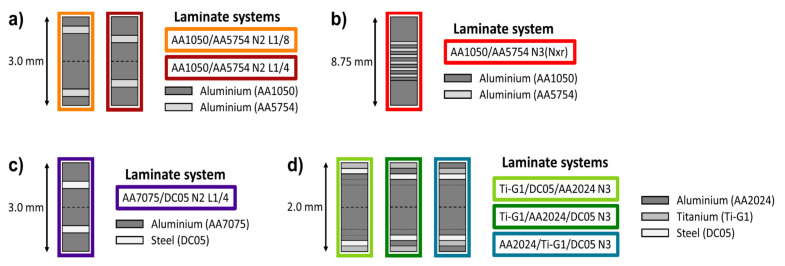
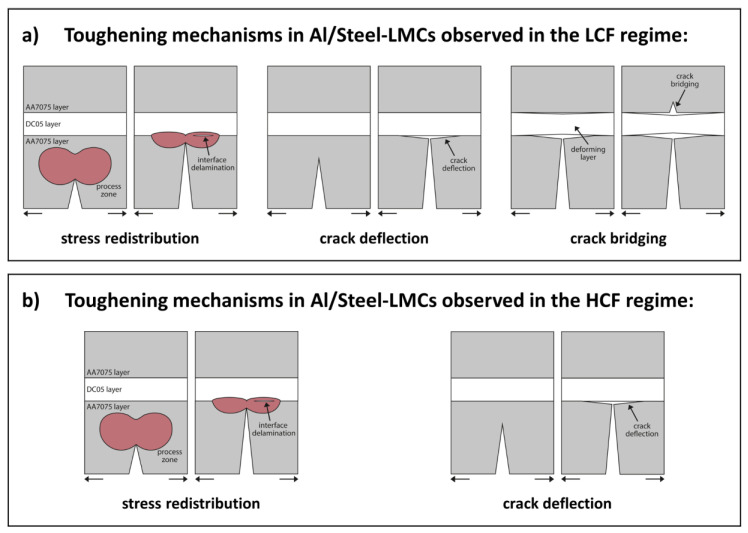
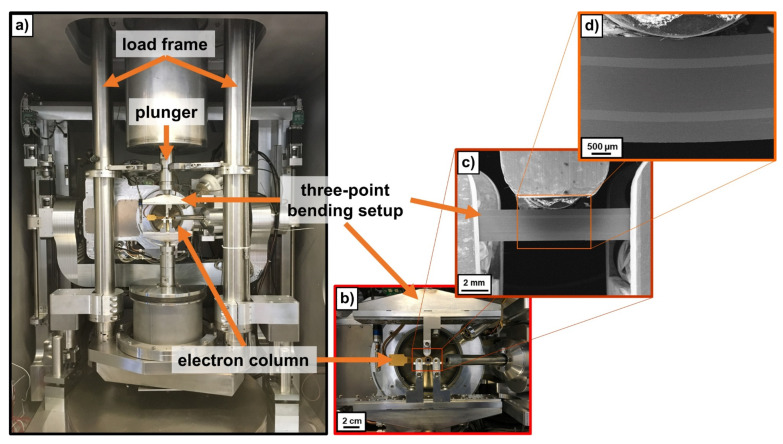
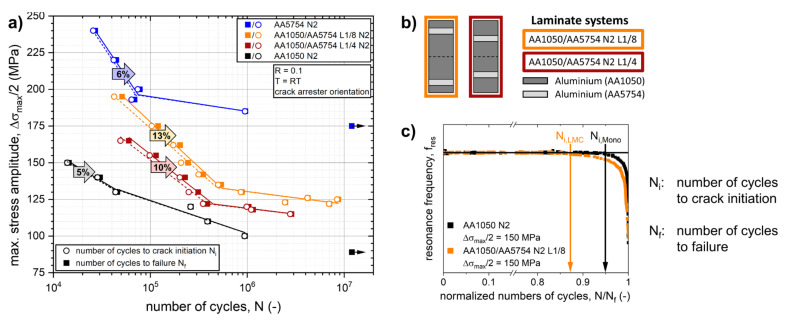
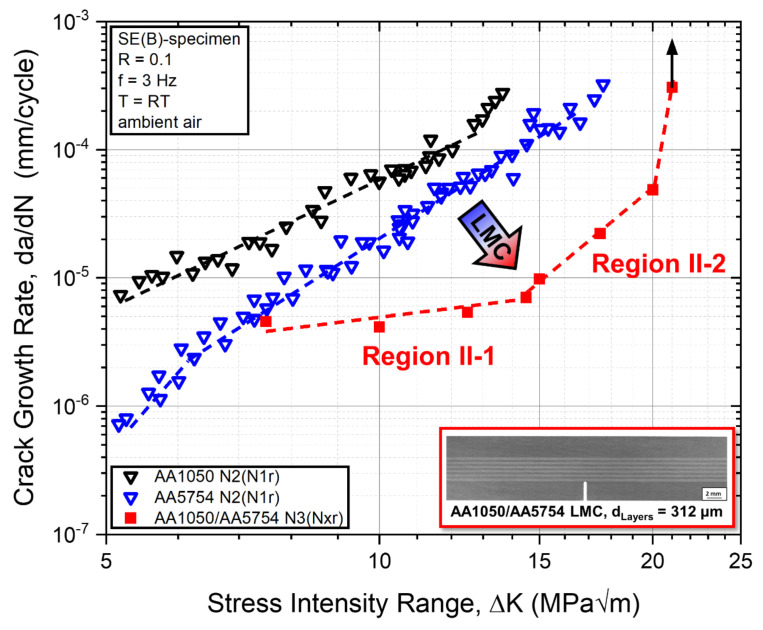
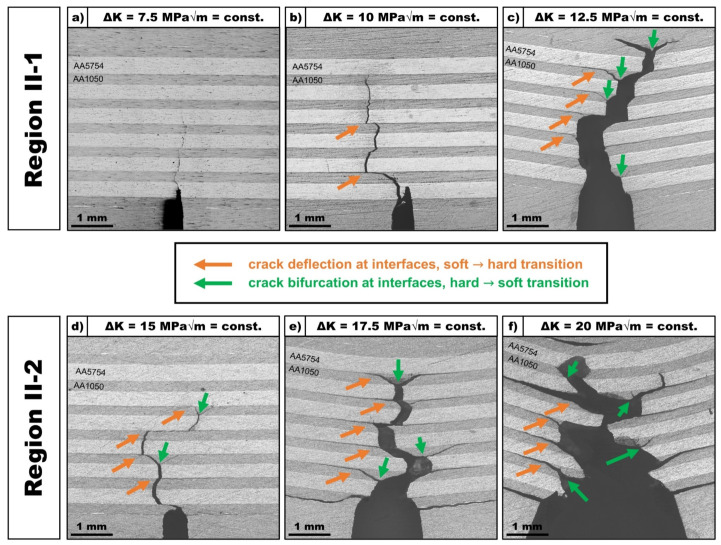
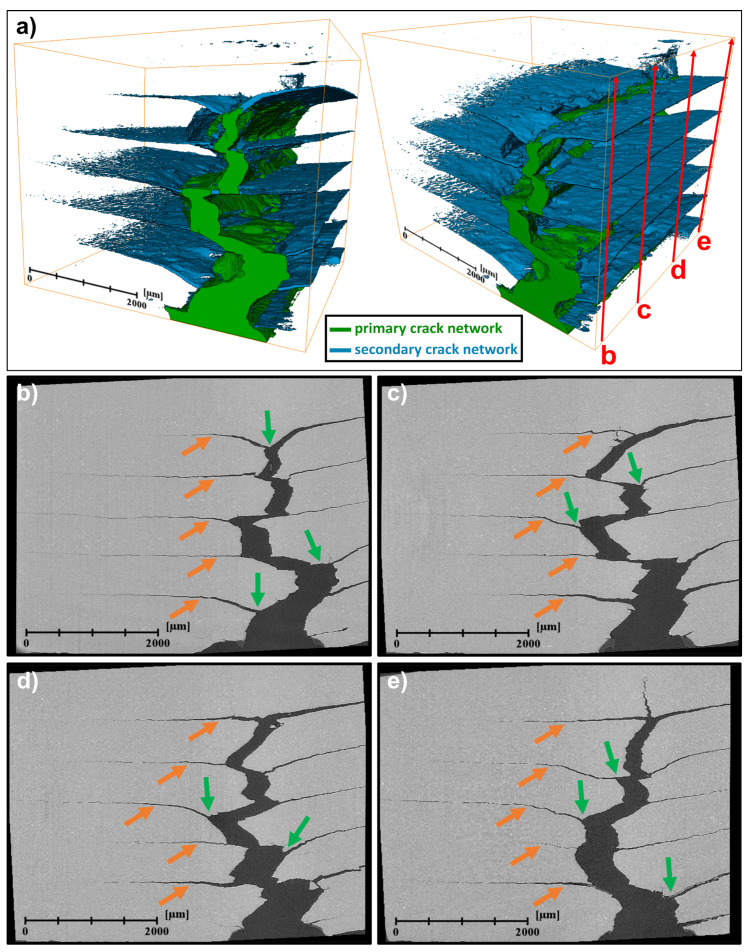
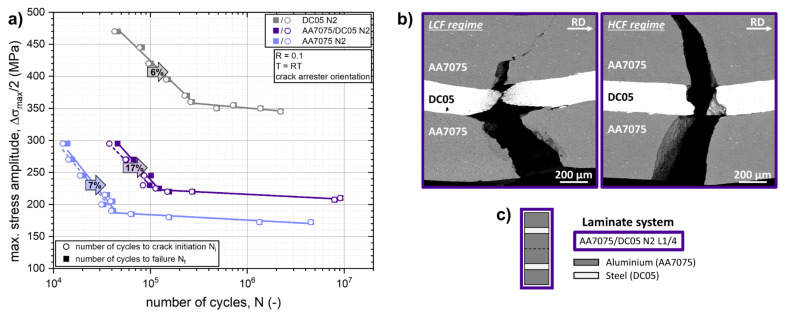
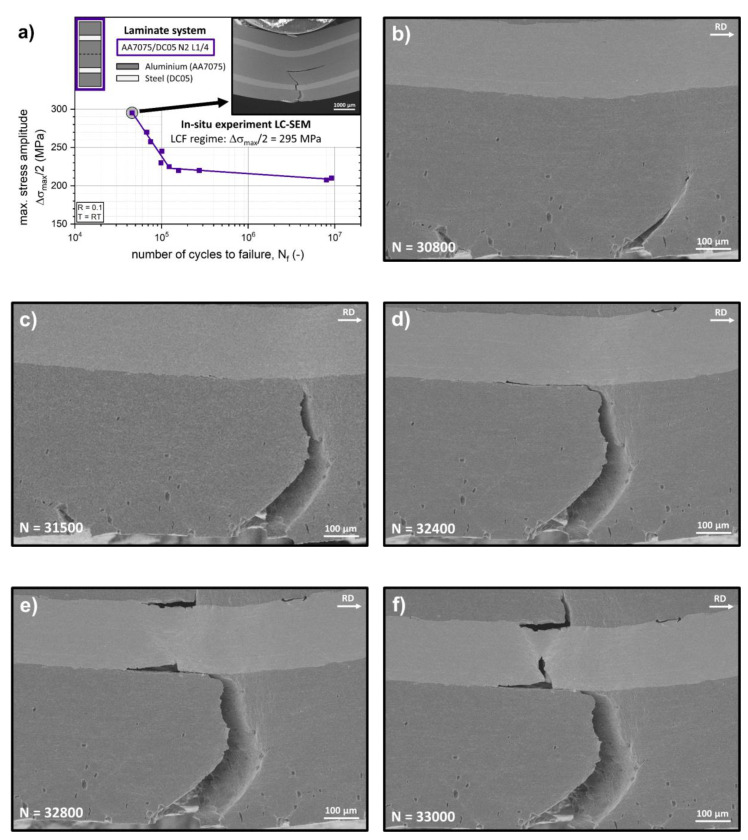
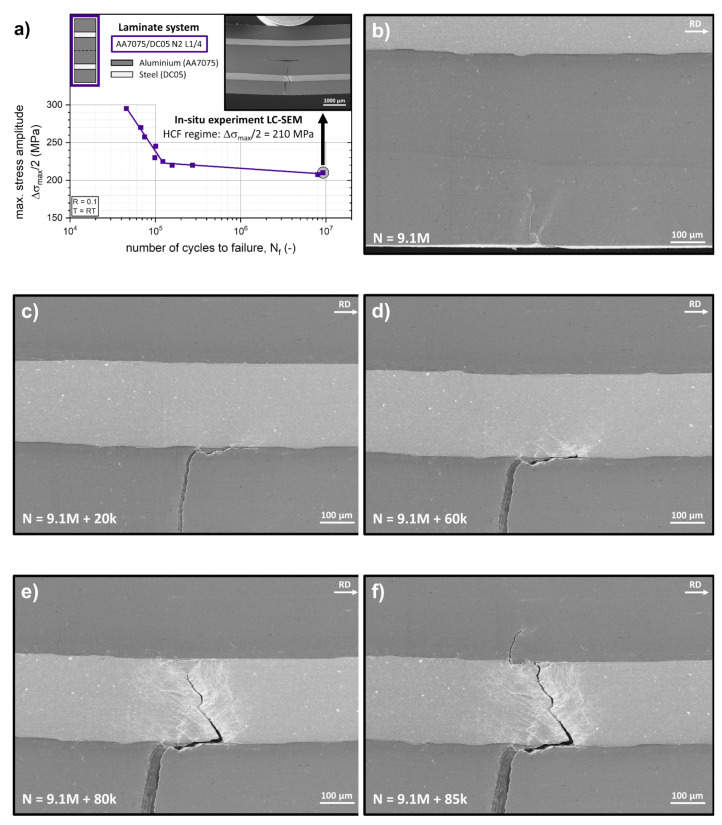
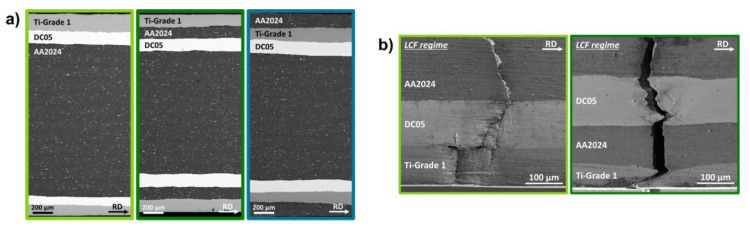
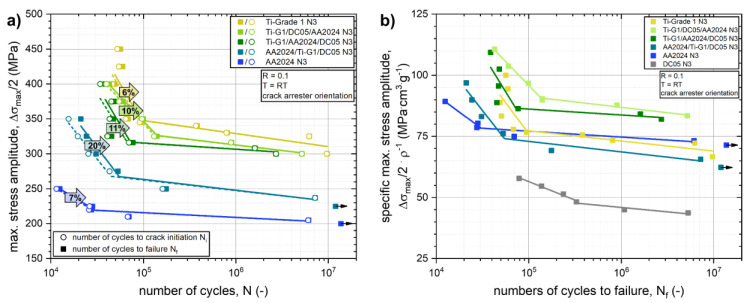
The influence of gradients in hardness and elastic properties at interfaces of dissimilar materials in laminated metallic composites (LMCs) on fatigue crack propagation is investigated experimentally for three different LMC systems: Al/Al-LMCs with dissimilar yield stress and Al/Steel-LMCs as well as Al/Ti/Steel-LMCs with dissimilar yield stress and Young's modulus, respectively. The damage tolerant fatigue behavior in Al/Al-LMCs with an alternating layer structure is enhanced significantly compared to constituent monolithic materials. The prevalent toughening mechanisms at the interfaces are identified by microscopical methods and synchrotron X-ray computed tomography. For the soft/hard transition, crack deflection mechanisms at the vicinity of the interface are observed, whereas crack bifurcation mechanisms can be seen for the hard/soft transition. The crack propagation in Al/Steel-LMCs was studied conducting in-situ scanning electron microscope (SEM) experiments in the respective low cycle fatigue (LCF) and high cycle fatigue (HCF) regimes of the laminate. The enhanced resistance against crack propagation in the LCF regime is attributed to the prevalent stress redistribution, crack deflection, and crack bridging mechanisms. The fatigue properties of different Al/Ti/Steel-LMC systems show the potential of LMCs in terms of an appropriate selection of constituents in combination with an optimized architecture. The results are also discussed under the aspect of tailored lightweight applications subjected to cyclic loading.
针对三种不同的层状金属复合材料(LMC)系统,通过实验研究了层状金属复合材料(LMC)中不同材料界面处硬度和弹性性能梯度对疲劳裂纹扩展的影响:分别具有不同屈服应力的Al/Al-LMC、Al/钢-LMC以及具有不同屈服应力和杨氏模量的Al/Ti/钢-LMC。与组成的单一材料相比,具有交替层结构的Al/Al-LMC中的损伤容限疲劳行为得到显著增强。通过显微镜方法和同步加速器X射线计算机断层扫描确定了界面处普遍存在的增韧机制。对于软/硬转变,在界面附近观察到裂纹偏转机制,而对于硬/软转变,则可以看到裂纹分叉机制。通过在层压板各自的低周疲劳(LCF)和高周疲劳(HCF)状态下进行原位扫描电子显微镜(SEM)实验,研究了Al/钢-LMC中的裂纹扩展。在LCF状态下对裂纹扩展的增强抗性归因于普遍存在的应力重新分布、裂纹偏转和裂纹桥接机制。不同Al/Ti/钢-LMC系统的疲劳性能表明,通过适当选择成分并结合优化的结构,LMC具有潜力。还从承受循环载荷的定制轻量化应用的角度讨论了结果。