Teixeira Francisca S, Vidigal Susana S M P, Pimentel Lígia L, Costa Paula T, Pintado Manuela E, Rodríguez-Alcalá Luís M
Escola Superior de Biotecnologia, CBQF-Centro de Biotecnologia e Química Fina-Laboratório Associado, Universidade Católica Portuguesa, Rua Diogo Botelho 1327, 4169-005 Porto, Portugal.
Foods. 2021 May 19;10(5):1125. doi: 10.3390/foods10051125.
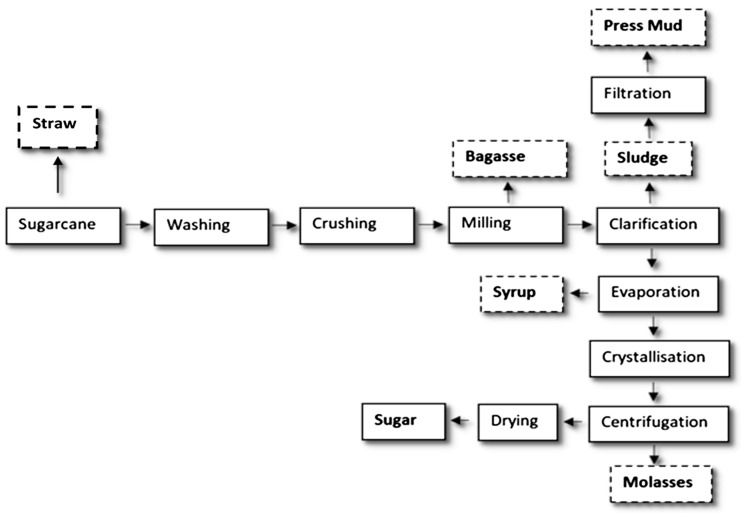
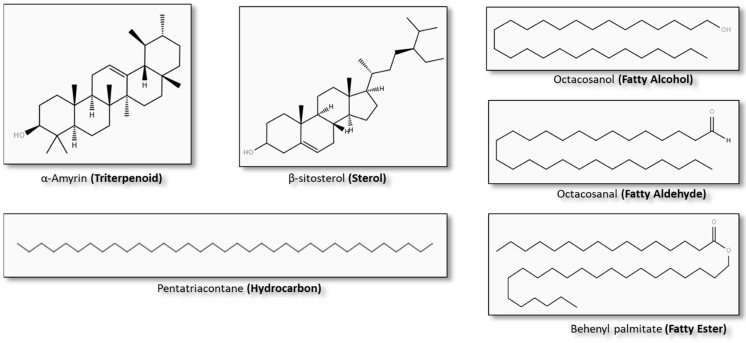
Most of the global sugar and ethanol supply trade comes from the harvesting of (i.e., sugarcane). Its industrial processing results in numerous by-products and waste streams, such as tops, straw, filter cake, molasses and bagasse. The recovery of lipids (i.e., octacosanol, phytosterols, long-chain aldehydes and triterpenoids) from these residues is an excellent starting point for the development of new products for various application fields, such as health and well-being, representing an important feature of the circular economy. By selecting green scalable extraction procedures, industry can reduce its environmental impact. Refluxed ethanol extraction methods have been demonstrated to meet these characteristics. On the other hand, effective non-solvent methodologies such as molecular distillation and supercritical CO extraction can fractionate lipids based on high temperature and pressure application with similar yields. Sugarcane lipophilic extracts are usually analyzed through gas chromatography (GC) and liquid chromatography (LC) techniques. In many cases, the identification of such compounds involves the development of high-temperature GC-MS/FID techniques. On the other hand, for the identification and quantification of thermolabile lipids, LC-MS techniques are suitable for the separation and identification of major lipid classes. Generically, its composition includes terpenes, phytosterols, tocopherol, free fatty acids, fatty alcohols, wax esters, triglycerides, diglycerides and monoglycerides. These compounds are already known for their interesting application in various fields such as pharma and cosmetics due to their anti-hypercholesterolemic, anti-hyperglycemic, antioxidant and anti-inflammatory properties.
全球大部分糖和乙醇供应贸易都来自(即甘蔗)的收割。其工业加工会产生大量副产品和废物流,如蔗梢、秸秆、滤饼、糖蜜和甘蔗渣。从这些残渣中回收脂质(即二十八烷醇、植物甾醇、长链醛和三萜类化合物)是开发适用于健康和福祉等各个应用领域新产品的绝佳起点,这代表了循环经济的一个重要特征。通过选择绿色可扩展的提取程序,行业可以减少其对环境的影响。回流乙醇提取方法已被证明符合这些特点。另一方面,有效的非溶剂方法,如分子蒸馏和超临界CO₂萃取,可以在高温高压条件下对脂质进行分馏,产率相似。甘蔗亲脂性提取物通常通过气相色谱(GC)和液相色谱(LC)技术进行分析。在许多情况下,此类化合物的鉴定涉及高温GC-MS/FID技术的开发。另一方面,对于热不稳定脂质的鉴定和定量,LC-MS技术适用于主要脂质类别的分离和鉴定。一般来说,其成分包括萜类、植物甾醇、生育酚、游离脂肪酸、脂肪醇、蜡酯、甘油三酯、甘油二酯和甘油单酯。由于这些化合物具有抗高胆固醇、抗高血糖、抗氧化和抗炎特性,它们在制药和化妆品等各个领域的有趣应用已为人所知。