Alcohol, Tobacco and Other Drug Research Unit, South African Medical Research Council, Tygerberg 7505, South Africa.
Division of Addiction Psychiatry, Department of Psychiatry & Mental Health, University of Cape Town, Cape Town 7701, South Africa.
Int J Environ Res Public Health. 2021 May 19;18(10):5449. doi: 10.3390/ijerph18105449.
South Africa temporarily banned alcohol and tobacco sales for about 20 weeks during the COVID-19 lockdown. We described changes in alcohol and tobacco consumption after implementation of these restrictions among a small number of participants in a tuberculosis treatment cohort.
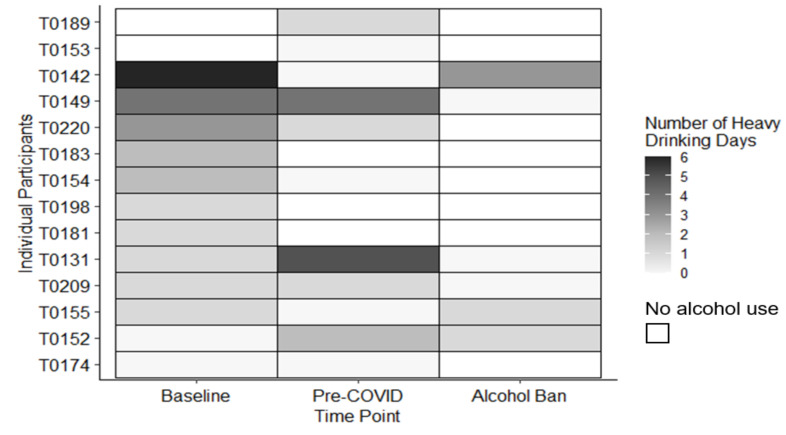
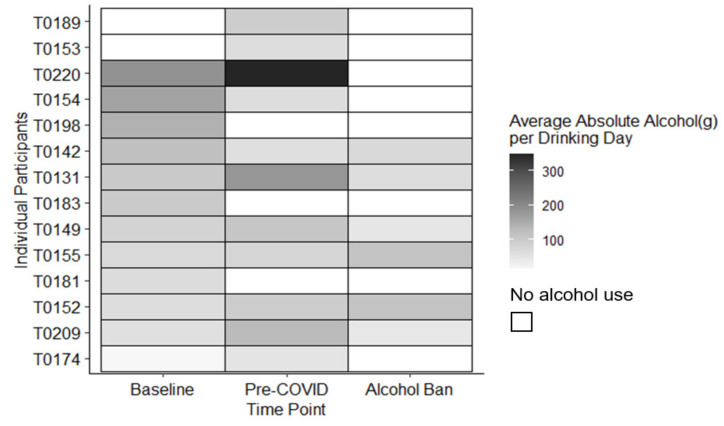
The timeline follow-back procedure and Fägerstrom test for nicotine dependence was used to collect monthly alcohol and tobacco use information. We report changes in heavy drinking days (HDD), average amount of absolute alcohol (AA) consumed per drinking day, and cigarettes smoked daily during the alcohol and tobacco ban compared to use prior to the ban.
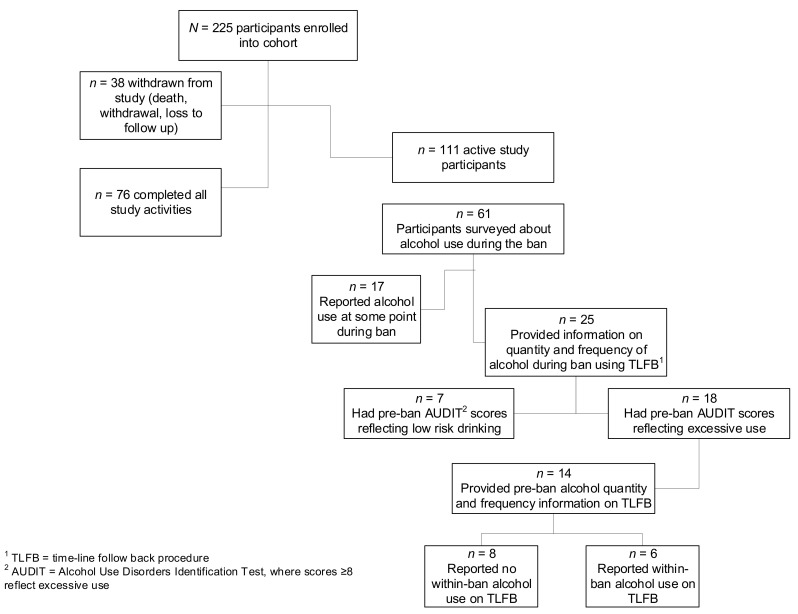
Of the 61 participants for whom we have pre-ban and within-ban alcohol use information, 17 (27.9%) reported within-ban alcohol use. On average, participants reported one less HDD per fortnight (interquartile range (IQR): -4, 1), but their amount of AA consumed increased by 37.4 g per drinking occasion (IQR: -65.9 g, 71.0 g). Of 53 participants who reported pre-ban tobacco use, 17 (32.1%) stopped smoking during the ban. The number of participants smoking >10 cigarettes per day decreased from 8 to 1.
From these observations, we hypothesize that policies restricting alcohol and tobacco availability seem to enable some individuals to reduce their consumption. However, these appear to have little effect on the volume of AA consumed among individuals with more harmful patterns of drinking in the absence of additional behavior change interventions.
在 COVID-19 封锁期间,南非暂时禁止销售酒精和烟草约 20 周。我们描述了在结核病治疗队列中的一小部分参与者中,在实施这些限制后,酒精和烟草消费的变化。
使用时间线回溯程序和尼古丁依赖 Fägerstrom 测试每月收集酒精和烟草使用信息。我们报告了在酒精和烟草禁令期间与禁令前相比,重度饮酒日(HDD)、每天饮酒日消耗的绝对酒精量(AA)和每天吸烟量的变化。
在我们有禁令前和禁令内酒精使用信息的 61 名参与者中,有 17 名(27.9%)报告了禁令内的酒精使用。平均而言,参与者每两周报告少喝一天(四分位距(IQR):-4,1),但他们每次饮酒时消耗的 AA 增加了 37.4 克(IQR:-65.9 克,71.0 克)。在报告禁令前吸烟的 53 名参与者中,有 17 名(32.1%)在禁令期间停止吸烟。每天吸烟超过 10 支的参与者人数从 8 人减少到 1 人。
从这些观察结果中,我们假设限制酒精和烟草供应的政策似乎使一些人能够减少他们的消费。然而,在没有额外行为改变干预措施的情况下,这些政策对更有害饮酒模式的个体消耗的 AA 量影响不大。