Cohen Isabel C, Cohenour Emry R, Harnett Kristen G, Schuh Sonya M
Department of Biology, Saint Mary's College of California, Moraga, CA 94575, USA.
Department of Cell and Molecular Biology, California State University, East Bay, Hayward, CA 94542, USA.
Int J Mol Sci. 2021 May 19;22(10):5363. doi: 10.3390/ijms22105363.
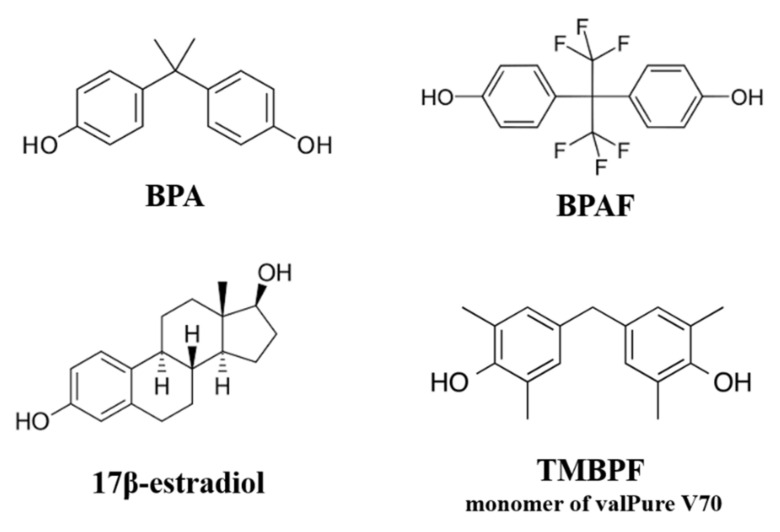
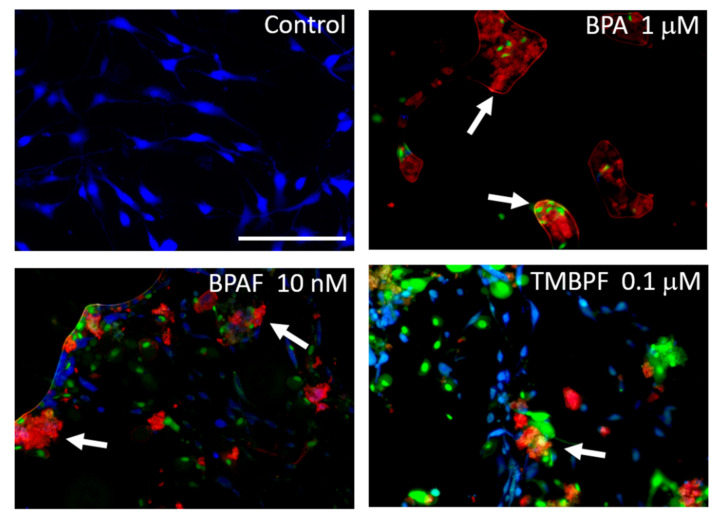
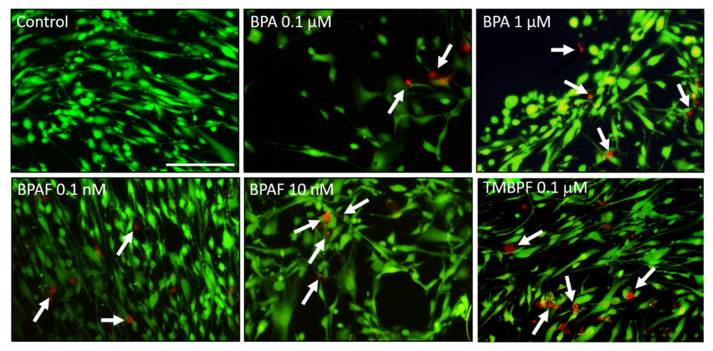
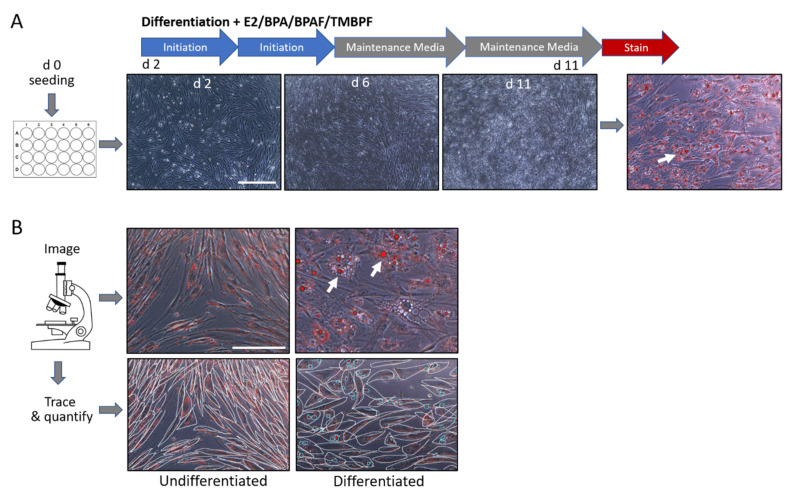
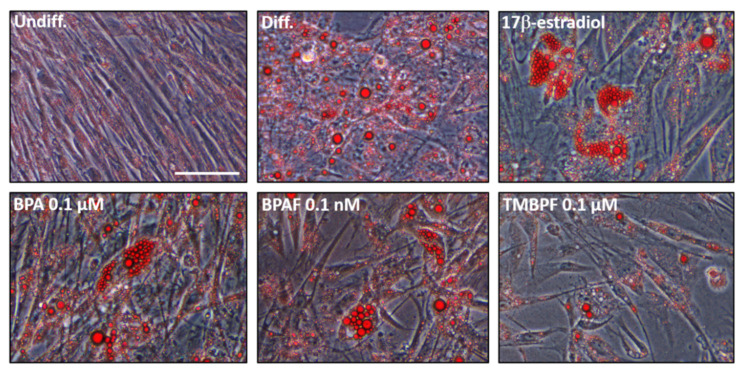
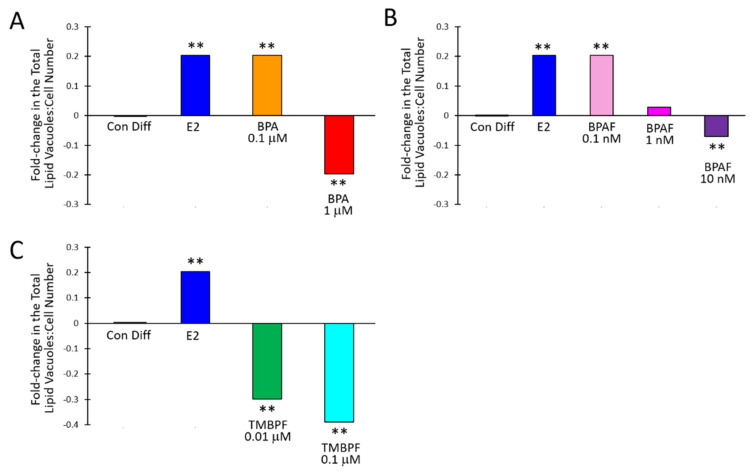
Bisphenol A (BPA) is an endocrine-disrupting chemical used in the production of plastics, and is linked to developmental, reproductive, and metabolic disorders including obesity. Manufacturers have begun using 'BPA-free' alternatives instead of BPA in many consumer products. However, these alternatives have had much less testing and oversight, yet they are already being mass-produced and used across industries from plastics to food-contact coatings. Here, we used human female adipose-derived stem cells (hASCs), a type of adult mesenchymal stem cell, to compare the effects of BPA and BPA alternatives on adipogenesis or fat cell development . We focused on two commonly used BPA replacements, bisphenol AF (BPAF) and tetramethyl bisphenol F (TMBPF; monomer of the new valPure V70 food-contact coating). Human ASCs were differentiated into adipocytes using chemically defined media in the presence of control differentiation media with and without 17β-estradiol (E2; 10 μM), or with increasing doses of BPA (0, 0.1 and 1 μM), BPAF (0, 0.1, 1 and 10 nM), or TMBPF (0, 0.01 and 0.1 μM). After differentiation, the cells were stained and imaged to visualize and quantify the accumulation of lipid vacuoles and number of developing fat cells. Treated cells were also examined for cell viability and apoptosis (programmed cell death) using the respective cellular assays. Similar to E2, BPA at 0.1 μM and BPAF at 0.1 nM, significantly increased adipogenesis and lipid production by 20% compared to control differentiated cells (based on total lipid vacuole number to cell number ratios), whereas higher levels of BPA and BPAF significantly decreased adipogenesis ( < 0.005). All tested doses of TMBPF significantly reduced adipogenesis and lipid production by 30-40%, likely at least partially through toxic effects on stem cells, as viable cell numbers decreased and apoptosis levels increased throughout differentiation. These findings indicate that low, environmentally-relevant doses of BPA, BPAF, and TMBPF have significant effects on fat cell development and lipid accumulation, with TMBPF having non-estrogenic, anti-adipogenic effects. These and other recent results may provide a potential cellular mechanism between exposure to bisphenols and human obesity, and underscore the likely impact of these chemicals on fat development in vivo.
双酚A(BPA)是一种用于塑料生产的内分泌干扰化学物质,与包括肥胖症在内的发育、生殖和代谢紊乱有关。制造商已开始在许多消费品中使用“不含双酚A”的替代品来取代双酚A。然而,这些替代品的测试和监管要少得多,但它们已经在从塑料到食品接触涂层的各个行业中大规模生产和使用。在这里,我们使用人类女性脂肪来源干细胞(hASC),一种成人间充质干细胞,来比较双酚A和双酚A替代品对脂肪生成或脂肪细胞发育的影响。我们重点研究了两种常用的双酚A替代品,双酚AF(BPAF)和四甲基双酚F(TMBPF;新型valPure V70食品接触涂层的单体)。在含有或不含有17β-雌二醇(E2;10 μM)的对照分化培养基存在下,或在添加递增剂量的双酚A(0、0.1和1 μM)、双酚AF(0、0.1、1和10 nM)或四甲基双酚F(0、0.01和0.1 μM)的情况下,使用化学成分明确的培养基将人类脂肪干细胞分化为脂肪细胞。分化后,对细胞进行染色和成像,以可视化和量化脂滴的积累以及发育中的脂肪细胞数量。还使用相应的细胞分析方法检测处理过的细胞的活力和凋亡(程序性细胞死亡)。与E2类似,0.1 μM的双酚A和0.1 nM的双酚AF与对照分化细胞相比,显著增加了20%的脂肪生成和脂质产生(基于总脂滴数与细胞数的比率),而更高水平的双酚A和双酚AF则显著降低了脂肪生成(P<0.005)。所有测试剂量的四甲基双酚F均显著降低了30 - 40%的脂肪生成和脂质产生,这可能至少部分是由于对干细胞的毒性作用,因为在整个分化过程中活细胞数量减少且凋亡水平增加。这些发现表明,与环境相关的低剂量双酚A、双酚AF和四甲基双酚F对脂肪细胞发育和脂质积累有显著影响,四甲基双酚F具有非雌激素、抗脂肪生成作用。这些以及其他近期结果可能为接触双酚类物质与人类肥胖之间提供一种潜在的细胞机制,并强调了这些化学物质对体内脂肪发育的可能影响。