Department of Mechatronic Engineering, Engineering School at the University of São Paulo, São Paulo 05508-010, Brazil.
Sensors (Basel). 2021 May 18;21(10):3501. doi: 10.3390/s21103501.
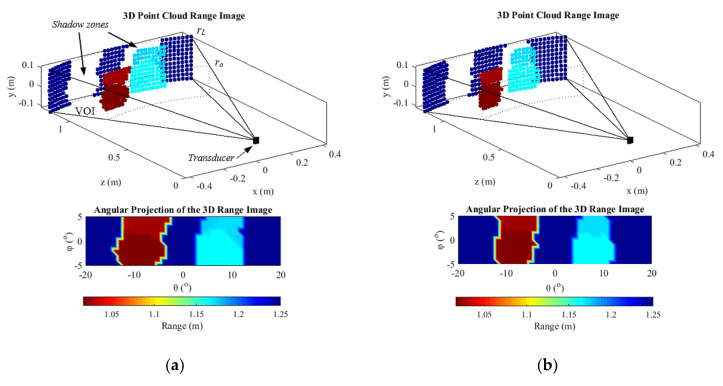
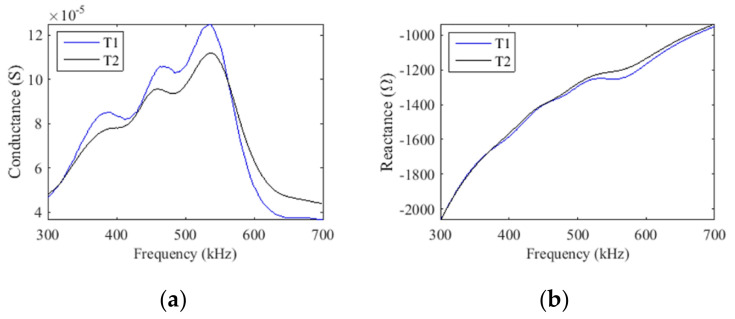
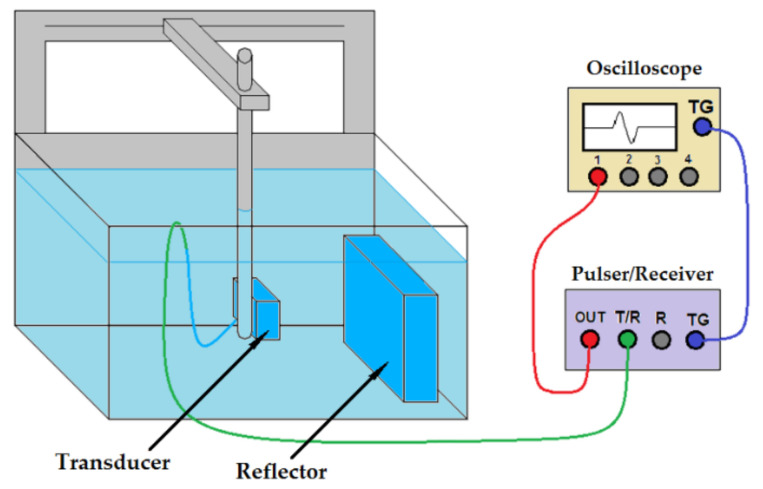
Most works that address 2-D array ultrasonic transducers for underwater applications are about the geometry aspects of the array and beamforming techniques to make 3-D images. They look for techniques to reduce the number of elements from wide apertures, maintaining the side lobes and the grating lobes at acceptable levels, but not many details about the materials and fabrication processes are described. To overcome these gaps, this paper presents in detail the development of a 2-D array ultrasonic transducer prototype that can individually emit and receive ultrasonic pulses to make 3-D images of immersed reflectors within a volume of interest (VOI). It consists of a 4 × 4 matrix ultrasonic transducer with a central frequency of 480 kHz. Each element is a 5 mm sided square cut into a 1-3 piezocomposite. The center-to-center distance of two contiguous elements (pitch) was chosen to be greater than half wavelength, to increase the amplitude of emission and reception of signals with larger elements. Artifacts generated by grating lobes were avoided by restricting the field of view in the azimuth and elevation directions within 40° × 40° and applying the sign coherence factor (SCF) filter. Two types of backing layer materials were tested, one with air and another made of epoxy resin, on the transducers called T1 and T2, respectively. The pulse echoes measured with T1 had 2.6 dB higher amplitude than those measured with T2, and the bandwidths were 54% and 50% @ -6 dB, respectively, exciting the element with a single rectangular negative pulse. The 3-D images obtained with full matrix capture (FMC) data sets acquired of objects from 0.2 to 1.15 m motivate the development of a 2-D array transducer with more elements, to increase the angular resolution and the range.
大多数涉及水下应用的 2-D 阵列超声换能器的工作都集中在阵列的几何形状和波束形成技术上,以生成 3-D 图像。它们寻找减少大孔径元件数量的技术,同时保持侧瓣和栅瓣在可接受的水平,但很少描述材料和制造工艺的细节。为了克服这些差距,本文详细介绍了一种 2-D 阵列超声换能器原型的开发,该原型可以单独发射和接收超声波脉冲,以生成感兴趣体积 (VOI) 内浸入式反射器的 3-D 图像。它由一个 4×4 矩阵超声换能器组成,中心频率为 480 kHz。每个元件都是一个边长为 5 毫米的正方形,切割成 1-3 型压电器件复合材料。选择两个相邻元件的中心到中心距离(节距)大于半波长,以增加大元件的发射和接收信号的幅度。通过将方位角和仰角方向的视场限制在 40°×40°内,并应用符号相干因子 (SCF) 滤波器,避免了栅瓣产生的伪影。两种类型的背衬材料在分别称为 T1 和 T2 的换能器上进行了测试,一种是空气,另一种是环氧树脂。用 T1 测量的脉冲回波的幅度比用 T2 测量的高出 2.6 dB,带宽分别为 54%和 50%@-6 dB,分别用单个矩形负脉冲激励元件。用全矩阵捕获 (FMC) 数据集获得的 0.2 至 1.15 m 物体的 3-D 图像激发了开发更多元件的 2-D 阵列换能器的发展,以提高角分辨率和范围。