Tsai Cheng-Yu, Ko Huey-Jiun, Huang Chi-Ying F, Lin Ching-Yi, Chiou Shean-Jaw, Su Yu-Feng, Lieu Ann-Shung, Loh Joon-Khim, Kwan Aij-Lie, Chuang Tsung-Hsien, Hong Yi-Ren
Ph.D. Program in Environmental and Occupational Medicine, College of Medicine, Kaohsiung Medical University and National Health Research Institutes, Kaohsiung 807, Taiwan.
Department of Neurosurgery, Kaohsiung Medical University Hospital, Kaohsiung 807, Taiwan.
Life (Basel). 2021 May 18;11(5):451. doi: 10.3390/life11050451.
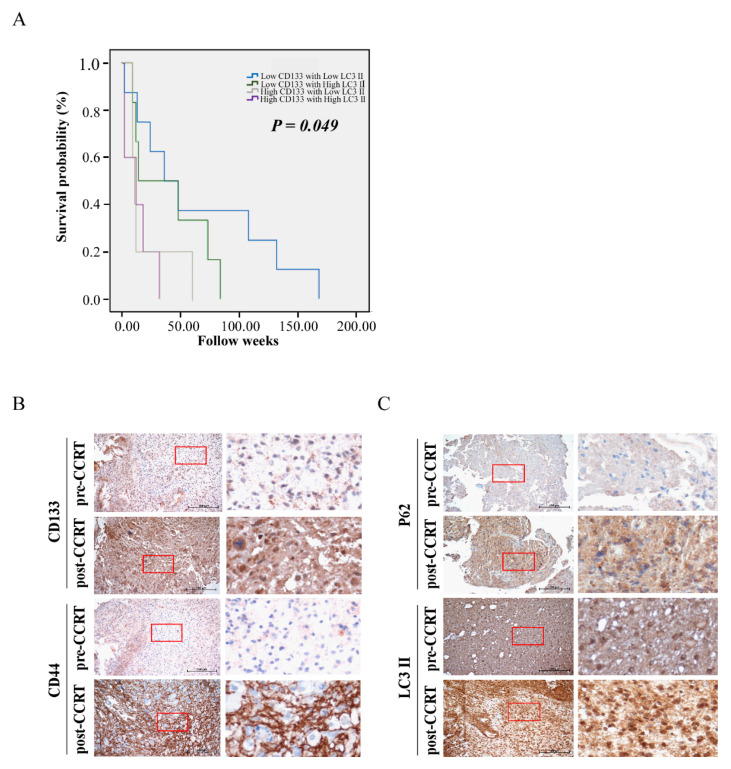
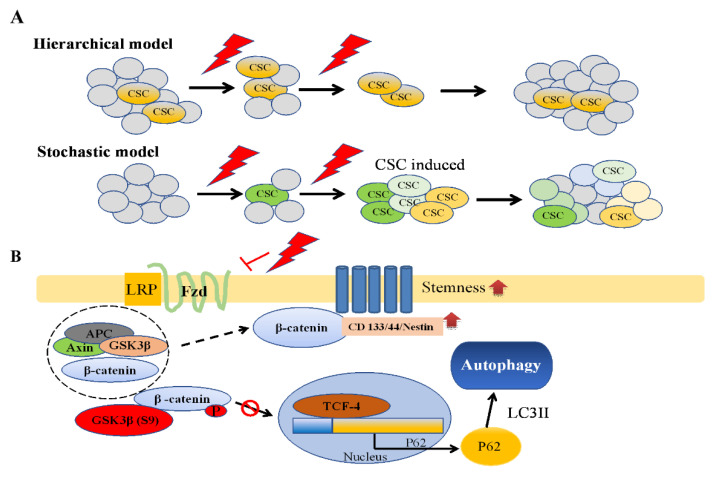
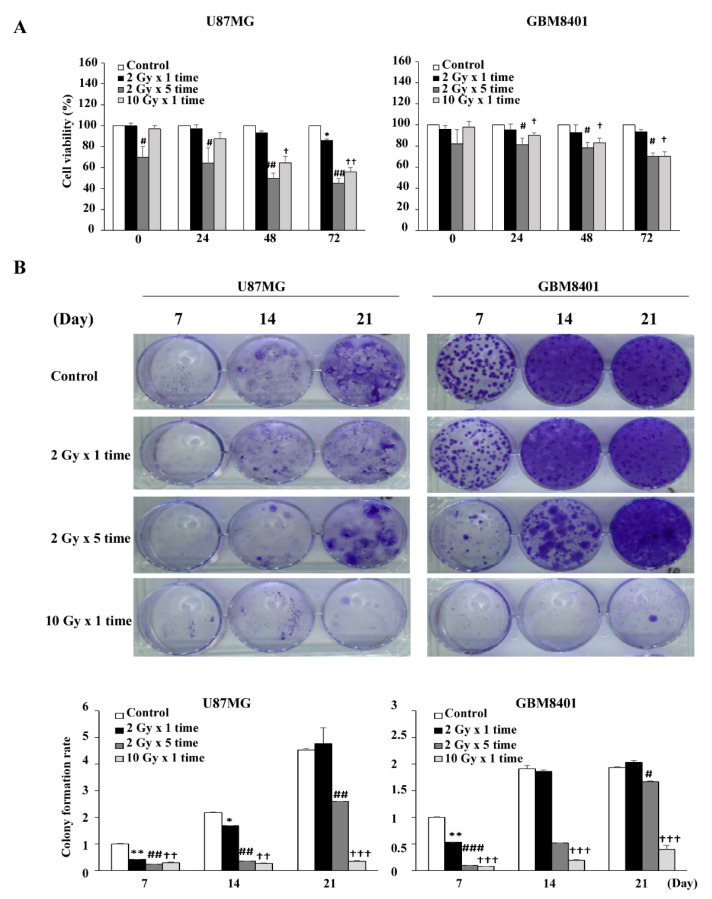
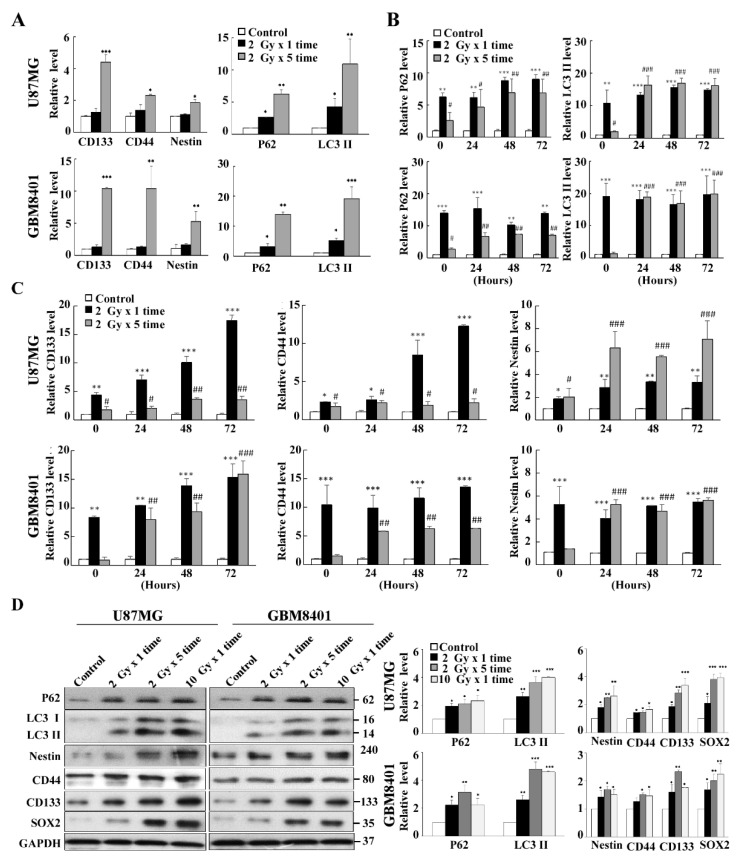
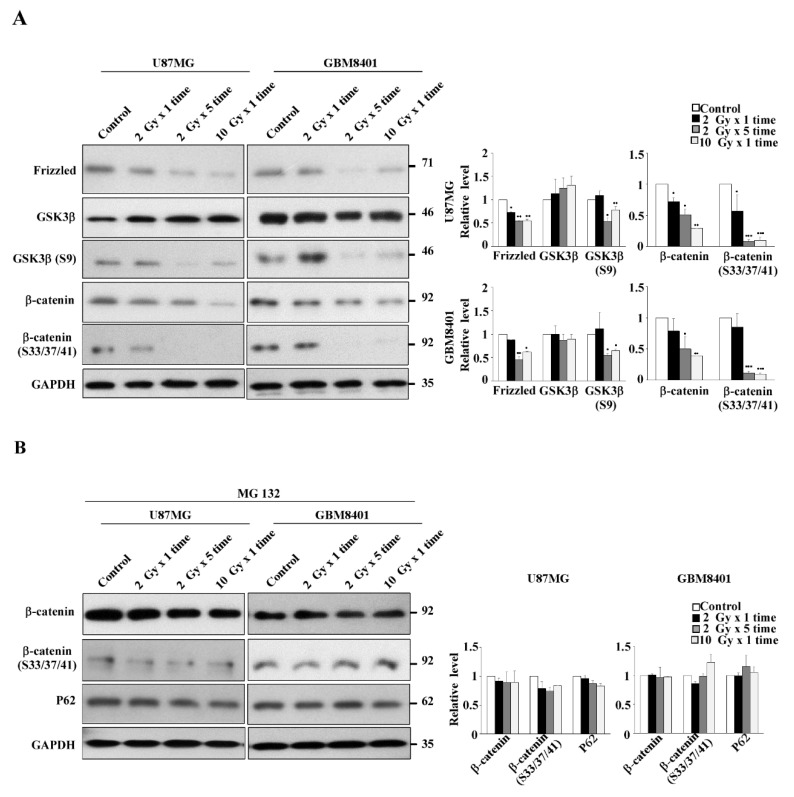
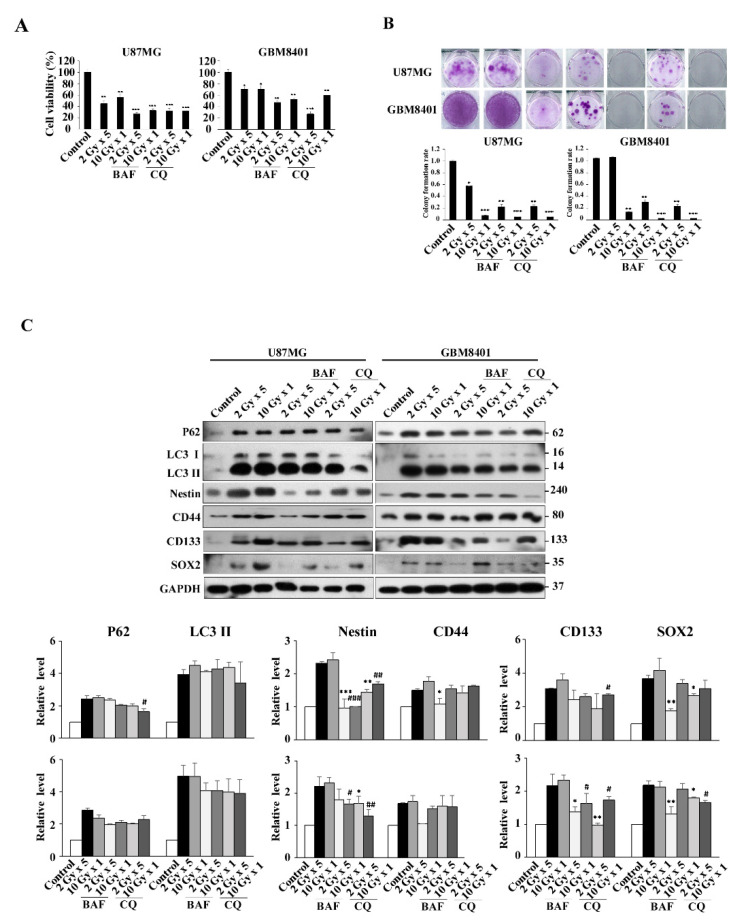
Therapeutic resistance in recurrent glioblastoma multiforme (GBM) after concurrent chemoradiotherapy (CCRT) is a challenging issue. Although standard fractionated radiation is essential to treat GBM, it has led to local recurrence along with therapy-resistant cells in the ionizing radiation (IR) field. Lines of evidence showed cancer stem cells (CSCs) play a vital role in therapy resistance in many cancer types, including GBM. However, the molecular mechanism is poorly understood. Here, we proposed that autophagy could be involved in GSC induction for radioresistance. In a clinical setting, patients who received radiation/chemotherapy had higher LC3II expression and showed poor overall survival compared with those with low LC3 II. In a cell model, U87MG and GBM8401 expressed high level of stemness markers CD133, CD44, Nestin, and autophagy marker P62/LC3II after receiving standard fractionated IR. Furthermore, Wnt/β-catenin proved to be a potential pathway and related to P62 by using proteasome inhibitor (MG132). Moreover, pharmacological inhibition of autophagy with BAF and CQ inhibit GSC cell growth by impairing autophagy flux as demonstrated by decrease Nestin, CD133, and SOX-2 levels. In conclusion, we demonstrated that fractionated IR could induce GSCs with the stemness phenotype by P62-mediated autophagy through the Wnt/β-catenin for radioresistance. This study offers a new therapeutic strategy for targeting GBM in the future.
多形性胶质母细胞瘤(GBM)在同步放化疗(CCRT)后出现治疗抵抗是一个具有挑战性的问题。尽管标准分割放疗对于治疗GBM至关重要,但它导致了局部复发以及电离辐射(IR)区域内的治疗抵抗细胞。有证据表明,癌症干细胞(CSCs)在包括GBM在内的许多癌症类型的治疗抵抗中起着至关重要的作用。然而,其分子机制尚不清楚。在此,我们提出自噬可能参与了胶质母细胞瘤干细胞(GSC)诱导的放射抗性。在临床环境中,接受放疗/化疗的患者与低LC3II水平的患者相比,LC3II表达更高,且总生存期较差。在细胞模型中,U87MG和GBM8401在接受标准分割IR后,干性标志物CD133、CD44、巢蛋白以及自噬标志物P62/LC3II表达水平较高。此外,通过使用蛋白酶体抑制剂(MG132)证明Wnt/β-连环蛋白是一条潜在途径且与P62相关。而且,用巴弗洛霉素A1(BAF)和氯喹(CQ)对自噬进行药理学抑制,通过降低巢蛋白、CD133和SOX-2水平,如自噬通量受损所示,抑制了GSC细胞生长。总之,我们证明了分割IR可通过P62介导的自噬经Wnt/β-连环蛋白诱导具有干性表型的GSCs产生放射抗性。本研究为未来靶向GBM提供了一种新的治疗策略。