Liu Chun-Shan, Toth Reka, Bakr Ali, Goyal Ashish, Islam Md Saiful, Breuer Kersten, Mayakonda Anand, Lin Yu-Yu, Stepper Peter, Jurkowski Tomasz P, Veldwijk Marlon R, Sperk Elena, Herskind Carsten, Lutsik Pavlo, Weichenhan Dieter, Plass Christoph, Schmezer Peter, Popanda Odilia
Division of Cancer Epigenomics, German Cancer Research Center (DKFZ), 69120 Heidelberg, Germany.
Division of Molecular Thoracic Oncology, German Cancer Research Center (DKFZ), 69120 Heidelberg, Germany.
Cancers (Basel). 2021 May 18;13(10):2455. doi: 10.3390/cancers13102455.
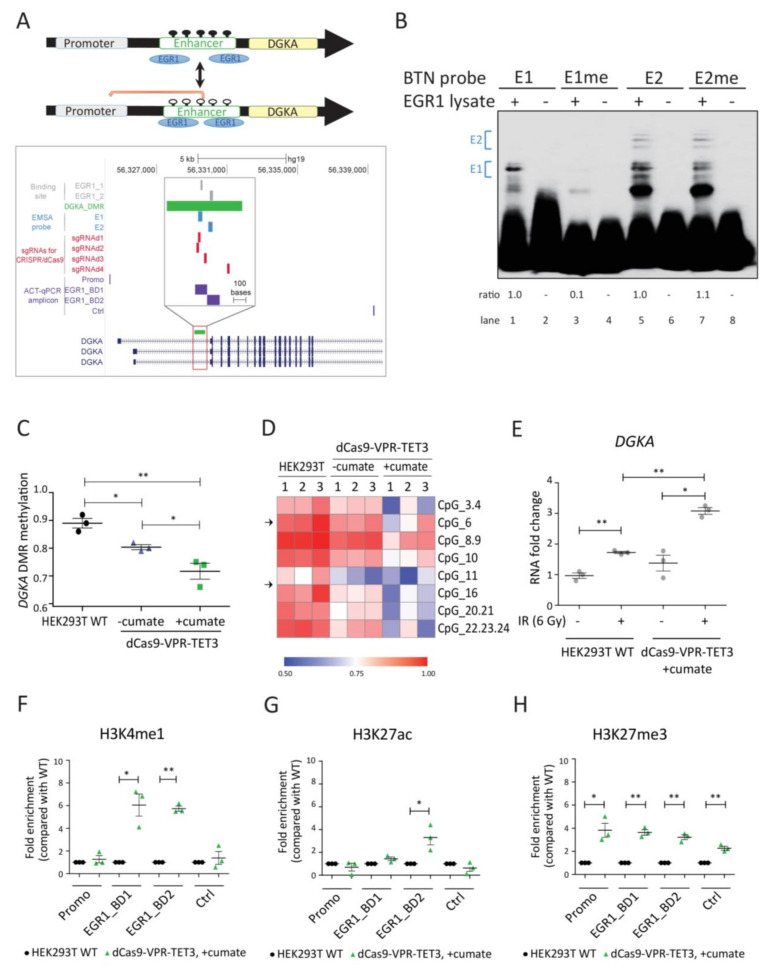
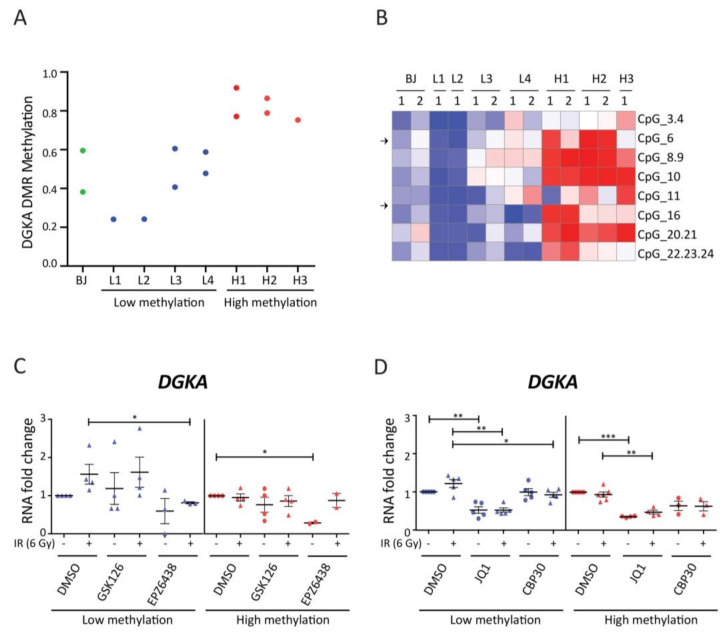
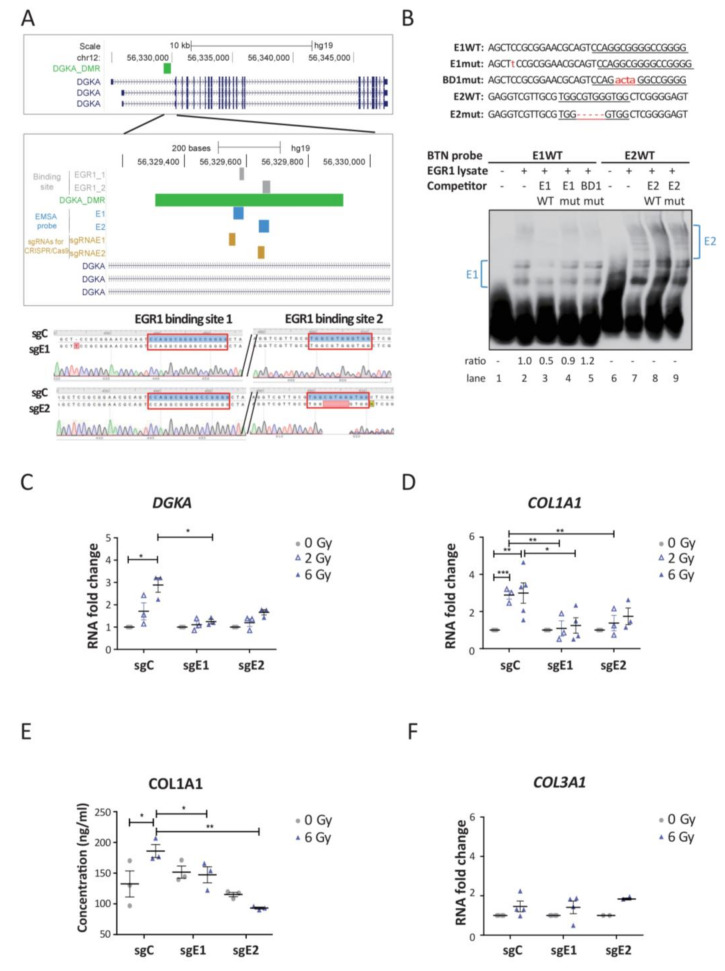
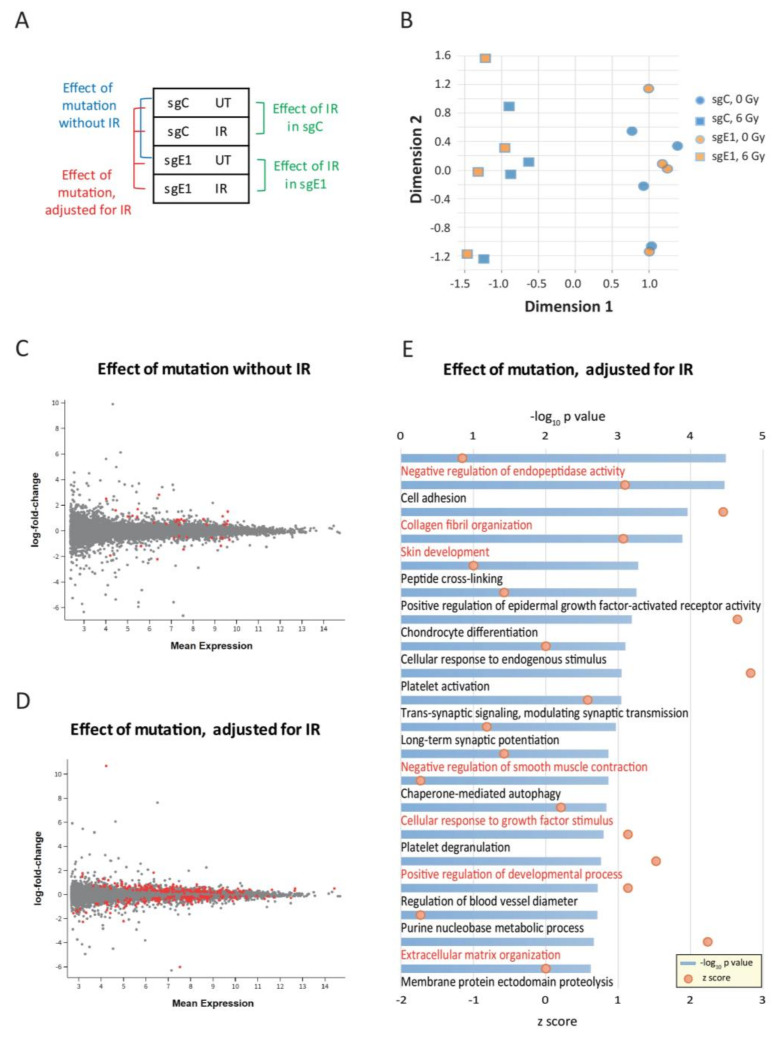
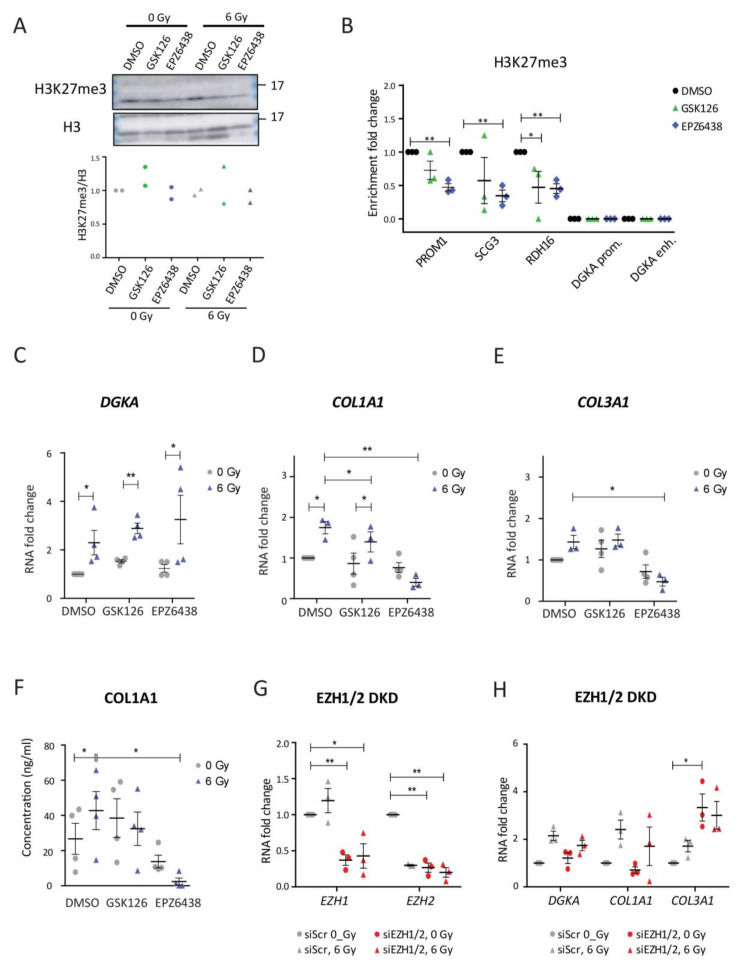
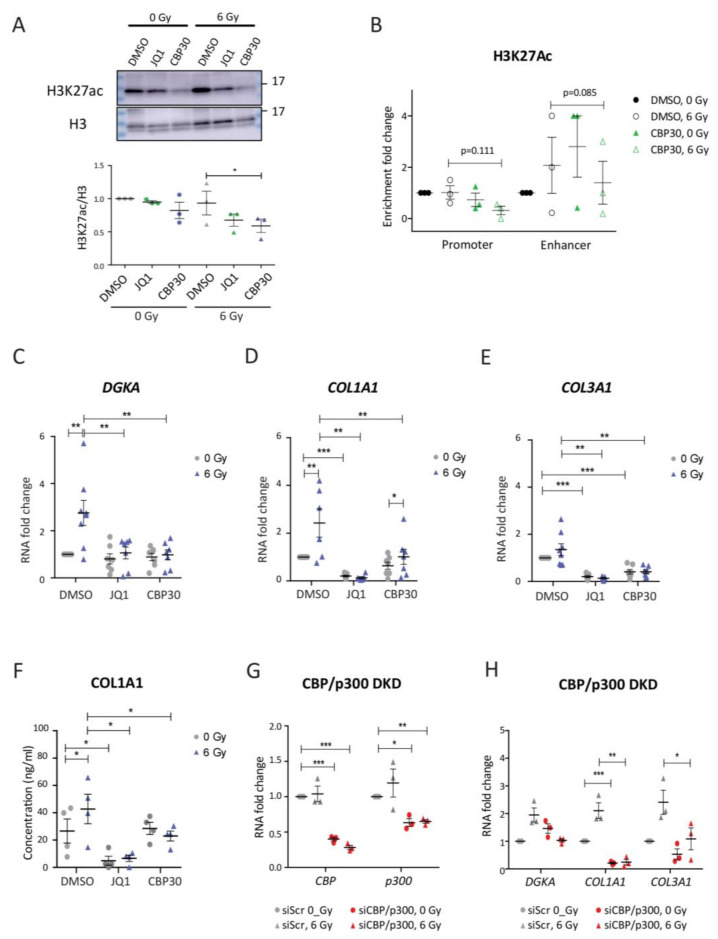
Radiotherapy, a common component in cancer treatment, can induce adverse effects including fibrosis in co-irradiated tissues. We previously showed that differential DNA methylation at an enhancer of diacylglycerol kinase alpha () in normal dermal fibroblasts is associated with radiation-induced fibrosis. After irradiation, the transcription factor EGR1 is induced and binds to the hypomethylated enhancer, leading to increased and pro-fibrotic marker expression. We now modulated this induction by targeted epigenomic and genomic editing of the enhancer and administering epigenetic drugs. Targeted DNA demethylation of the enhancer in HEK293T cells resulted in enrichment of enhancer-related histone activation marks and radiation-induced expression. Mutations of the EGR1-binding motifs decreased radiation-induced expression in BJ fibroblasts and caused dysregulation of multiple fibrosis-related pathways. EZH2 inhibitors (GSK126, EPZ6438) did not change radiation-induced increase. Bromodomain inhibitors (CBP30, JQ1) suppressed radiation-induced and pro-fibrotic marker expression. Similar drug effects were observed in donor-derived fibroblasts with low DNA methylation. Overall, epigenomic manipulation of expression may offer novel options for a personalized treatment to prevent or attenuate radiotherapy-induced fibrosis.
放射疗法是癌症治疗中的常见组成部分,可引发包括共照射组织纤维化在内的不良反应。我们之前表明,正常皮肤成纤维细胞中二酰甘油激酶α(DGKα)增强子处的差异DNA甲基化与辐射诱导的纤维化有关。照射后,转录因子EGR1被诱导并与低甲基化的增强子结合,导致DGKα和促纤维化标志物表达增加。我们现在通过对DGKα增强子进行靶向表观基因组和基因组编辑以及施用表观遗传药物来调节这种DGKα诱导。在HEK293T细胞中对DGKα增强子进行靶向DNA去甲基化导致增强子相关组蛋白激活标记物富集以及辐射诱导的DGKα表达。EGR1结合基序的突变降低了BJ成纤维细胞中辐射诱导的DGKα表达,并导致多种纤维化相关途径的失调。EZH2抑制剂(GSK126、EPZ6438)没有改变辐射诱导的DGKα增加。溴结构域抑制剂(CBP30、JQ1)抑制了辐射诱导的DGKα和促纤维化标志物表达。在DNA甲基化水平低的供体来源的成纤维细胞中也观察到了类似的药物作用。总体而言,对DGKα表达进行表观基因组操作可能为个性化治疗提供新的选择,以预防或减轻放射治疗引起的纤维化。