Lee Seul, Woo Dong-Cheol, Kang Jeeheon, Ra Moonjin, Kim Ki Hyun, Lee Seoung Rak, Choi Dong Kyu, Lee Heejin, Hong Ki Bum, Min Sang-Hyun, Lee Yongjun, Yu Ji Hoon
New Drug Development Center, Daegu-Gyeongbuk Medical Innovation Foundation, Daegu 41061, Korea.
Convergence Medicine Research Center, Asan Institute for Life Sciences, Asan Medical Center, and Department of Convergence Medicine, University of Ulsan College of Medicine, Asan Medical Center, Seoul 05505, Korea.
Biology (Basel). 2020 May 2;9(5):93. doi: 10.3390/biology9050093.
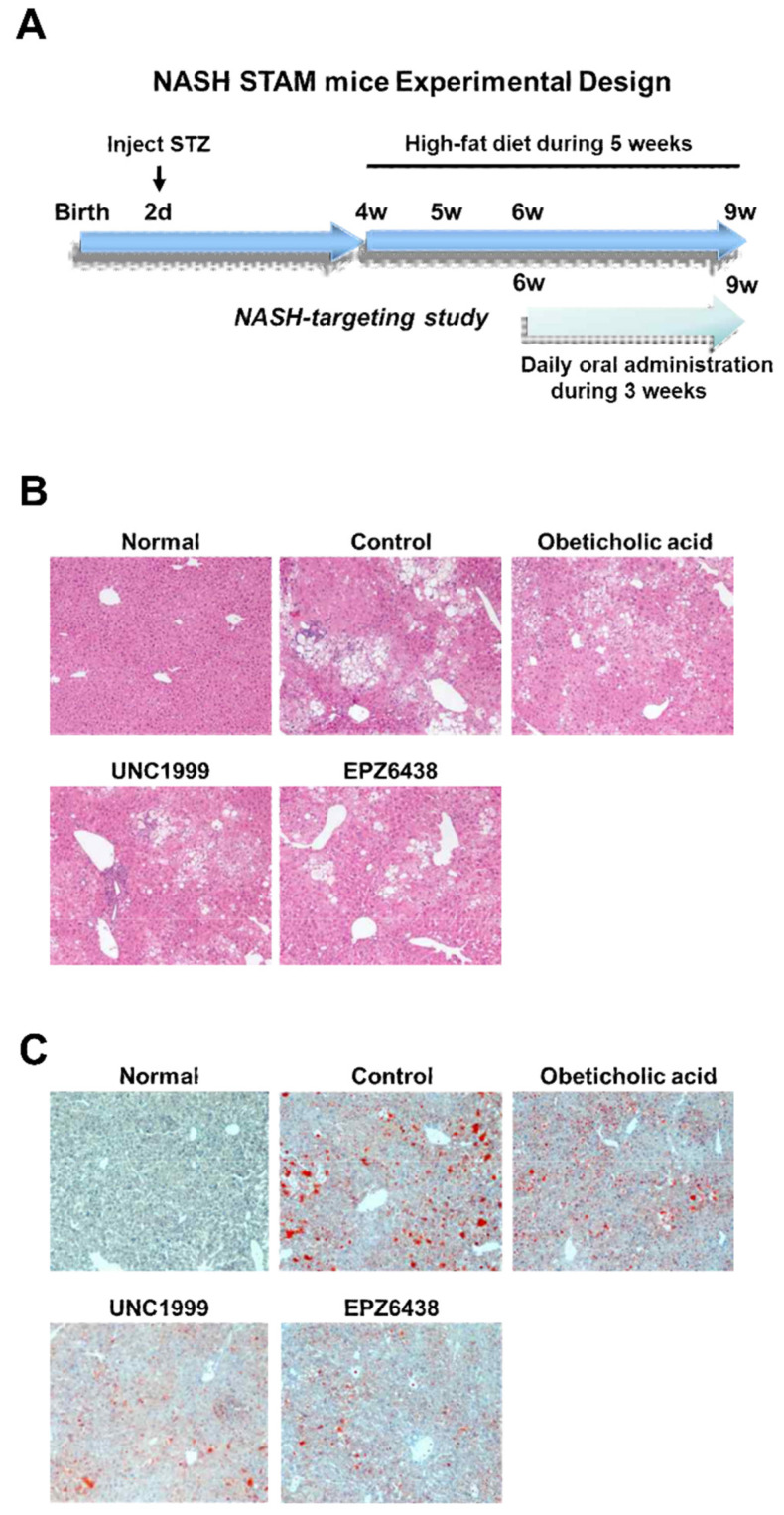
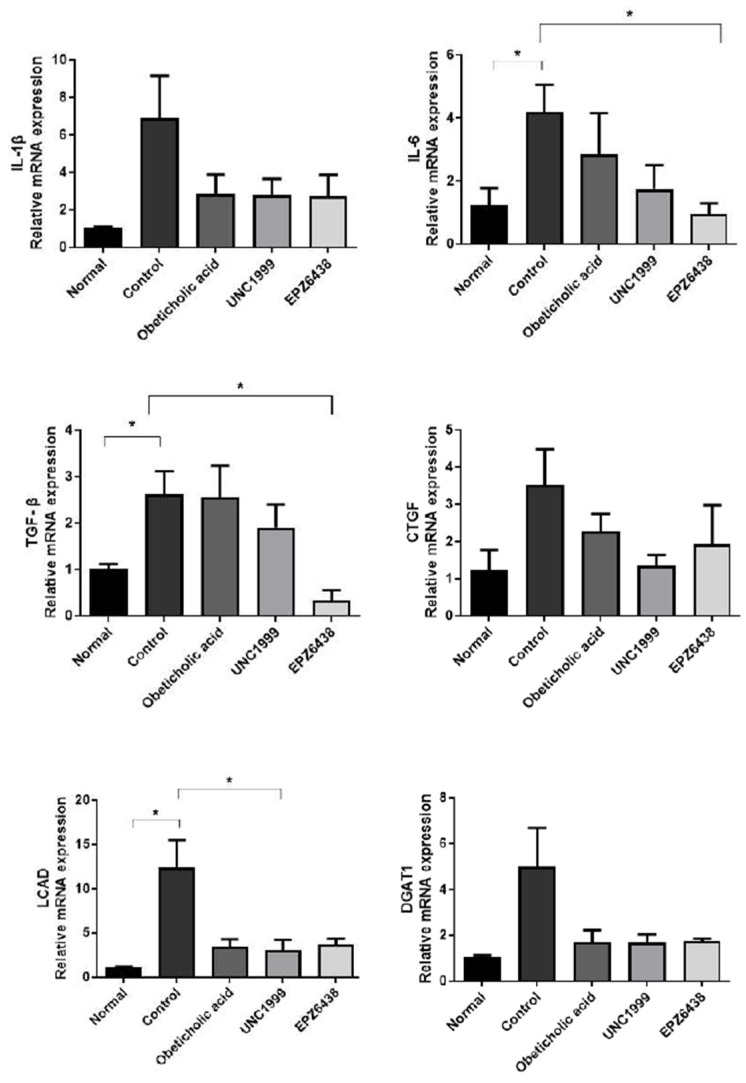
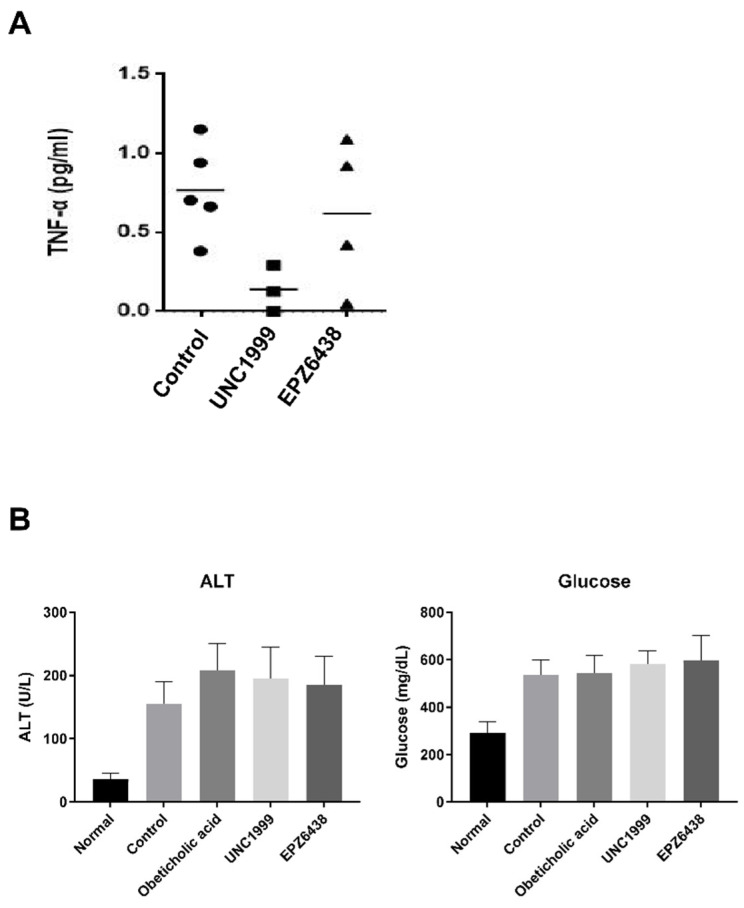
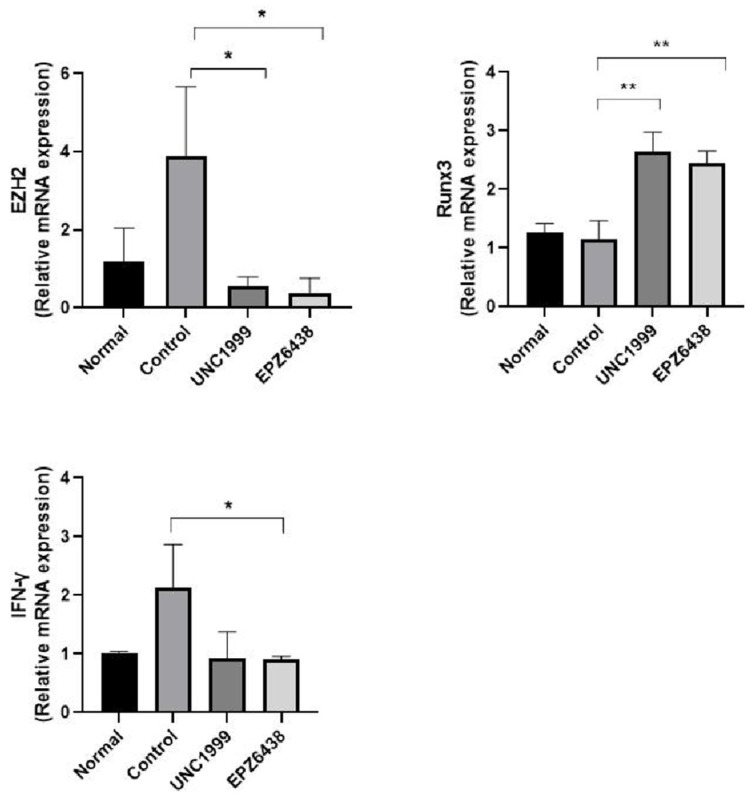
Non-alcoholic fatty liver disease (NAFLD) is a leading form of chronic liver disease, with few biomarkers and treatment options currently available. Non-alcoholic steatohepatitis (NASH), a progressive disease of NAFLD, may lead to fibrosis, cirrhosis, and hepatocellular carcinoma. Epigenetic modification can contribute to the progression of NAFLD causing non-alcoholic steatohepatitis (NASH), in which the exact role of epigenetics remains poorly understood. To identify potential therapeutics for NASH, we tested small-molecule inhibitors of the epigenetic target histone methyltransferase EZH2, Tazemetostat (EPZ-6438), and UNC1999 in STAM NASH mice. The results demonstrate that treatment with EZH2 inhibitors decreased serum TNF-alpha in NASH. In this study, we investigated that inhibition of EZH2 reduced mRNA expression of inflammatory cytokines and fibrosis markers in NASH mice. In conclusion, these results suggest that EZH2 may present a promising therapeutic target in the treatment of NASH.
非酒精性脂肪性肝病(NAFLD)是慢性肝病的主要形式,目前几乎没有生物标志物和治疗选择。非酒精性脂肪性肝炎(NASH)是NAFLD的一种进展性疾病,可能导致纤维化、肝硬化和肝细胞癌。表观遗传修饰可促使NAFLD进展为非酒精性脂肪性肝炎(NASH),但表观遗传学的确切作用仍知之甚少。为了确定NASH的潜在治疗方法,我们在STAM NASH小鼠中测试了表观遗传靶点组蛋白甲基转移酶EZH2的小分子抑制剂他泽司他(EPZ-6438)和UNC1999。结果表明,用EZH2抑制剂治疗可降低NASH小鼠血清中的肿瘤坏死因子-α(TNF-α)。在本研究中,我们研究了抑制EZH2可降低NASH小鼠炎症细胞因子和纤维化标志物的mRNA表达。总之,这些结果表明,EZH2可能是治疗NASH的一个有前景的治疗靶点。