Division of Infectious Diseases, Department of Medicine, Edison Family Center for Genome Sciences & Systems Biology, Washington University School of Medicine, St. Louis, MO 63110, USA.
Department of Molecular Microbiology, Washington University School of Medicine, St. Louis, MO 63110, USA.
Viruses. 2021 May 25;13(6):975. doi: 10.3390/v13060975.
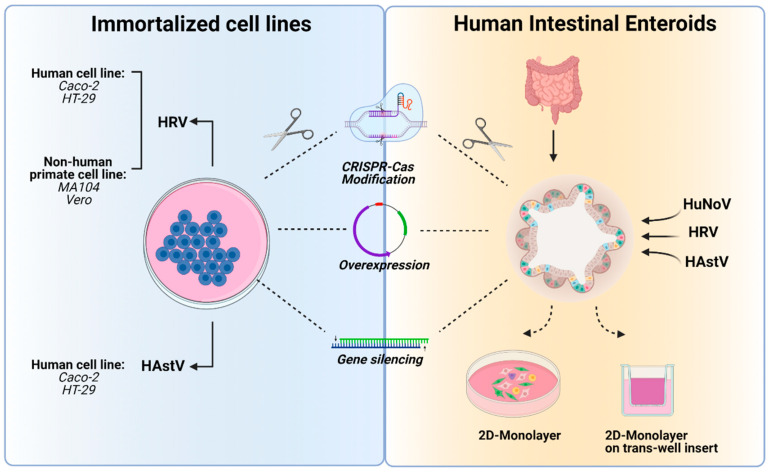
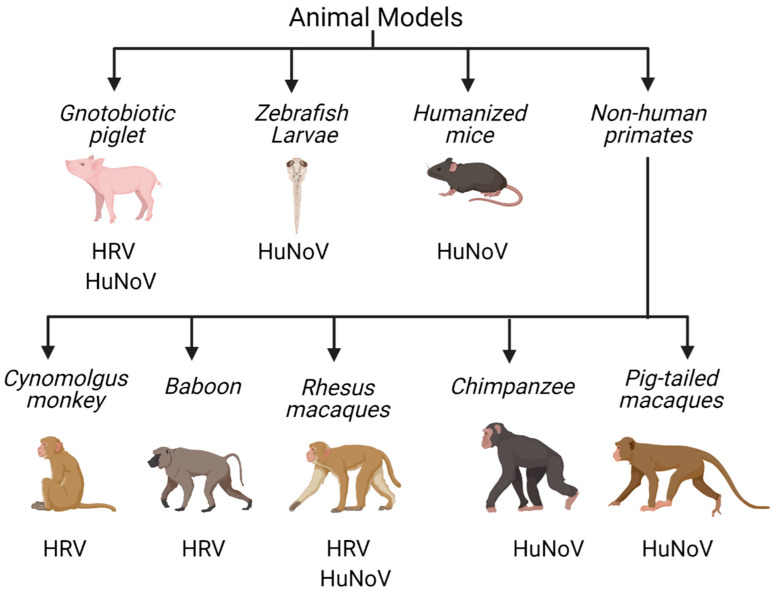
Every year, millions of children are infected with viruses that target the gastrointestinal tract, causing acute gastroenteritis and diarrheal illness. Indeed, approximately 700 million episodes of diarrhea occur in children under five annually, with RNA viruses norovirus, rotavirus, and astrovirus serving as major causative pathogens. Numerous methodological advancements in recent years, including the establishment of novel cultivation systems using enteroids as well as the development of murine and other animal models of infection, have helped provide insight into many features of viral pathogenesis. However, many aspects of enteric viral infections remain elusive, demanding further study. Here, we describe the different in vitro and in vivo tools available to explore different pathophysiological attributes of human enteric RNA viruses, highlighting their advantages and limitations depending upon the question being explored. In addition, we discuss key areas and opportunities that would benefit from further methodological progress.
每年,都有数百万儿童感染针对胃肠道的病毒,导致急性肠胃炎和腹泻病。事实上,每年五岁以下儿童中约有 7 亿例腹泻,RNA 病毒诺如病毒、轮状病毒和星状病毒是主要的病原体。近年来,许多方法学上的进展,包括使用类肠细胞建立新的培养系统以及感染鼠类和其他动物模型的发展,都有助于深入了解病毒发病机制的许多特征。然而,肠道病毒感染的许多方面仍然难以捉摸,需要进一步研究。在这里,我们描述了可用于探索人类肠道 RNA 病毒不同病理生理特性的不同体外和体内工具,根据所研究的问题强调了它们的优点和局限性。此外,我们还讨论了需要进一步方法学进展的关键领域和机会。