Cheng Chun-Wen, Liao Wen-Ling, Chen Po-Ming, Yu Jyh-Cherng, Shiau Hui-Ping, Hsieh Yi-Hsien, Lee Huei-Jane, Cheng Yu-Chun, Wu Pei-Ei, Shen Chen-Yang
Institute of Medicine, Chung Shan Medical University, Taichung 40201, Taiwan.
Clinical Laboratory, Chung Shan Medical University Hospital, Taichung 40201, Taiwan.
Cancers (Basel). 2021 May 25;13(11):2582. doi: 10.3390/cancers13112582.
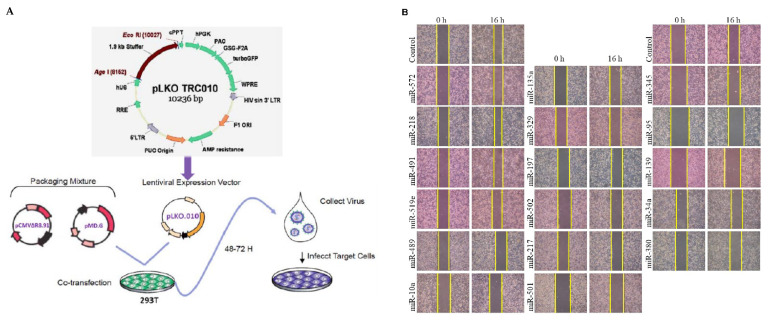
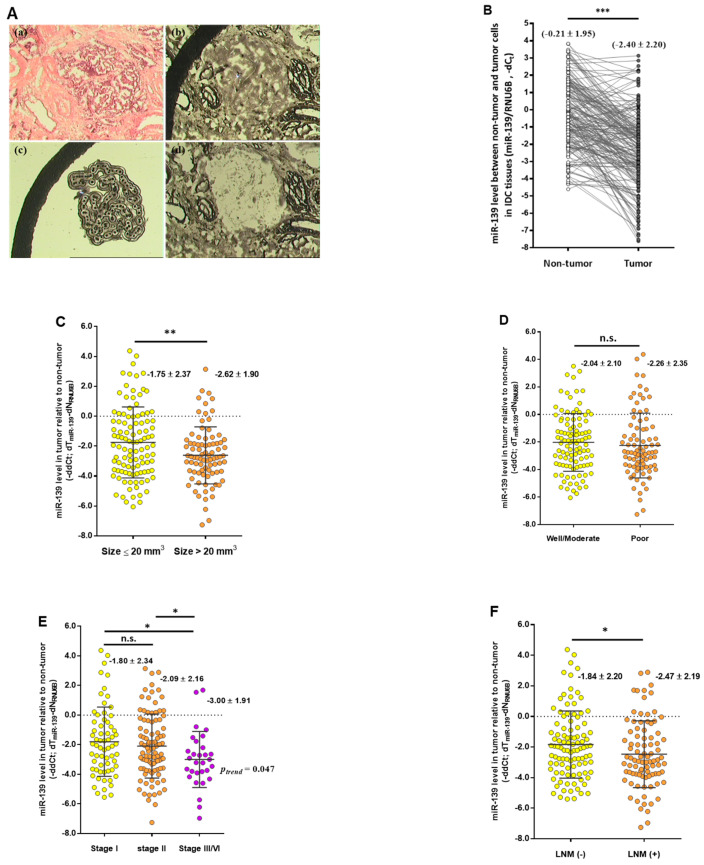
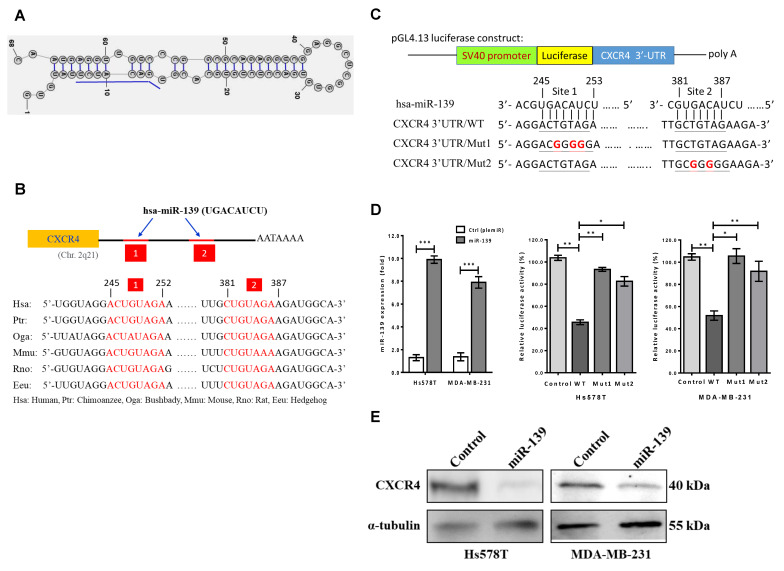
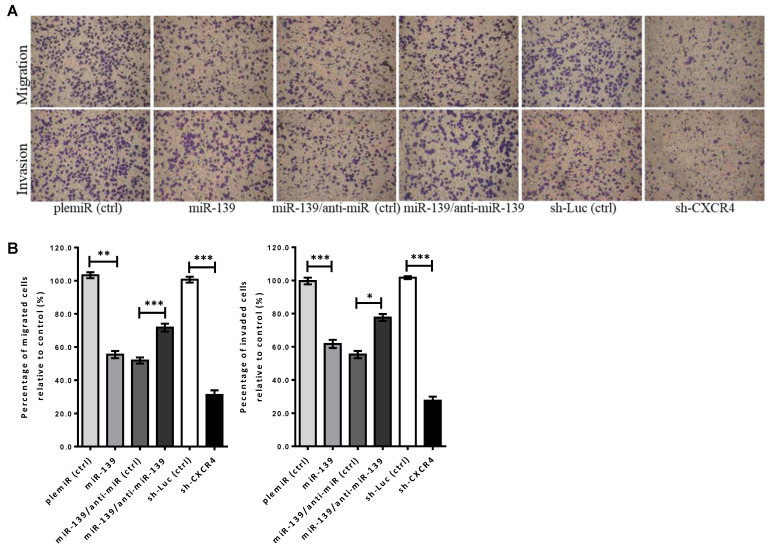
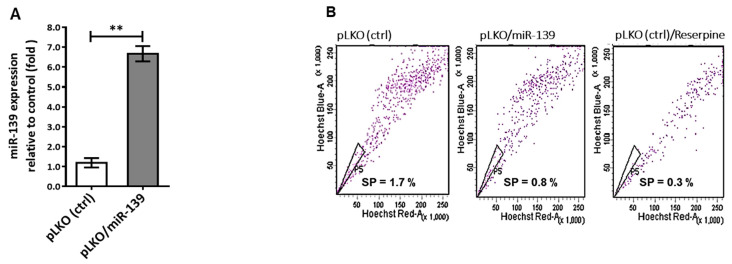
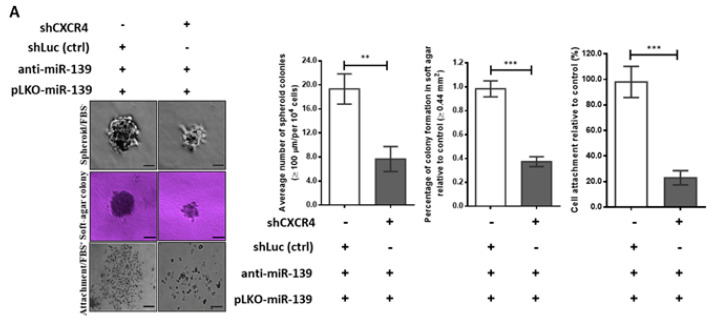
Elevated expression of C-X-C motif chemokine receptor 4 (CXCR4) correlates with chemotaxis, invasion, and cancer stem cell (CSC) properties within several solid-tumor malignancies. Recent studies reported that microRNA (miRNA) modulates the stemness of embryonic stem cells. We aimed to investigate the role of miRNA, via CXCR4-modulation, on CSC properties in breast cancer using cell lines and xenotransplantation mouse model and evaluated miR-193 levels in 191 patients with invasive ductal carcinoma. We validated miR-139 directly targets the 3'-untranslated region of CXCR4. Hoechst 33342 fluorescence-activated cell sorting (FACS) and sphere-forming assay were used to identify CSCs. MiR-139 suppressed breast CSCs with mesenchymal traits; led to decreased migration and invasion abilities through down-regulating CXCR4/p-Akt signaling. In lung cancer xenograft model of nude mice transplanted with human miR-139-carrying MDA-MB-231 cells, metastatic lung nodules were suppressed. Clinically, microdissected breast tumor tissues showed miR-139 reduction, compared to adjacent non-tumor tissues, that was significantly associated with worse clinicopathological features, including larger tumor size, advanced tumor stage and lymph node metastasis; moreover, reduced miR-139 level was predominately occurred in late-stage HER2-oreexpression tumors. Collectively, our findings highlight miR-139-mediated suppression of CXCR4/p-Akt signaling and thereby affected mesenchymal stem-cell genesis, indicating its potential as a therapeutic target for invasive breast cancer.
C-X-C基序趋化因子受体4(CXCR4)的高表达与几种实体瘤恶性肿瘤中的趋化性、侵袭以及癌症干细胞(CSC)特性相关。最近的研究报道,微小RNA(miRNA)可调节胚胎干细胞的干性。我们旨在通过细胞系和异种移植小鼠模型,研究miRNA通过调节CXCR4对乳腺癌CSC特性的作用,并评估191例浸润性导管癌患者的miR-193水平。我们验证了miR-139直接靶向CXCR4的3'-非翻译区。使用Hoechst 33342荧光激活细胞分选(FACS)和球形成试验来鉴定CSC。miR-139抑制具有间充质特征的乳腺CSC;通过下调CXCR4/p-Akt信号通路导致迁移和侵袭能力下降。在用携带人miR-139的MDA-MB-231细胞移植的裸鼠肺癌异种移植模型中,肺转移结节受到抑制。临床上,与相邻的非肿瘤组织相比,显微切割的乳腺肿瘤组织显示miR-139减少,这与更差的临床病理特征显著相关,包括更大的肿瘤大小、晚期肿瘤分期和淋巴结转移;此外,miR-139水平降低主要发生在晚期HER2过表达肿瘤中。总的来说,我们的研究结果突出了miR-139介导的对CXCR4/p-Akt信号通路的抑制,从而影响间充质干细胞的发生,表明其作为浸润性乳腺癌治疗靶点的潜力。