Lu Ying-Yi, Wu Chieh-Hsin, Hong Chien-Hui, Chang Kee-Lung, Lee Chih-Hung
Department of Dermatology, Kaohsiung Veterans General Hospital, Kaohsiung 81362, Taiwan.
Graduate Institute of Medicine, College of Medicine, Kaohsiung Medical University, Kaohsiung 80708, Taiwan.
Life (Basel). 2021 May 30;11(6):505. doi: 10.3390/life11060505.
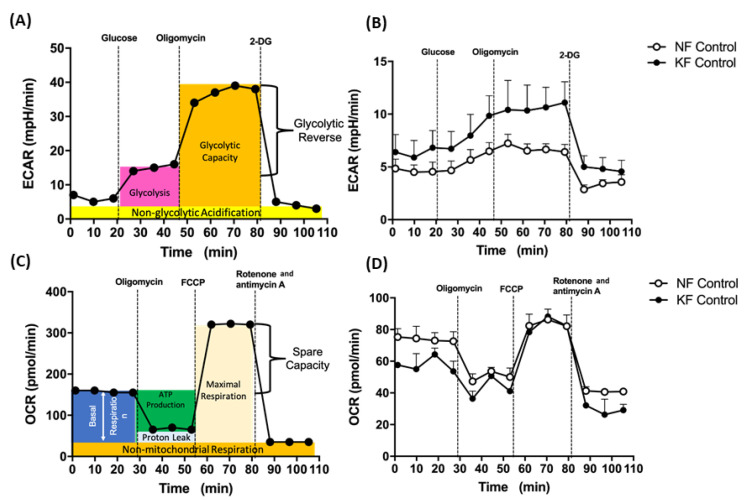
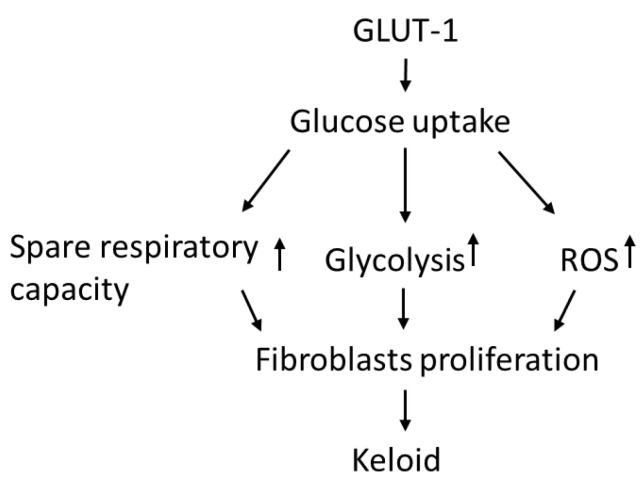
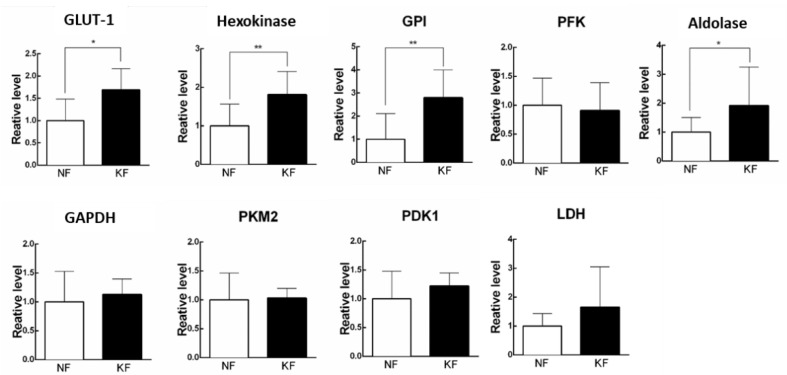
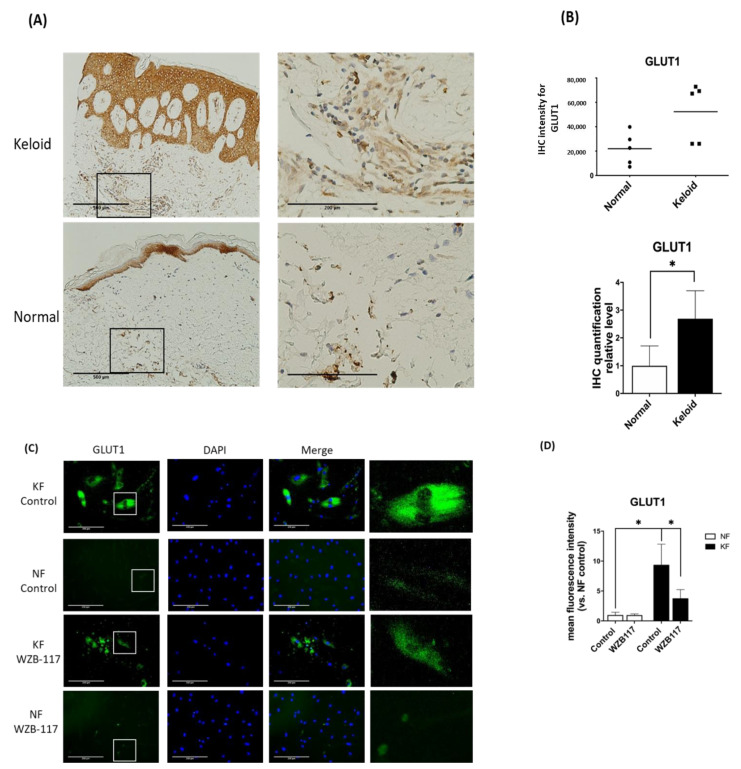
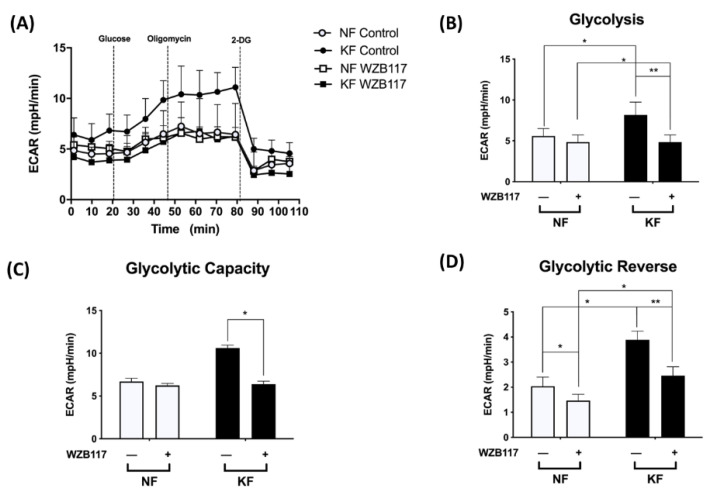
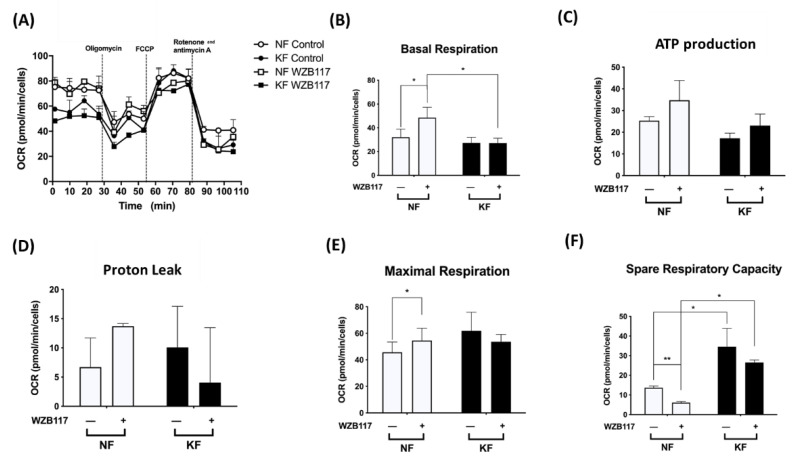
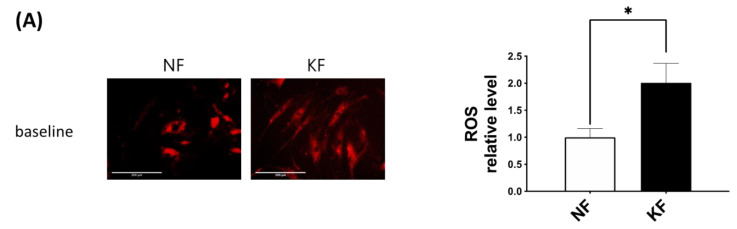
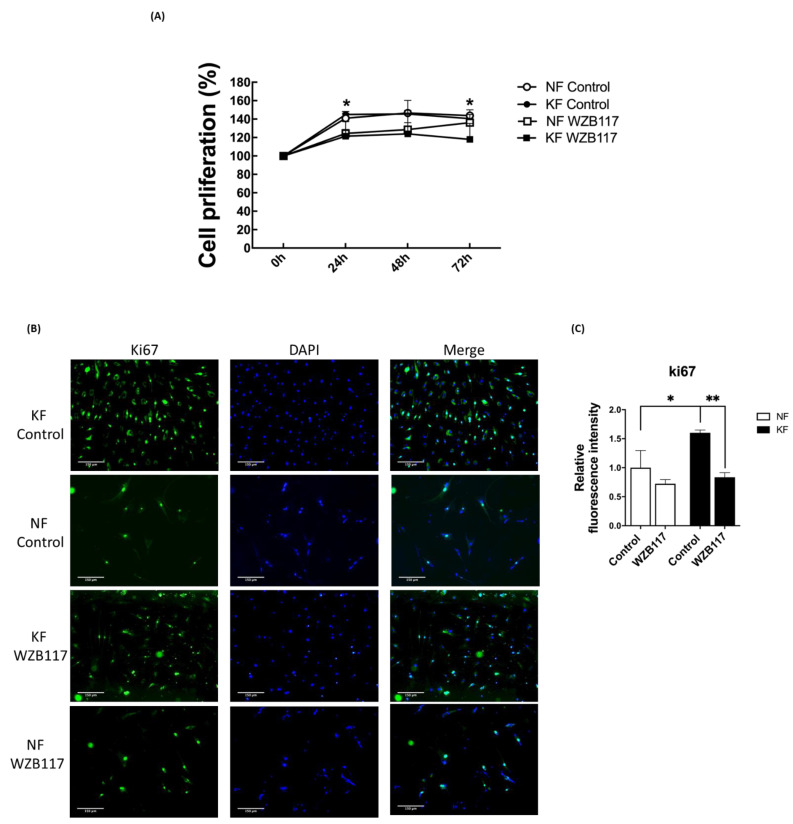
A keloid is a fibroproliferative skin tumor. Proliferating keloid fibroblasts (KFs) demand active metabolic utilization. The contributing roles of glycolysis and glucose metabolism in keloid fibroproliferation remain unclear. This study aims to determine the regulation of glycolysis and glucose metabolism by glucose transporter-1 (GLUT-1), an essential protein to initiate cellular glucose uptake, in keloids and in KFs. Tissues of keloids and healthy skin were explanted for KFs and normal fibroblasts (NFs), respectively. GLUT-1 expression was measured by immunofluorescence, RT-PCR, and immunoblotting. The oxygen consumption rate (OCR) and extracellular acidification rate (ECAR) were measured with or without WZB117, a GLUT-1 inhibitor. Reactive oxygen species (ROS) were assayed by MitoSOX immunostaining. The result showed that glycolysis (ECAR) was enhanced in KFs, whereas OCR was not. GLUT-1 expression was selectively increased in KFs. Consistently, GLUT-1 expression was increased in keloid tissue. Treatment with WZB117 abolished the enhanced ECAR, including glycolysis and glycolytic capacity, in KFs. ROS levels were increased in KFs compared to those in NFs. GLUT-1 inhibition suppressed not only the ROS levels but also the cell proliferation in KFs. In summary, the GLUT-1-dependent glycolysis and ROS production mediated fibroblast proliferation in keloids. GLUT1 might be a potential target for metabolic reprogramming to treat keloids.
瘢痕疙瘩是一种纤维增生性皮肤肿瘤。增殖的瘢痕疙瘩成纤维细胞(KF)需要活跃的代谢利用。糖酵解和葡萄糖代谢在瘢痕疙瘩纤维增生中的作用尚不清楚。本研究旨在确定葡萄糖转运蛋白-1(GLUT-1,一种启动细胞葡萄糖摄取的必需蛋白)对瘢痕疙瘩和KF中糖酵解及葡萄糖代谢的调节作用。分别取瘢痕疙瘩组织和健康皮肤组织用于培养KF和正常成纤维细胞(NF)。通过免疫荧光、RT-PCR和免疫印迹法检测GLUT-1的表达。使用GLUT-1抑制剂WZB117或不使用该抑制剂来测量氧消耗率(OCR)和细胞外酸化率(ECAR)。通过MitoSOX免疫染色检测活性氧(ROS)。结果显示,KF中的糖酵解(ECAR)增强,而OCR未增强。KF中GLUT-1的表达选择性增加。同样,瘢痕疙瘩组织中GLUT-1的表达也增加。用WZB117处理可消除KF中增强的ECAR,包括糖酵解和糖酵解能力。与NF相比,KF中的ROS水平升高。抑制GLUT-1不仅可降低ROS水平,还可抑制KF中的细胞增殖。总之,GLUT-1依赖性糖酵解和ROS产生介导了瘢痕疙瘩中纤维母细胞的增殖。GLUT1可能是用于治疗瘢痕疙瘩的代谢重编程的潜在靶点。