Department of Surgery - Otorhinolaryngology Head and Neck Surgery, The Queen Elizabeth Hospital and the University of Adelaide, Adelaide, SA, Australia.
Front Cell Infect Microbiol. 2020 Mar 19;10:110. doi: 10.3389/fcimb.2020.00110. eCollection 2020.
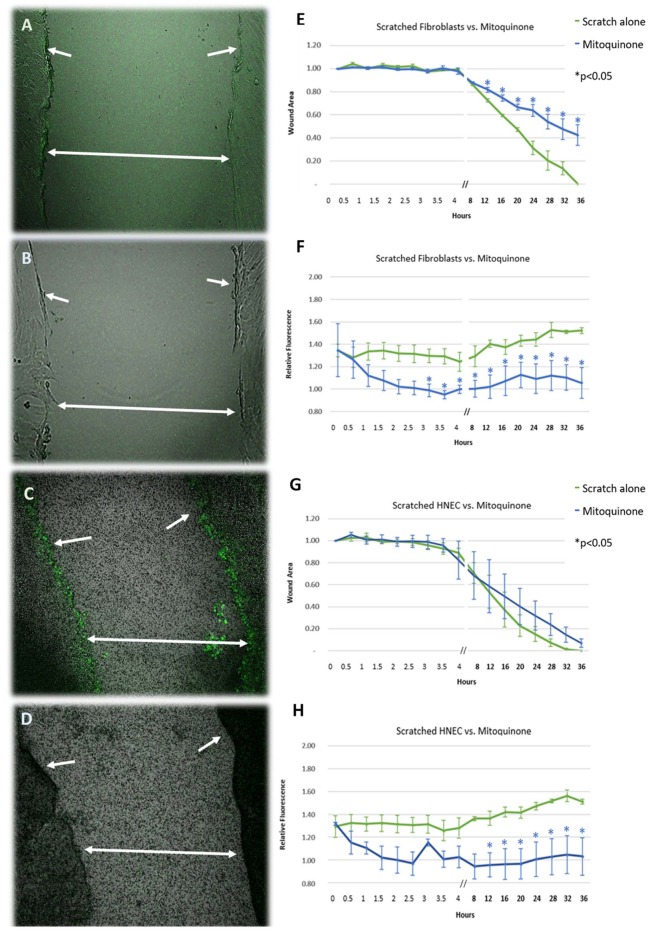
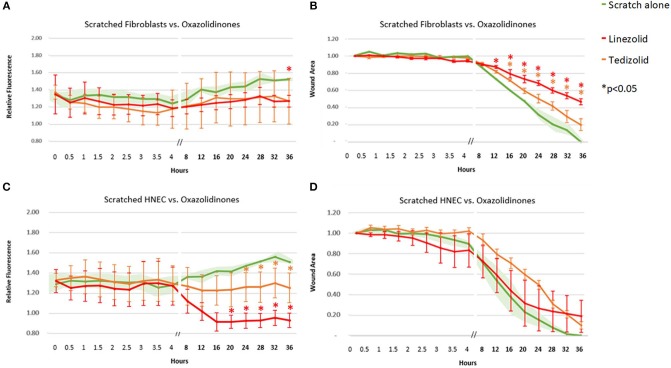
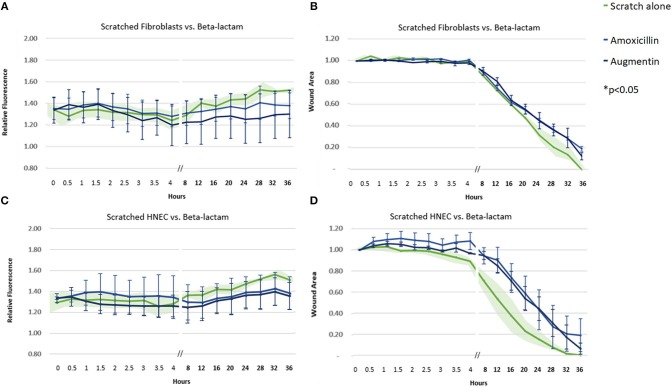
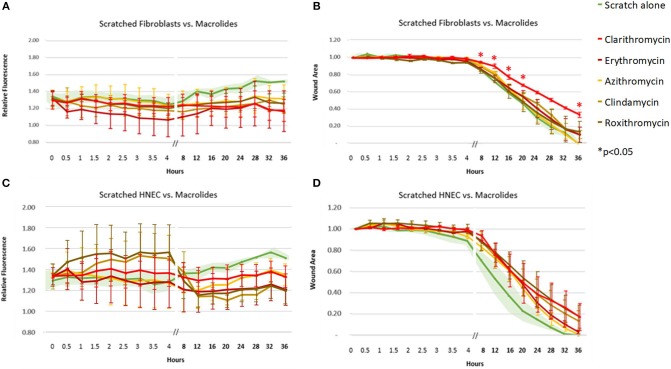
Antibiotics are often administered to patients perioperatively and have been shown to affect ROS production of nasal cells , but their effect in the setting of active wound healing remains unclear. Reactive oxygen species (ROS) are known to play a significant role in wound healing. This study analyzed a broad array of antibiotics used after sinus surgery to assess their effect on wound healing and ROS production . It was hypothesized that ROS production would be affected by these antibiotics and there would be a negative relationship between ROS activity and cell migration speed. Monolayers of primary human nasal epithelial cells (HNEC) and primary fibroblasts were disrupted with a linear wound, treated with 10 different antibiotics or a ROS inhibitor and observed over 36 h in a controlled environment using confocal microscopy. ROS activity and migration speed of the wound edge were measured at regular intervals. The relationship between the two parameters was analyzed using mixed linear modeling. Performing a linear scratch over the cell monolayers produced an immediate increase in ROS production of ~35% compared to unscratched controls in both cell types. Incubation with mitoquinone and the oxazolidinone antibiotic linezolid inhibited ROS activity in both fibroblasts and HNEC in association with slowed fibroblast cell migration ( < 0.05). Fibroblast cell migration was also reduced in the presence of clarithromycin and mupirocin ( < 0.05). A significant correlation was seen between ROS suppression and cell migration rate in fibroblasts for mitoquinone and all antibiotics except for azithromycin and doxycycline, where no clear relationship was seen. Treatments that slowed fibroblast cell migration compared to untreated controls showed a significant correlation with ROS suppression ( < 0.05). Increased ROS production in freshly wounded HNEC and fibroblast cell monolayers was suppressed in the presence of antibiotics, in correlation with reduced fibroblast cell migration. In contrast, HNEC cell migration was not significantly affected by any of the antibiotics tested. This differential effect of antibiotics on fibroblast and HNEC migration might have clinical relevance by reducing adhesion formation without affecting epithelial healing in the postoperative setting.
抗生素通常在围手术期给予患者,并且已经表明它们会影响鼻腔细胞的 ROS 产生,但它们在活跃的伤口愈合环境中的作用尚不清楚。活性氧 (ROS) 已知在伤口愈合中起重要作用。本研究分析了广泛用于鼻窦手术后的抗生素,以评估它们对伤口愈合和 ROS 产生的影响。研究假设 ROS 产生会受到这些抗生素的影响,并且 ROS 活性与细胞迁移速度之间存在负相关关系。使用线性划痕破坏原代人鼻腔上皮细胞 (HNEC) 和原代成纤维细胞单层,用 10 种不同的抗生素或 ROS 抑制剂处理,并在受控环境中使用共聚焦显微镜观察 36 小时。定期测量伤口边缘的 ROS 活性和迁移速度。使用混合线性建模分析这两个参数之间的关系。在两种细胞类型中,与未划痕对照相比,在细胞单层上进行线性划痕会立即导致 ROS 产生增加约 35%。米托醌和唑烷酮类抗生素利奈唑胺的孵育抑制了两种细胞类型中 ROS 的活性,并与成纤维细胞迁移速度减慢有关(<0.05)。在克拉霉素和莫匹罗星存在的情况下,成纤维细胞的迁移也减少(<0.05)。在米托醌和除阿奇霉素和多西环素之外的所有抗生素中,观察到 ROS 抑制与成纤维细胞迁移率之间存在显著相关性,但在阿奇霉素和多西环素中没有明显的相关性。与未处理对照相比,使成纤维细胞迁移速度减慢的治疗方法与 ROS 抑制呈显著相关性(<0.05)。在抗生素存在的情况下,新受伤的 HNEC 和成纤维细胞单层中的 ROS 产生增加受到抑制,与成纤维细胞迁移减少相关。相比之下,任何一种测试的抗生素都没有显著影响 HNEC 细胞的迁移。抗生素对成纤维细胞和 HNEC 迁移的这种不同影响可能具有临床意义,因为它可以减少粘连形成,而不会影响术后上皮愈合。