Departamento de Bioquímica y Biología Molecular y Celular, Facultad de Veterinaria, Instituto de Investigación Sanitaria de Aragón, Universidad de Zaragoza, E-50013 Zaragoza, Spain.
Instituto Agroalimentario de Aragón, CITA-Universidad de Zaragoza, E-50013 Zaragoza, Spain.
Nutrients. 2021 May 27;13(6):1838. doi: 10.3390/nu13061838.
The type and amount of dietary protein has become a topic of renewed interest in light of their involvement in metabolic diseases, atherosclerosis and thrombosis. However, little attention has been devoted to the effect of avian proteins despite their wide human consumption. The aim was to investigate the influence of chicken and turkey as sources of protein compared with that of soybean on atherosclerosis and fatty liver disease.
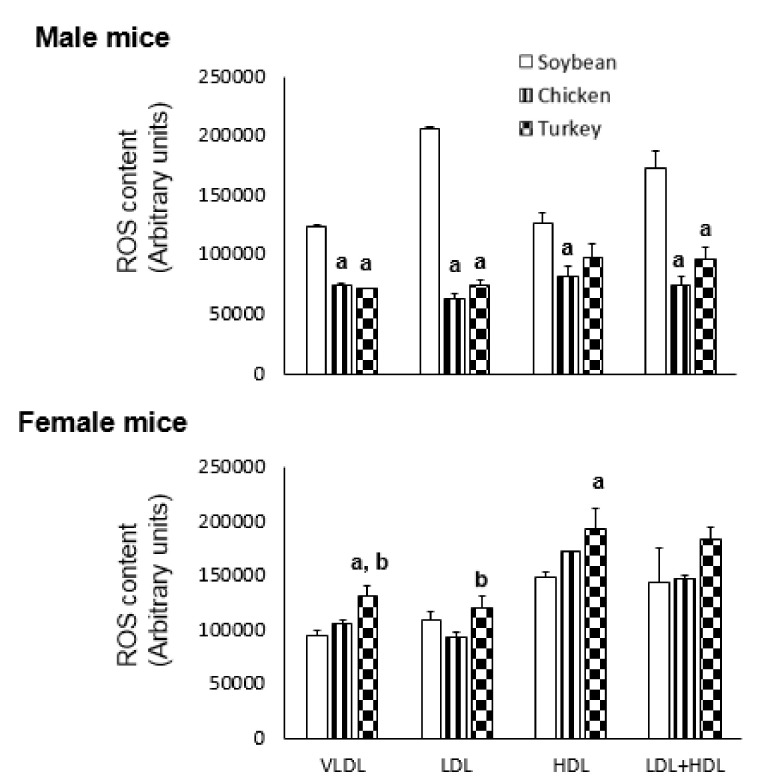
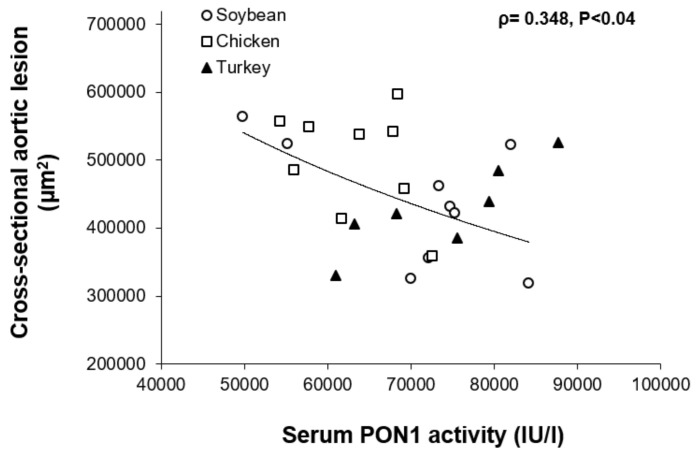
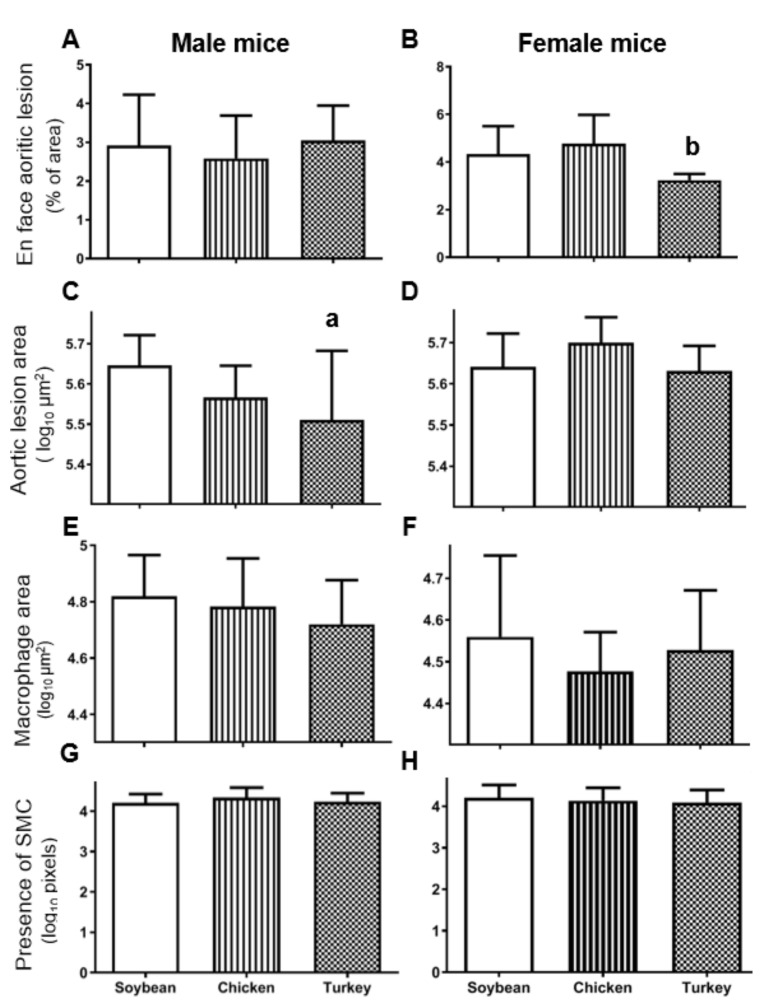
To this purpose, male and female -deficient were fed purified Western diets differing in their protein sources for 12 weeks. After this period, blood, liver, aortic tree and heart base samples were taken for analyses of plasma lipids and atherosclerosis. Plasma triglycerides, non-esterified fatty acids, esterified cholesterol levels and radical oxygen species in lipoproteins changed depending on the diet and sex. Females consuming the turkey protein-containing diet showed decreased atherosclerotic foci, as evidenced by the en face atherosclerosis analyses. The presence of macrophages and smooth muscle cells in plaques were not modified, and no changes were observed in hepatic lipid droplets in the studied groups either. Paraoxonase activity was higher in the group consuming turkey protein without sex differences, but only in females, it was significantly associated with aortic lesion areas.
Compared to soybean protein, the consumption of avian proteins depending on sex resulted in similar or lower atherosclerosis development and comparable hepatic steatosis.
鉴于膳食蛋白质在代谢性疾病、动脉粥样硬化和血栓形成中的作用,其种类和数量再次成为人们关注的焦点。然而,尽管禽类蛋白被广泛食用,但人们对其影响却关注甚少。本研究旨在探讨与大豆蛋白相比,鸡肉和火鸡作为蛋白质来源对动脉粥样硬化和脂肪肝疾病的影响。
为此,雄性和雌性低脂饮食缺乏症动物分别用含有不同蛋白质来源的纯化西方饮食喂养 12 周。在此期间,采集血液、肝脏、主动脉树和心脏基部样本,用于分析血浆脂质和动脉粥样硬化。不同饮食和性别会改变血浆甘油三酯、非酯化脂肪酸、酯化胆固醇水平和脂蛋白中的自由基氧。摄入火鸡蛋白饮食的雌性动物的动脉粥样硬化病灶减少,这可以通过主动脉粥样硬化分析得到证明。斑块中的巨噬细胞和平滑肌细胞数量没有变化,研究组的肝脏脂质滴也没有变化。在没有性别差异的情况下,消耗火鸡蛋白的组中对氧磷酶活性更高,但只有在女性中,它与主动脉病变面积显著相关。
与大豆蛋白相比,禽类蛋白的消耗(取决于性别)导致相似或更低的动脉粥样硬化发展和可比的肝脂肪变性。