Department of Botany, Panjab University, Chandigarh 160014, India.
Department of Plant and Soil Sciences, Mississippi State University, Starkville, MS 39762, USA.
Int J Mol Sci. 2021 May 29;22(11):5825. doi: 10.3390/ijms22115825.
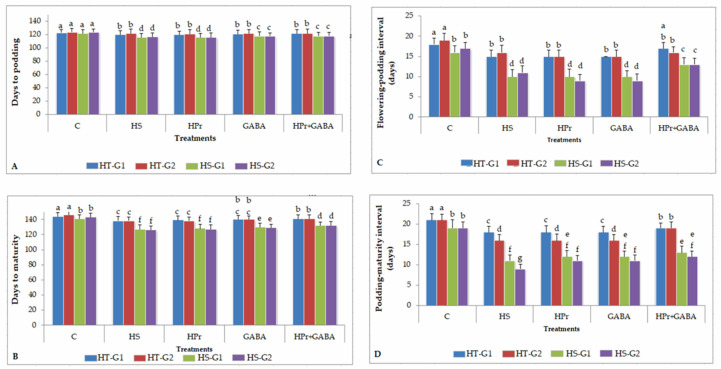
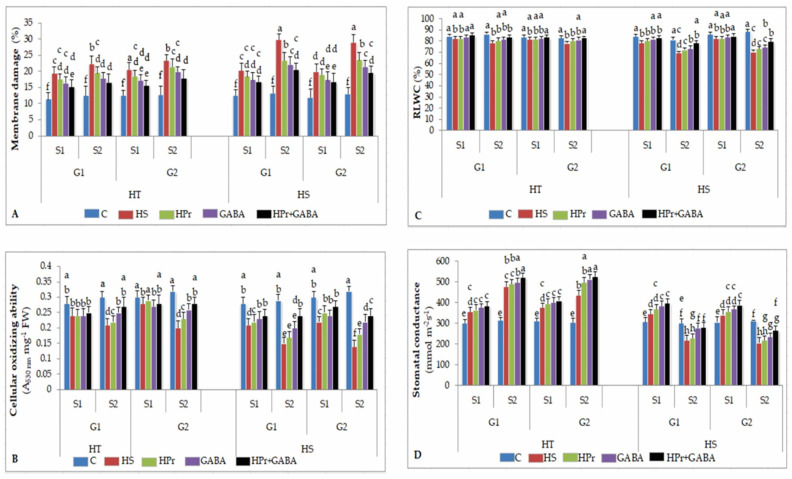
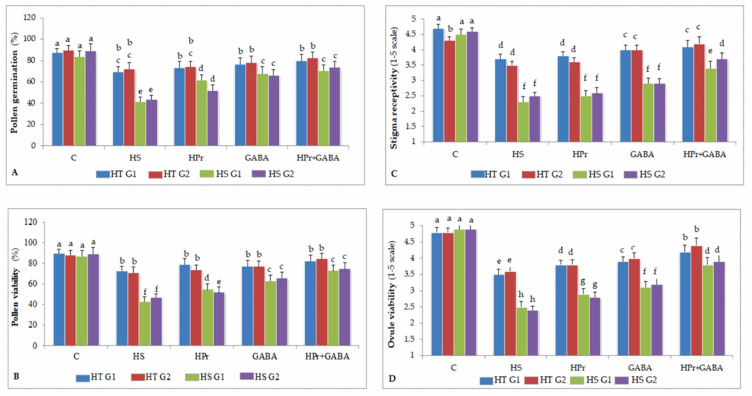
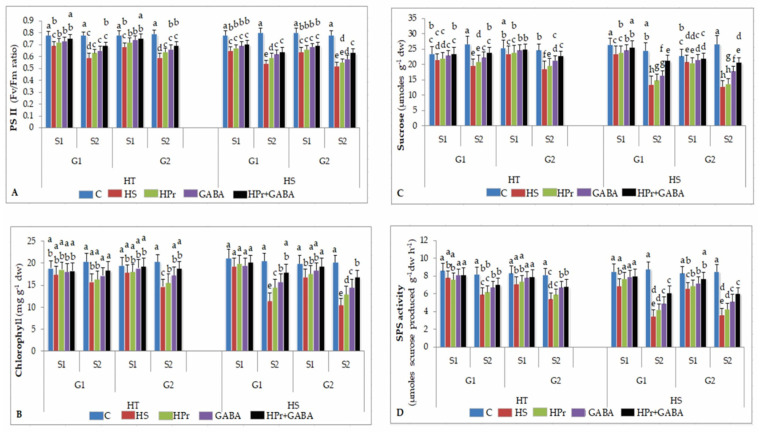
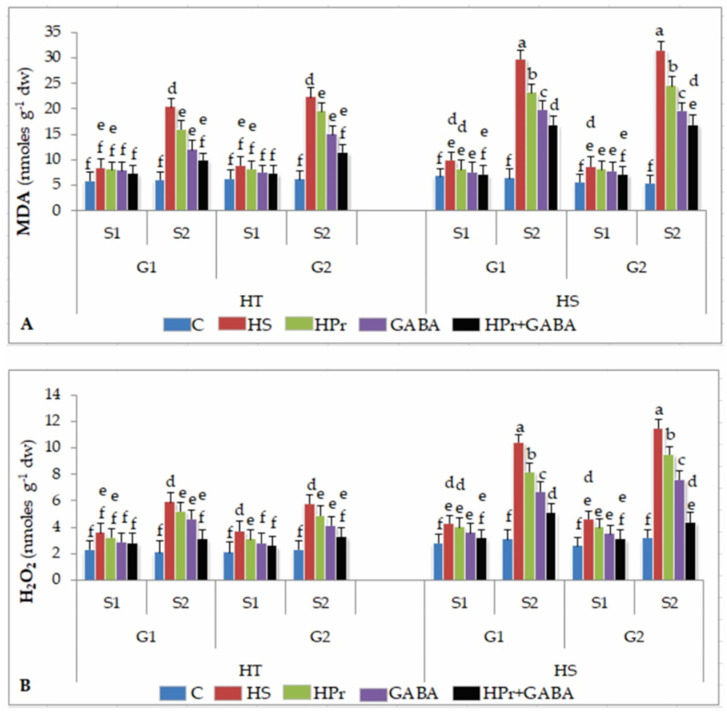
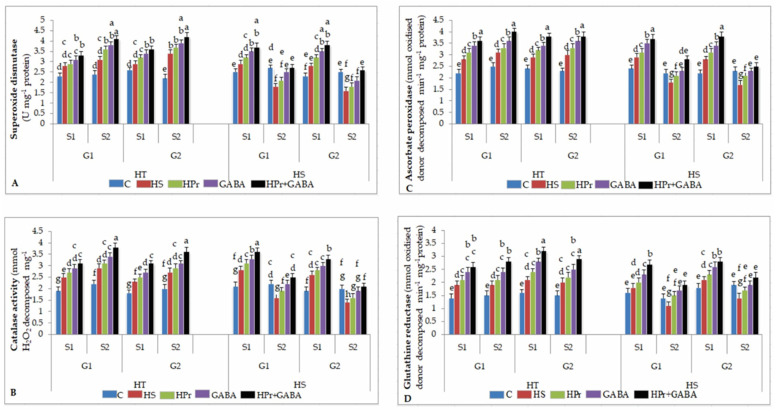
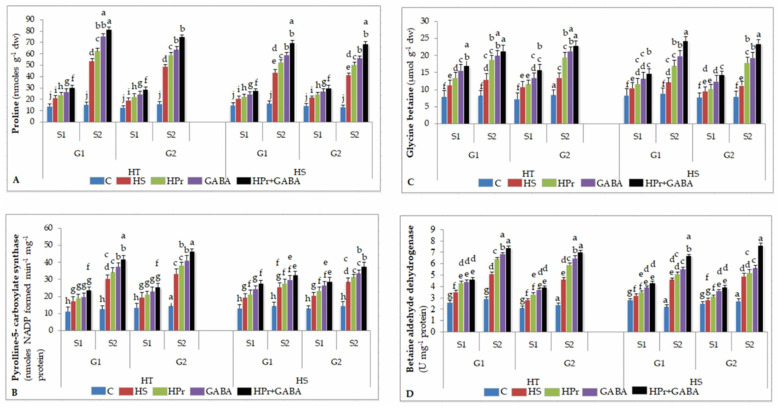
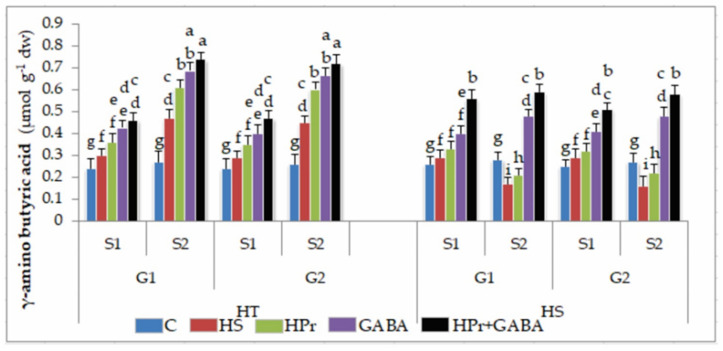
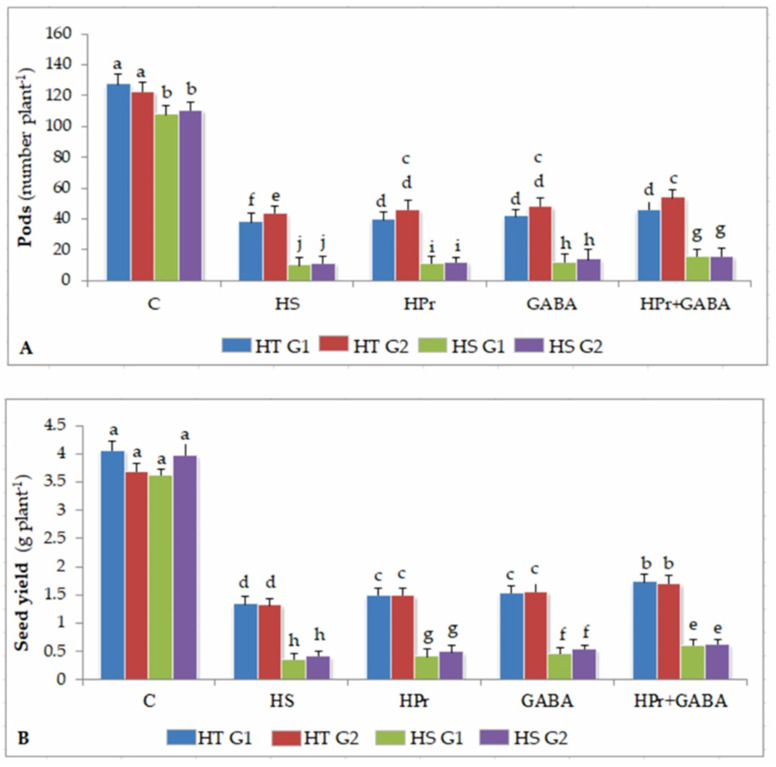
Gradually increasing temperatures at global and local scales are causing heat stress for cool and summer-season food legumes, such as lentil ( Medik.), which is highly susceptible to heat stress, especially during its reproductive stages of development. Hence, suitable strategies are needed to develop heat tolerance in this legume. In the present study, we tested the effectiveness of heat priming (HPr; 6 h at 35 °C) the lentil seeds and a foliar treatment of γ-aminobutyric acid (GABA; 1 mM; applied twice at different times), singly or in combination (HPr+GABA), under heat stress (32/20 °C) in two heat-tolerant (HT; IG2507, IG3263) and two heat-sensitive (HS; IG2821, IG2849) genotypes to mitigate heat stress. The three treatments significantly reduced heat injury to leaves and flowers, particularly when applied in combination, including leaf damage assessed as membrane injury, cellular oxidizing ability, leaf water status, and stomatal conductance. The combined HPr+GABA treatment significantly improved the photosynthetic function, measured as photosynthetic efficiency, chlorophyll concentration, and sucrose synthesis; and significantly reduced the oxidative damage, which was associated with a marked up-regulation in the activities of enzymatic antioxidants. The combined treatment also facilitated the synthesis of osmolytes, such as proline and glycine betaine, by upregulating the expression of their biosynthesizing enzymes (pyrroline-5-carboxylate synthase; betaine aldehyde dehydrogenase) under heat stress. The HPr+GABA treatment caused a considerable enhancement in endogenous levels of GABA in leaves, more so in the two heat-sensitive genotypes. The reproductive function, measured as germination and viability of pollen grains, receptivity of stigma, and viability of ovules, was significantly improved with combined treatment, resulting in enhanced pod number (21-23% in HT and 35-38% in HS genotypes, compared to heat stress alone) and seed yield per plant (22-24% in HT and 37-40% in HS genotypes, in comparison to heat stress alone). The combined treatment (HPr+GABA) was more effective and pronounced in heat-sensitive than heat-tolerant genotypes for all the traits tested. This study offers a potential solution for tackling and protecting heat stress injury in lentil plants.
逐渐升高的全球和局地温度导致凉爽季节和夏季食用豆类作物(如小扁豆)遭受热胁迫,小扁豆尤其容易受到热胁迫的影响,尤其是在其生殖发育阶段。因此,需要采用合适的策略来培育该豆类的耐热性。本研究采用热预处理(HPr;35°C 下 6 小时)和叶面喷施γ-氨基丁酸(GABA;1 mM;在不同时间喷施 2 次),单独或组合(HPr+GABA)处理小扁豆种子,以缓解热胁迫(32/20°C)对两耐热(HT;IG2507、IG3263)和两热敏(HS;IG2821、IG2849)基因型的影响。三种处理均显著降低了叶片和花朵的热损伤,尤其是单独或组合处理时,包括叶片损伤(细胞膜损伤评估)、细胞氧化能力、叶片水分状况和气孔导度。HPr+GABA 联合处理可显著改善光合作用功能,表现为光合效率、叶绿素浓度和蔗糖合成的提高,同时降低氧化损伤,这与抗氧化酶活性的显著上调有关。该联合处理还通过上调脯氨酸和甘氨酸甜菜碱生物合成酶(吡咯啉-5-羧酸合酶;甜菜碱醛脱氢酶)的表达,促进了渗透物(如脯氨酸和甘氨酸甜菜碱)的合成。HPr+GABA 处理使叶片中 GABA 的内源性水平显著升高,在两个热敏基因型中更为显著。通过联合处理,生殖功能(花粉粒萌发和活力、柱头可授性、胚珠活力)显著提高,导致荚果数(在 HT 中增加 21-23%,在 HS 中增加 35-38%,与单独热胁迫相比)和单株种子产量(在 HT 中增加 22-24%,在 HS 中增加 37-40%,与单独热胁迫相比)提高。在所有测试性状中,HPr+GABA 处理在热敏基因型中的效果比耐热基因型更为显著。本研究为解决小扁豆热胁迫伤害提供了一种潜在的解决方案。