Department of Human and Animal Cell Lines, Leibniz-Institute DSMZ-German Collection of Microorganisms and Cell Cultures, 38124 Braunschweig, Germany.
Int J Mol Sci. 2021 May 31;22(11):5902. doi: 10.3390/ijms22115902.
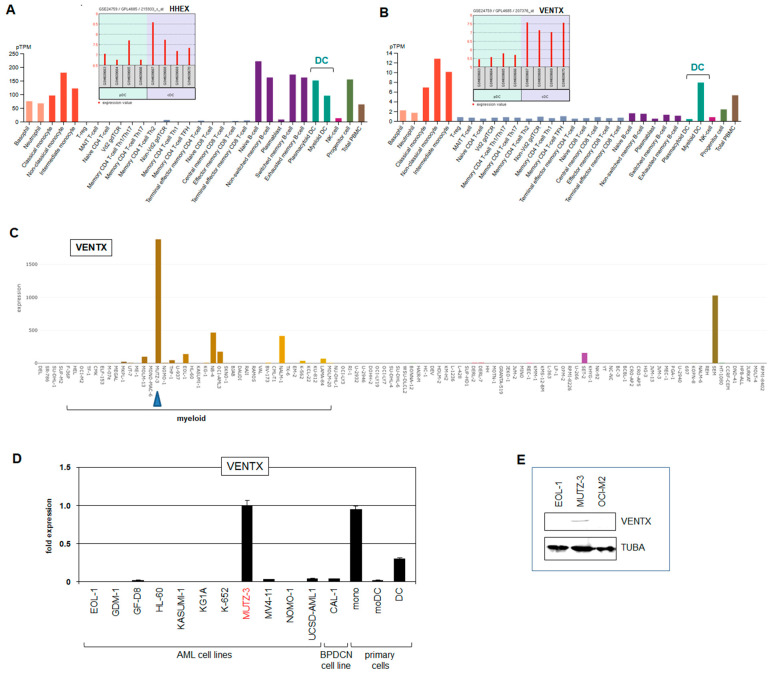
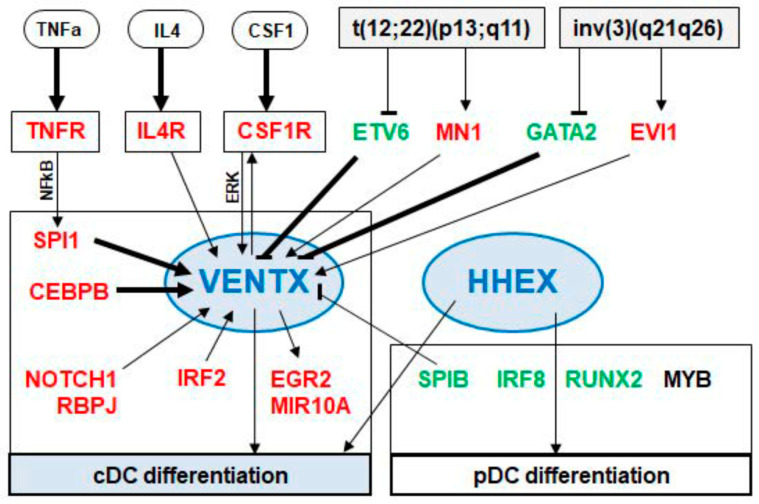
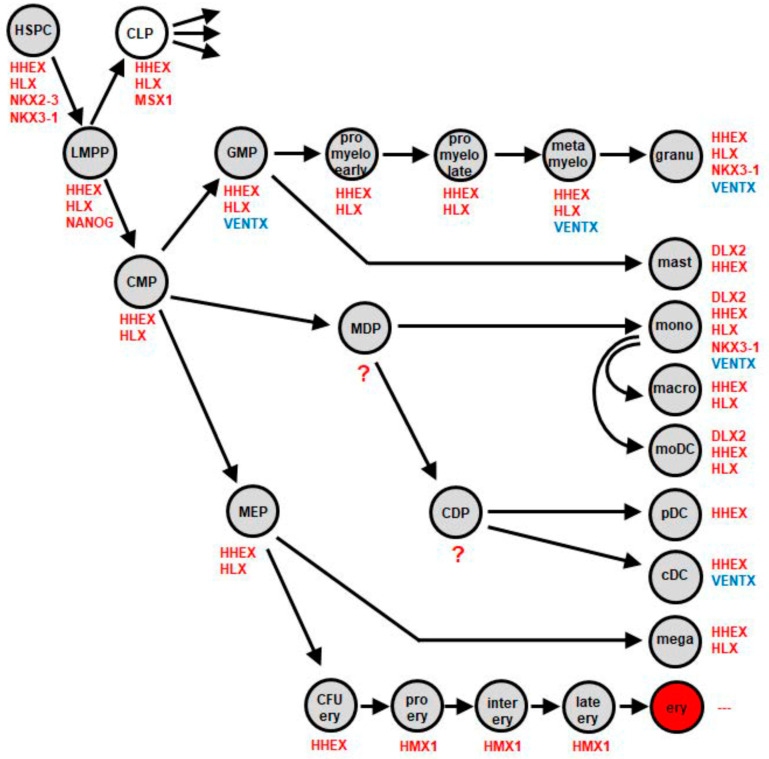
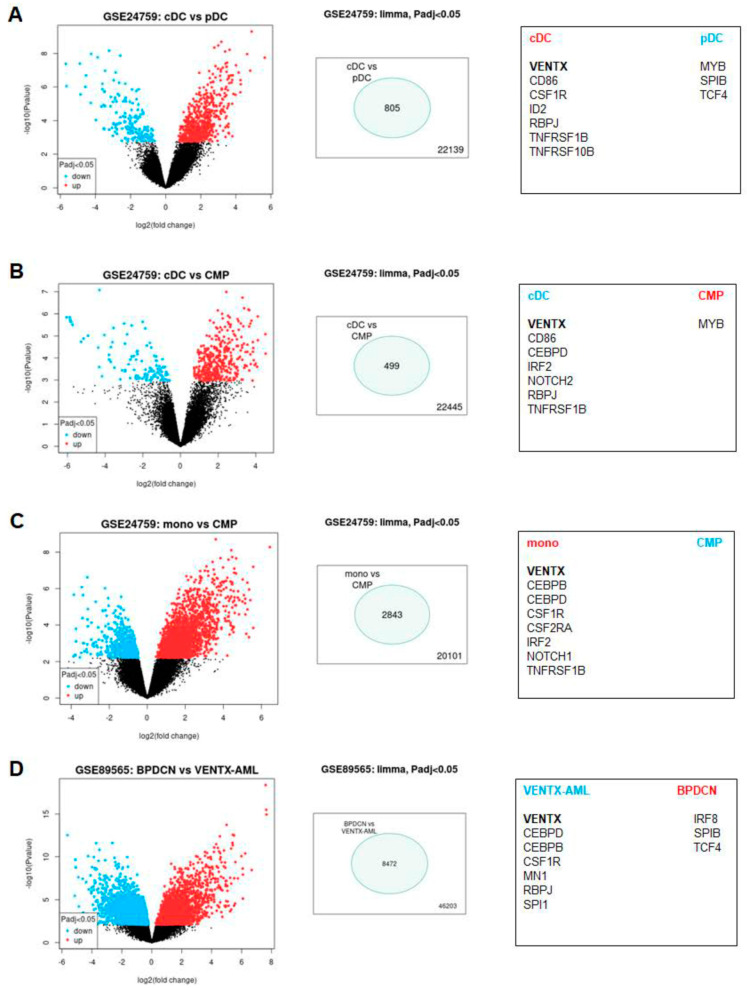
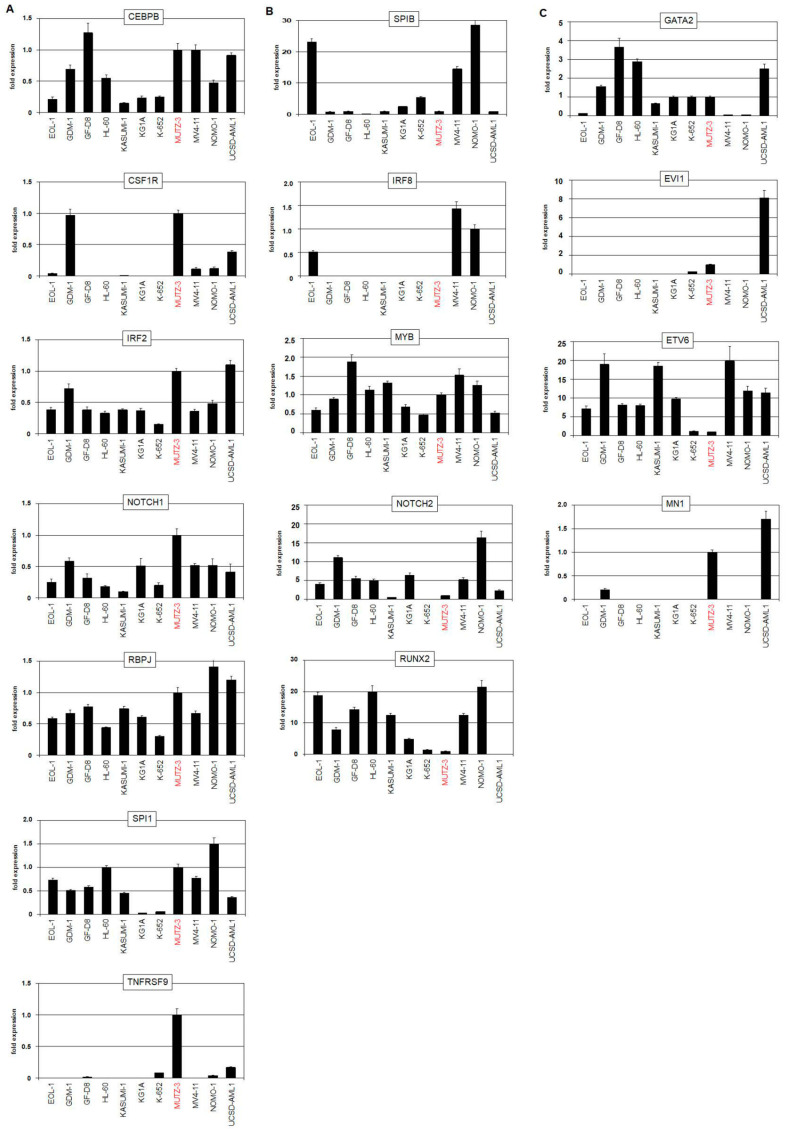
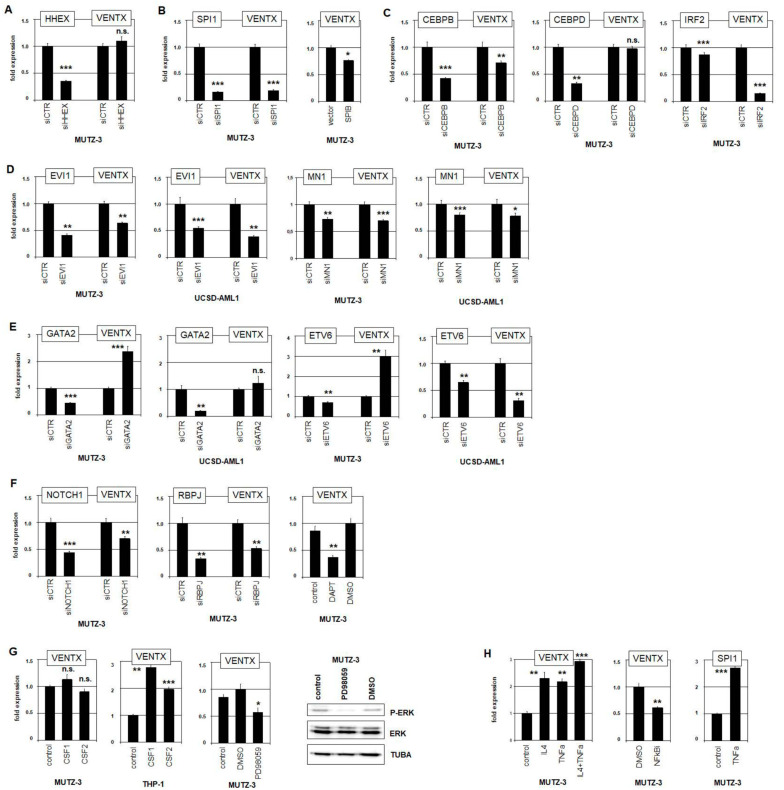
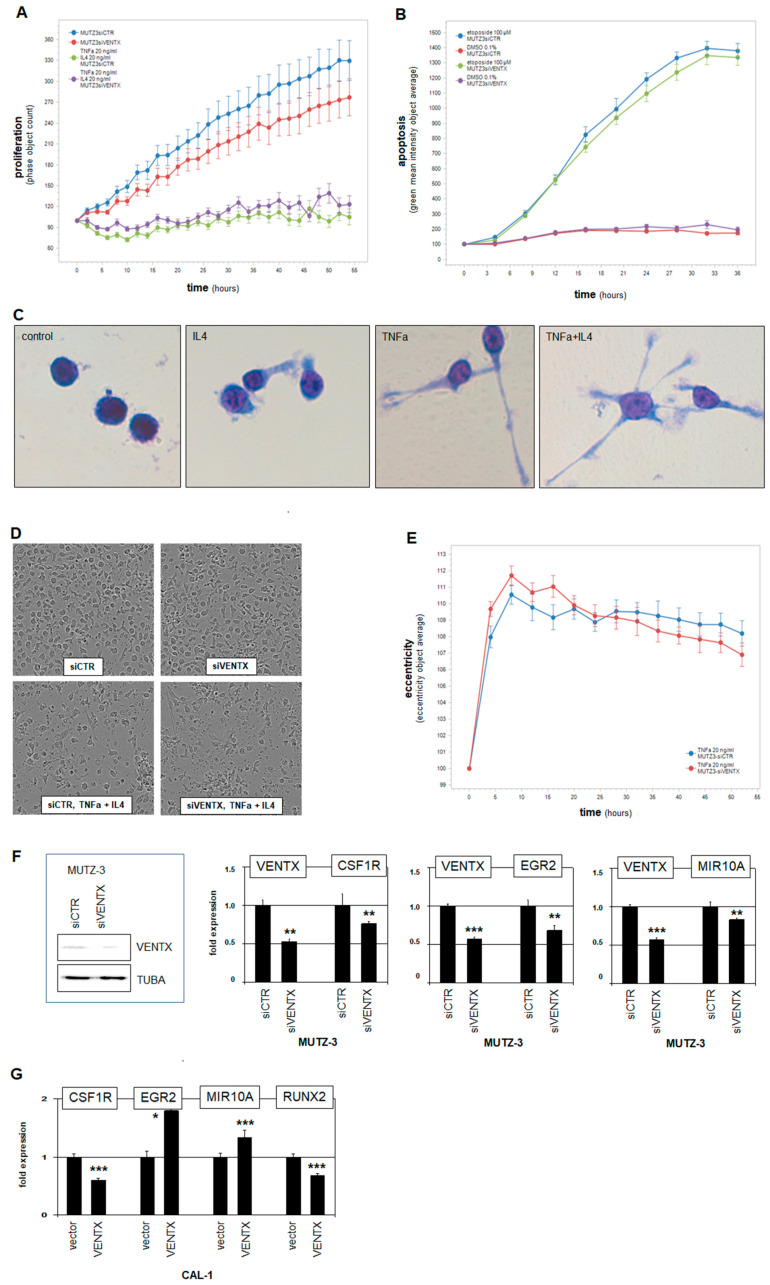
Recently, we documented a hematopoietic NKL-code mapping physiological expression patterns of NKL homeobox genes in human myelopoiesis including monocytes and their derived dendritic cells (DCs). Here, we enlarge this map to include normal NKL homeobox gene expressions in progenitor-derived DCs. Analysis of public gene expression profiling and RNA-seq datasets containing plasmacytoid and conventional dendritic cells (pDC and cDC) demonstrated HHEX activity in both entities while cDCs additionally expressed VENTX. The consequent aim of our study was to examine regulation and function of VENTX in DCs. We compared profiling data of VENTX-positive cDC and monocytes with VENTX-negative pDC and common myeloid progenitor entities and revealed several differentially expressed genes encoding transcription factors and pathway components, representing potential VENTX regulators. Screening of RNA-seq data for 100 leukemia/lymphoma cell lines identified prominent VENTX expression in an acute myelomonocytic leukemia cell line, MUTZ-3 containing inv(3)(q21q26) and t(12;22)(p13;q11) and representing a model for DC differentiation studies. Furthermore, extended gene analyses indicated that MUTZ-3 is associated with the subtype cDC2. In addition to analysis of public chromatin immune-precipitation data, subsequent knockdown experiments and modulations of signaling pathways in MUTZ-3 and control cell lines confirmed identified candidate transcription factors CEBPB, ETV6, EVI1, GATA2, IRF2, MN1, SPIB, and SPI1 and the CSF-, NOTCH-, and TNFa-pathways as VENTX regulators. Live-cell imaging analyses of MUTZ-3 cells treated for VENTX knockdown excluded impacts on apoptosis or induced alteration of differentiation-associated cell morphology. In contrast, target gene analysis performed by expression profiling of knockdown-treated MUTZ-3 cells revealed VENTX-mediated activation of several cDC-specific genes including CSFR1, EGR2, and MIR10A and inhibition of pDC-specific genes like RUNX2. Taken together, we added NKL homeobox gene activities for progenitor-derived DCs to the NKL-code, showing that VENTX is expressed in cDCs but not in pDCs and forms part of a cDC-specific gene regulatory network operating in DC differentiation and function.
最近,我们记录了造血 NKL 编码在人类髓系发生中包括单核细胞及其衍生的树突状细胞 (DC) 在内的 NKL 同源盒基因的生理表达模式。在这里,我们将该图谱扩展到包括祖细胞衍生的 DC 中正常的 NKL 同源盒基因表达。对包含浆细胞样和常规树突状细胞 (pDC 和 cDC) 的公共基因表达谱和 RNA-seq 数据集的分析表明,HHEX 在这两种细胞实体中均有活性,而 cDC 还表达 VENTX。因此,我们的研究目的是研究 VENTX 在 DC 中的调控和功能。我们比较了 VENTX 阳性 cDC 和单核细胞与 VENTX 阴性 pDC 和共同髓系祖细胞实体的分析数据,并揭示了几个编码转录因子和途径成分的差异表达基因,代表潜在的 VENTX 调节剂。对 100 个白血病/淋巴瘤细胞系的 RNA-seq 数据进行筛选,发现含有 inv(3)(q21q26) 和 t(12;22)(p13;q11) 的急性髓单核细胞白血病细胞系 MUTZ-3 中存在明显的 VENTX 表达,代表了 DC 分化研究的模型。此外,对基因的进一步分析表明,MUTZ-3 与 cDC2 亚型相关。除了分析公共染色质免疫沉淀数据外,随后在 MUTZ-3 和对照细胞系中进行的敲低实验和信号通路的调节证实了候选转录因子 CEBPB、ETV6、EVI1、GATA2、IRF2、MN1、SPIB 和 SPI1 以及 CSF-、NOTCH-和 TNFa-途径作为 VENTX 调节剂。用 VENTX 敲低处理 MUTZ-3 细胞的活细胞成像分析排除了对细胞凋亡的影响或诱导与分化相关的细胞形态改变。相反,对敲低处理的 MUTZ-3 细胞进行表达谱分析的靶基因分析显示,VENTX 激活了几个 cDC 特异性基因,包括 CSFR1、EGR2 和 MIR10A,并抑制了 pDC 特异性基因,如 RUNX2。综上所述,我们将造血祖细胞衍生的 DC 中的 NKL 同源盒基因活性添加到 NKL 编码中,表明 VENTX 在 cDC 中表达,但不在 pDC 中表达,并构成了在 DC 分化和功能中起作用的 cDC 特异性基因调控网络的一部分。