Kiss Gabriel, Rusu Gerlinde, Bandur Geza, Hulka Iosif, Romecki Daniel, Péter Francisc
Faculty of Industrial Chemistry and Environmental Engineering, University Politehnica Timișoara, C. Telbisz 6, 300001 Timișoara, Romania.
Momentive Performances Materials, Carl-Duisberg-Straße 101, 51373 Leverkusen, Germany.
Polymers (Basel). 2021 May 26;13(11):1736. doi: 10.3390/polym13111736.
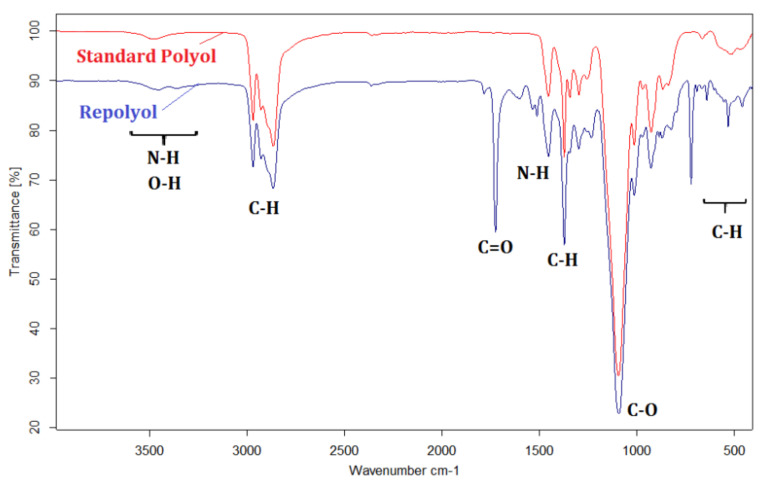
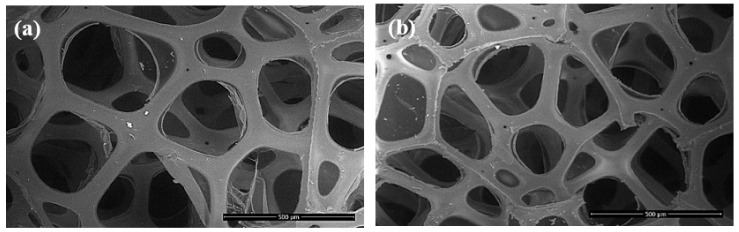
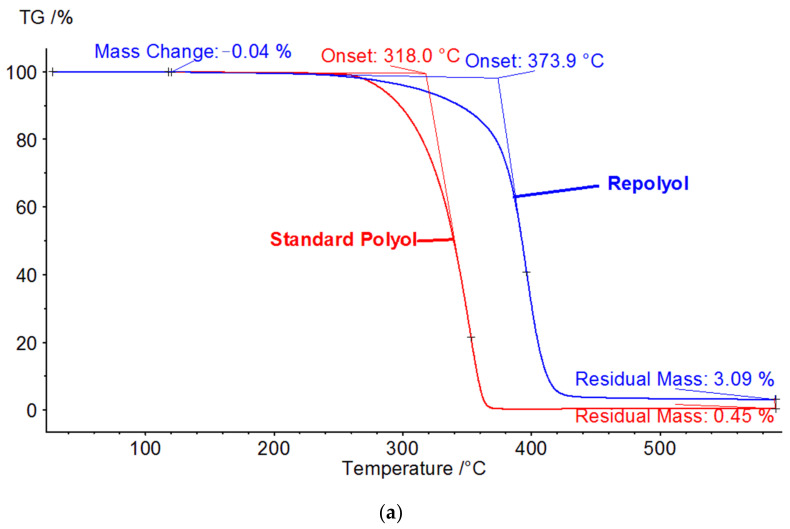
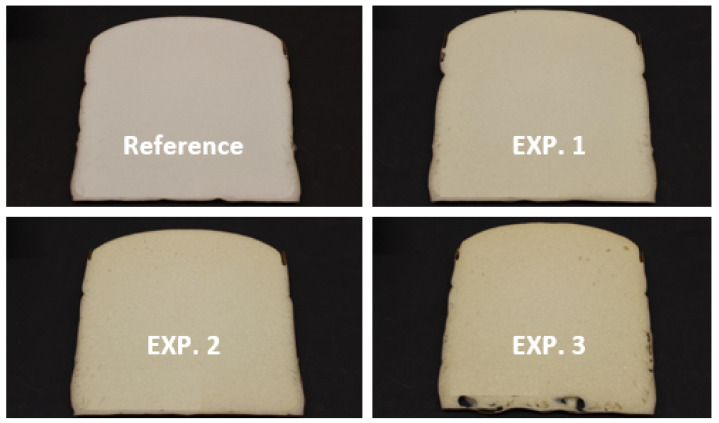
An industrially manufactured recycled polyol, obtained by acidolysis process, was for the first time proved to be a possible replacement of the reference fossil-based polyol in a low-density formulation suitable for industrial production of flexible polyurethane foams. The influence of increasing recycled polyol amounts on the properties of the polyurethane foam has been studied, also performing foam emission tests to evaluate the environmental impact. Using 10 pbw recycled polyol in the standard formulation, significant differences of the physical properties were not observed, but increase of the recycled polyol amount to 30 pbw led to a dramatic decrease of the foam air flow and a very tight foam. To overcome this drawback, N,N'-[3-(dimethylamino)propyl]urea was selected as tertiary amine catalyst, enabling the preservation of foam properties even at high recycled polyol level (30 pbw). Foam emission data demonstrated that this optimized foam formulation also led to an important reduction of volatile organic compounds. The results open the way for further optimization studies in low-density flexible polyurethane foam formulations, to increase the reutilization of the polyurethane waste and reduce the amount of petroleum-based raw materials.
一种通过酸解工艺获得的工业制造的回收多元醇,首次被证明在适合工业生产软质聚氨酯泡沫的低密度配方中可以替代参考化石基多元醇。研究了增加回收多元醇用量对聚氨酯泡沫性能的影响,并进行了泡沫排放测试以评估环境影响。在标准配方中使用10 pbw回收多元醇时,未观察到物理性能有显著差异,但将回收多元醇用量增加到30 pbw会导致泡沫气流急剧下降且泡沫非常致密。为克服这一缺点,选择N,N'-[3-(二甲氨基)丙基]脲作为叔胺催化剂,即使在高回收多元醇水平(30 pbw)下也能保持泡沫性能。泡沫排放数据表明,这种优化的泡沫配方还能显著减少挥发性有机化合物。这些结果为低密度软质聚氨酯泡沫配方的进一步优化研究开辟了道路,以提高聚氨酯废料的再利用率并减少石油基原料的用量。