Ibrahim Abeer A, Kareem Mohanad M, Al-Noor Taghreed H, Al-Muhimeed Tahani, AlObaid Abeer A, Albukhaty Salim, Sulaiman Ghassan M, Jabir Majid, Taqi Zainab J, Sahib Usama I
Department of Medical Laboratories Science, Technical College of Health, Sulaimani Polytechnic University, Sulaymaniyah 46001, Iraq.
Department of Chemistry, College of Science, University of Babylon, Babil-Hilla 51002, Iraq.
Pharmaceuticals (Basel). 2021 May 26;14(6):509. doi: 10.3390/ph14060509.
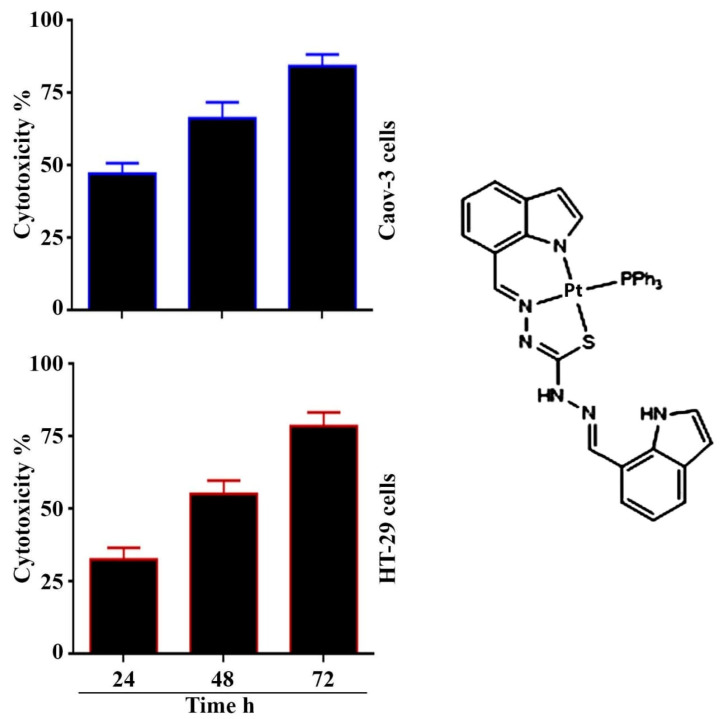
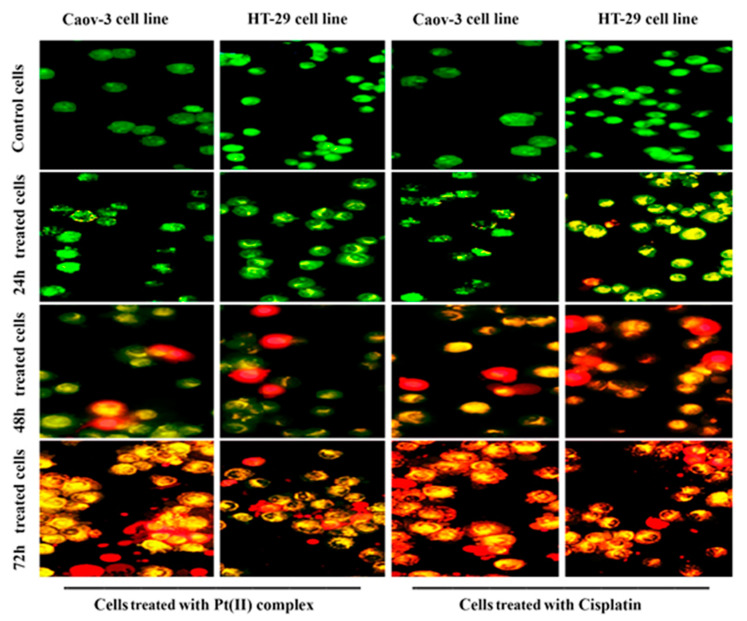
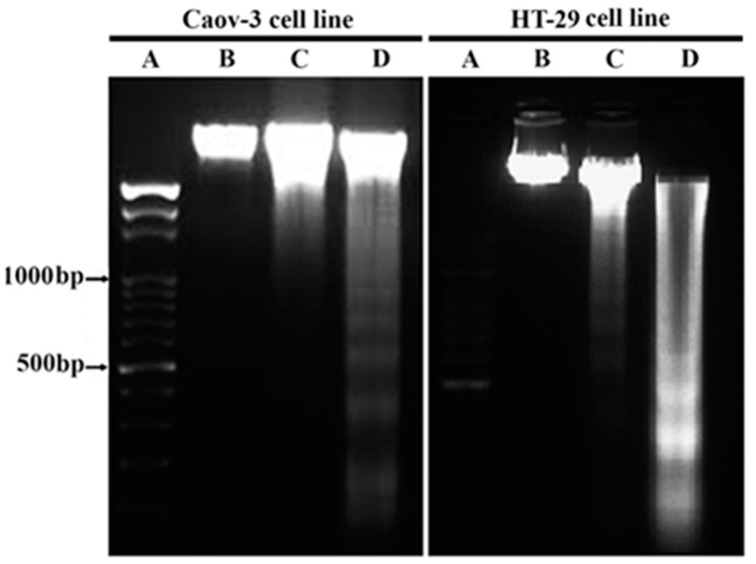
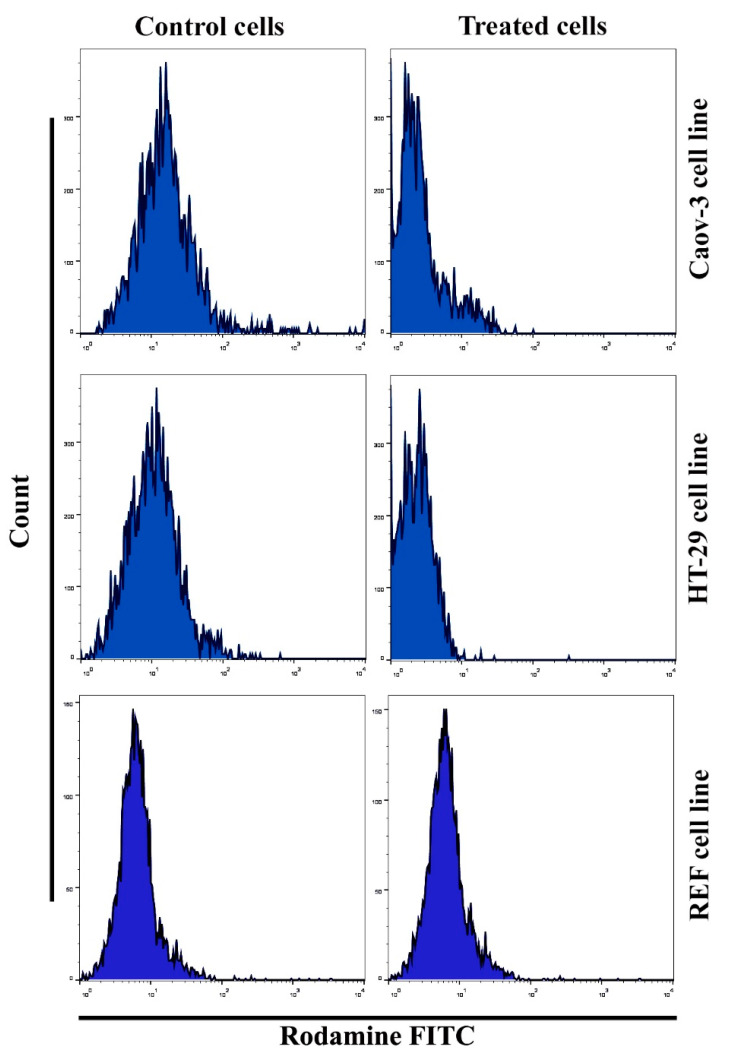
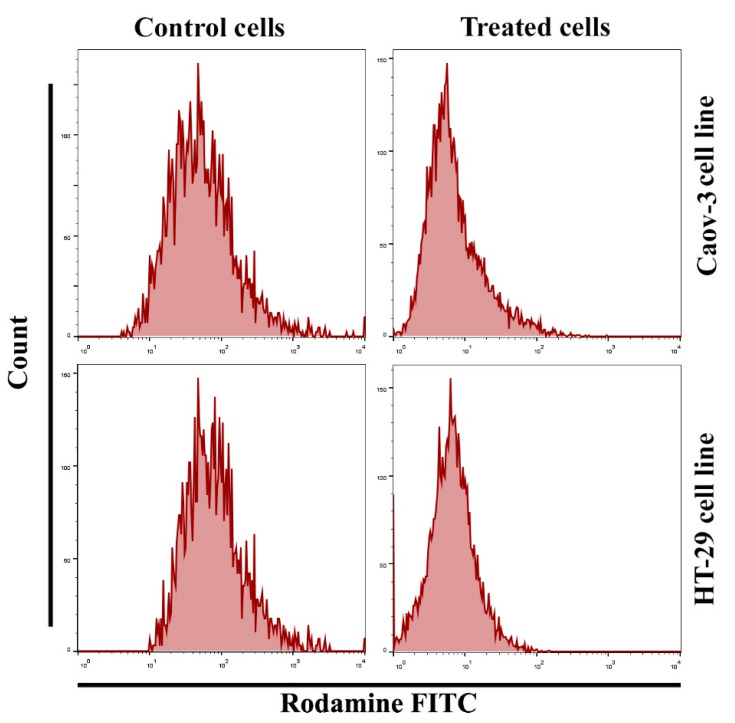
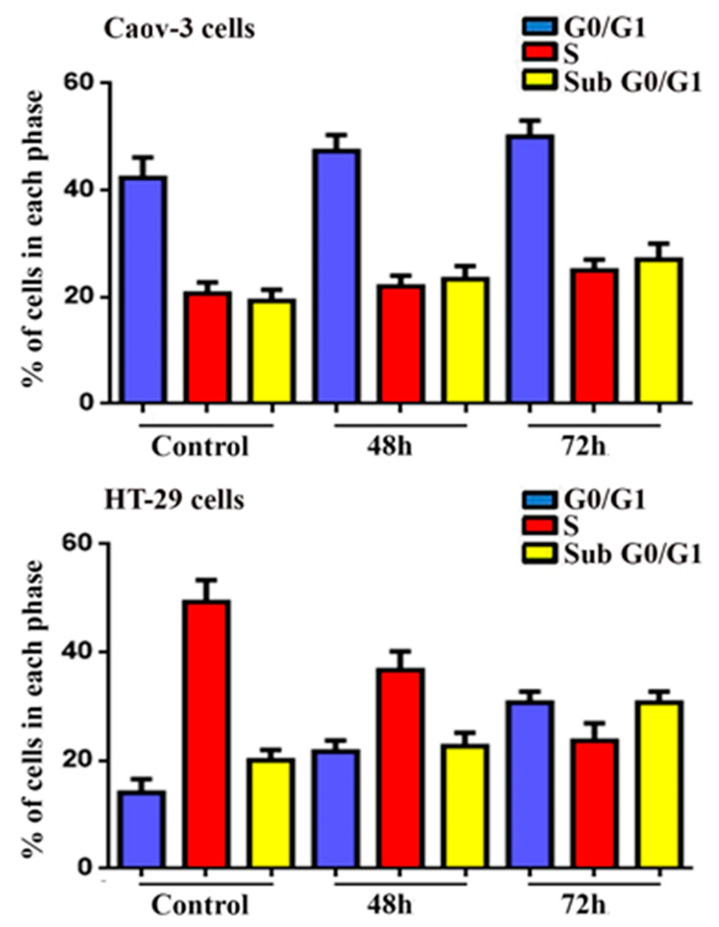
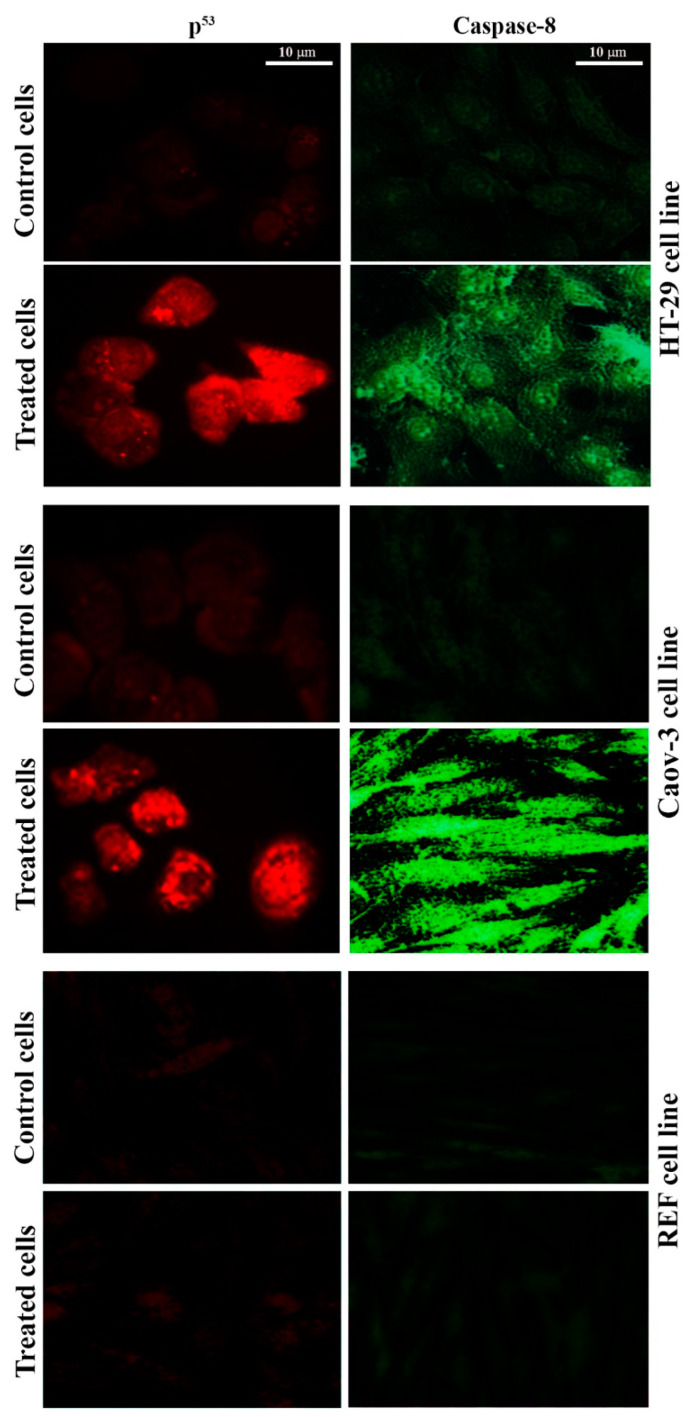
In this study, a platinum(II) complex ([Pt(HL)(PPh)] complex) containing a thiocarbohydrazone as the ligand was tested as an anti-proliferative agent against ovarian adenocarcinoma (Caov-3) and human colorectal adenocarcinoma (HT-29) through MTT assays. Apoptotic markers were tested by the AO/PI double staining assay and DNA fragmentation test. Flow cytometry was conducted to measure cell cycle distribution, while the p53 and caspase-8 pathways were tested via immunofluorescence assay. Results demonstrated that the cytotoxic effect of the Pt(II)-thiocarbohydrazone complexes against Caov-3 and HT-29 cells was highly significant, and this effect triggered the activation of the p53 and caspase-8 pathways. Besides, apoptosis stimulated by the Pt(II)-thiocarbohydrazone complex was associated with cell cycle arrest at the G0/G1 phase. These findings suggest that the target complex inhibited the proliferation of Caov-3 and HT-29 cells, resulting in the arrest of the cell cycle and induction of apoptosis via the stimulation of the p53 and caspase-8 pathways. The present data suggests that the Pt(II)-thiocarbohydrazone complex could also be a promising chemotherapeutic agent for other types of cancer cells.
在本研究中,通过MTT试验测试了一种以硫代卡巴腙为配体的铂(II)配合物([Pt(HL)(PPh)]配合物)作为抗增殖剂对卵巢腺癌(Caov-3)和人结肠腺癌(HT-29)的作用。通过AO/PI双重染色试验和DNA片段化试验检测凋亡标志物。进行流式细胞术以测量细胞周期分布,同时通过免疫荧光试验检测p53和半胱天冬酶-8途径。结果表明,铂(II)-硫代卡巴腙配合物对Caov-3和HT-29细胞的细胞毒性作用非常显著,且这种作用触发了p53和半胱天冬酶-8途径的激活。此外,铂(II)-硫代卡巴腙配合物刺激引起的凋亡与细胞周期在G0/G1期停滞有关。这些发现表明,目标配合物抑制了Caov-�和HT-29细胞的增殖,导致细胞周期停滞并通过刺激p53和半胱天冬酶-8途径诱导凋亡。目前的数据表明,铂(II)-硫代卡巴腙配合物也可能是一种有前景的用于其他类型癌细胞的化疗药物。