Department of Virology, Faculty of Medicine, University of Helsinki, 00290 Helsinki, Finland.
Department of Veterinary Biosciences, Faculty of Veterinary Medicine, University of Helsinki, 00790 Helsinki, Finland.
Viruses. 2021 May 26;13(6):996. doi: 10.3390/v13060996.
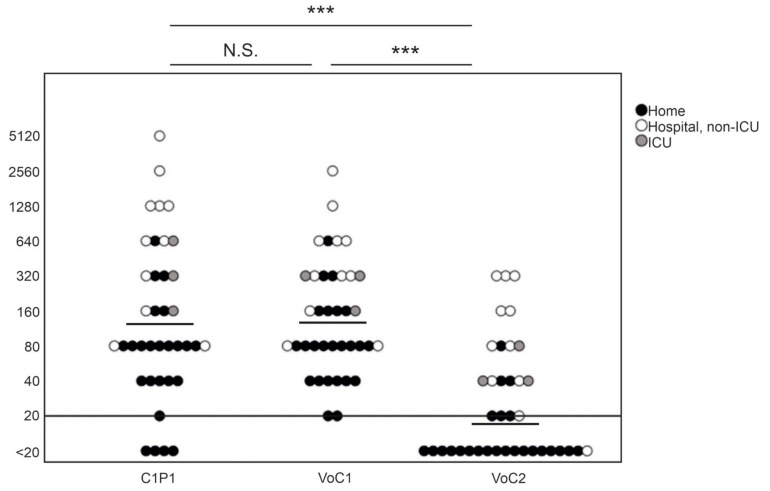
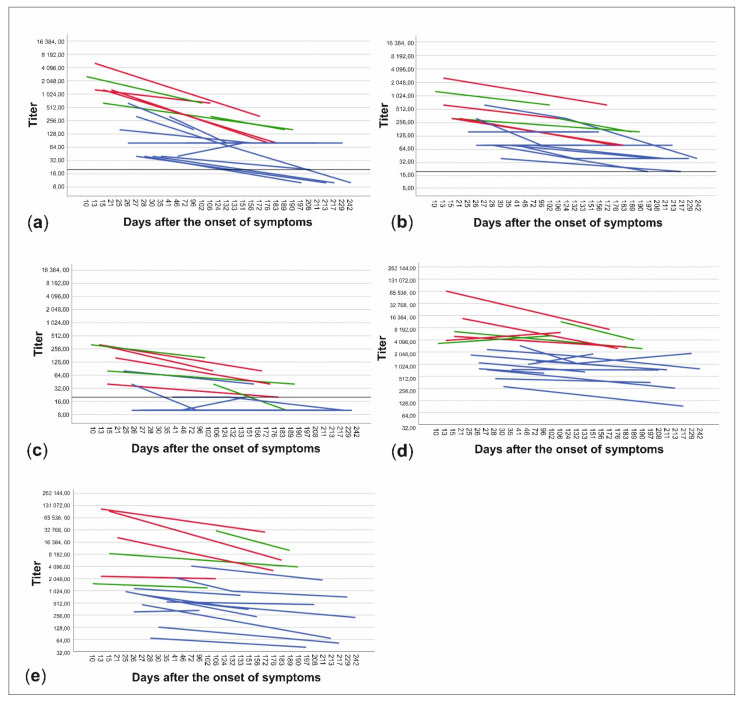
Increasing evidence suggests that some newly emerged SARS-CoV-2 variants of concern (VoCs) resist neutralization by antibodies elicited by the early-pandemic wild-type virus. We applied neutralization tests to paired recoveree sera ( = 38) using clinical isolates representing the first wave (D614G), VoC1, and VoC2 lineages (B.1.1.7 and B 1.351). Neutralizing antibodies inhibited contemporary and VoC1 lineages, whereas inhibition of VoC2 was reduced 8-fold, with 50% of sera failing to show neutralization. These results provide evidence for the increased potential of VoC2 to reinfect previously SARS-CoV-infected individuals. The kinetics of NAbs in different patients showed similar decline against all variants, with generally low initial anti-B.1.351 responses becoming undetectable, but with anti-B.1.1.7 NAbs remaining detectable (>20) for months after acute infection.
越来越多的证据表明,一些新出现的引起关注的 SARS-CoV-2 变体(VOCs)对由早期大流行野生型病毒引发的抗体的中和作用具有抗性。我们使用代表第一波(D614G)、VOC1 和 VOC2 谱系(B.1.1.7 和 B 1.351)的临床分离株对配对的恢复期血清(=38)进行了中和试验。中和抗体抑制了当代和 VOC1 谱系,但对 VOC2 的抑制作用降低了 8 倍,有 50%的血清未能显示出中和作用。这些结果为 VOC2 有更大潜力重新感染先前 SARS-CoV 感染个体提供了证据。不同患者的 NAb 动力学对所有变体均表现出相似的下降趋势,一般来说,初始针对 B.1.351 的反应较低,变得无法检测,但针对 B.1.1.7 的 NAb 在急性感染后数月仍可检测到(>20)。