Translational Immunology Research Program, Faculty of Medicine, University of Helsinki, Finland; Department of Bacteriology and Immunology, Faculty of Medicine, University of Helsinki, Helsinki, Finland.
Department of Virology, Faculty of Medicine, University of Helsinki, Helsinki, Finland.
Vaccine. 2023 May 11;41(20):3233-3246. doi: 10.1016/j.vaccine.2023.04.020. Epub 2023 Apr 14.
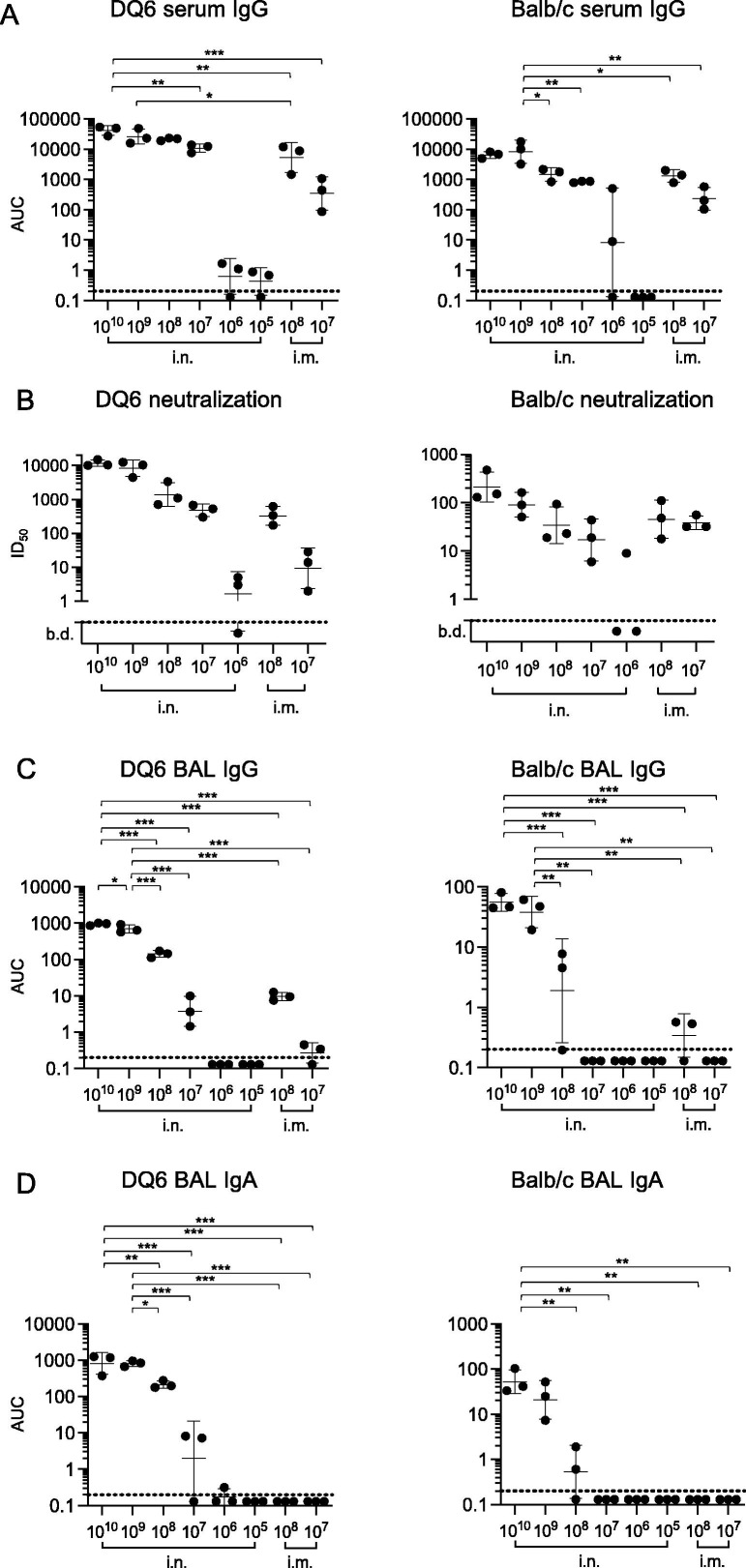
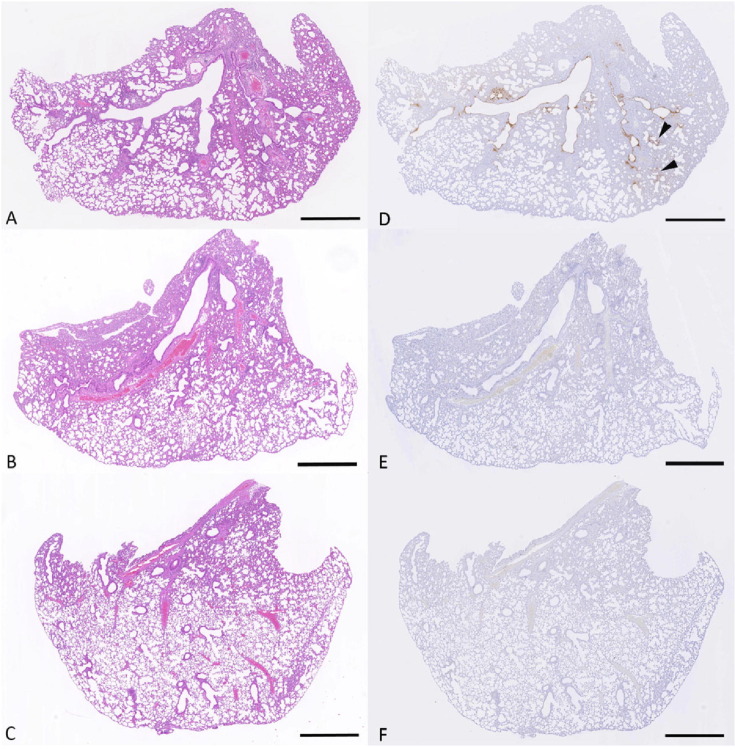
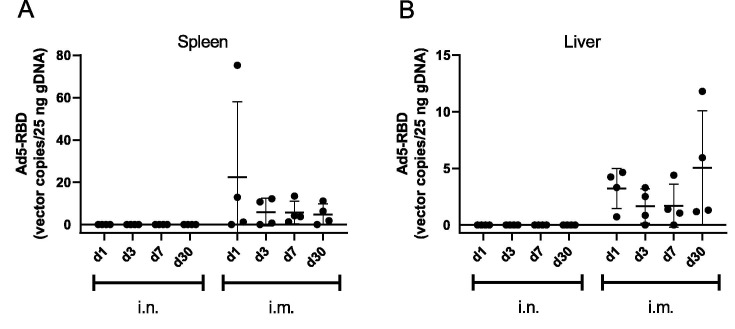
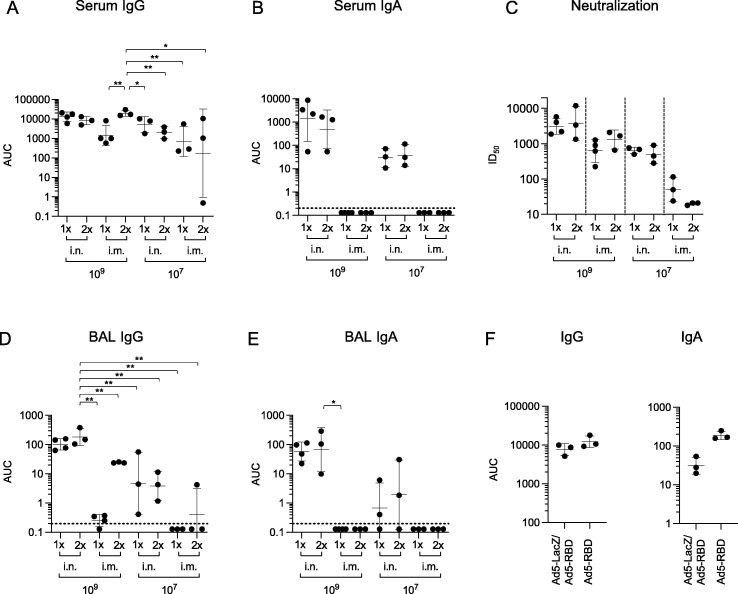
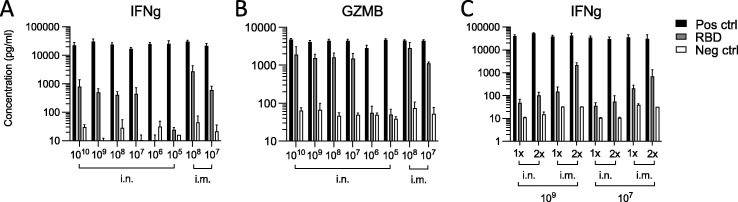
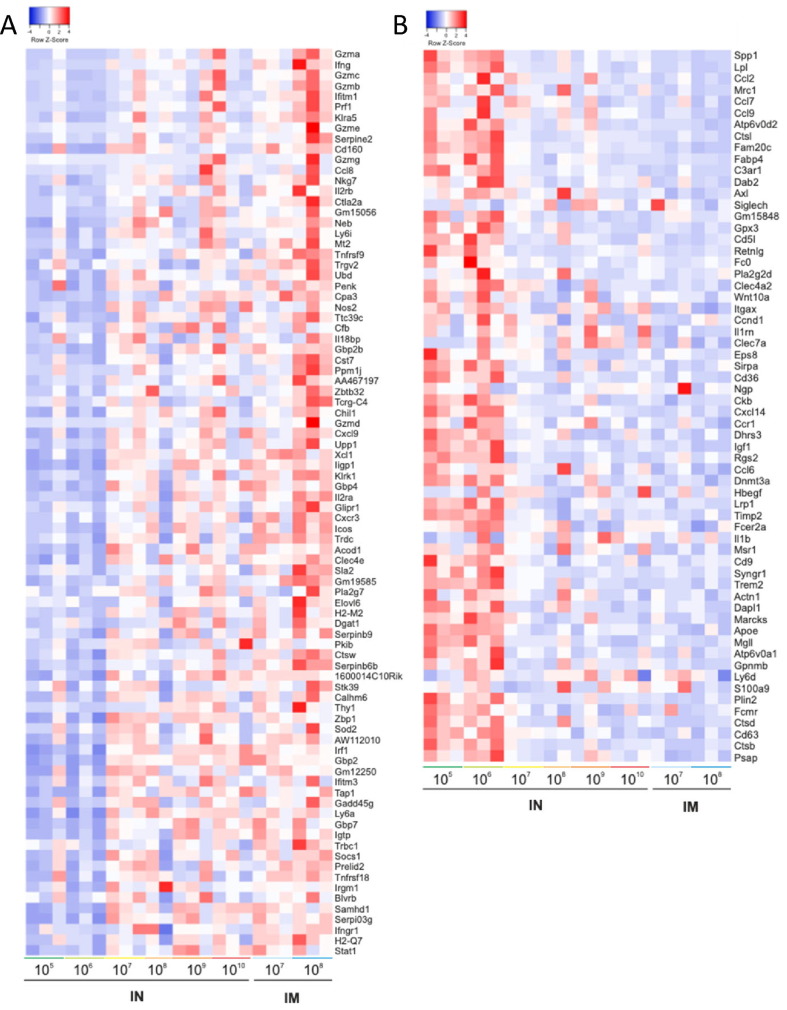
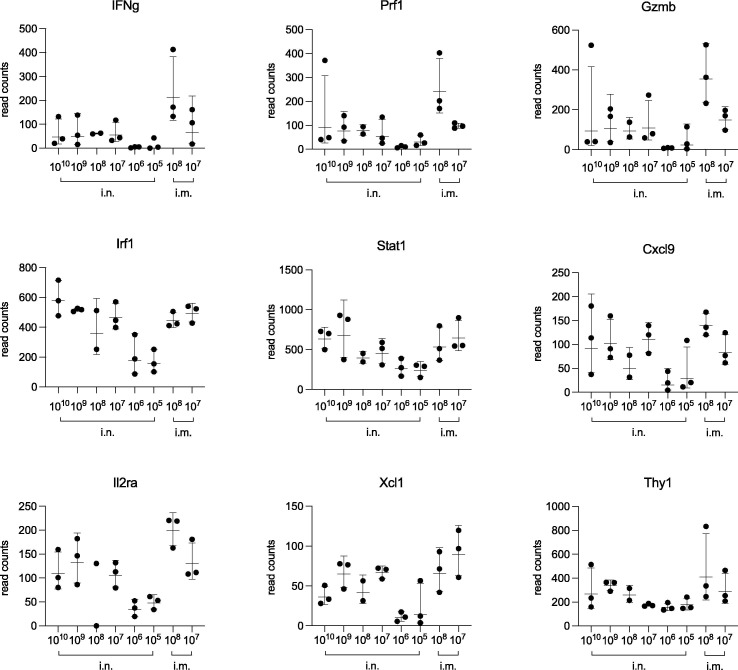
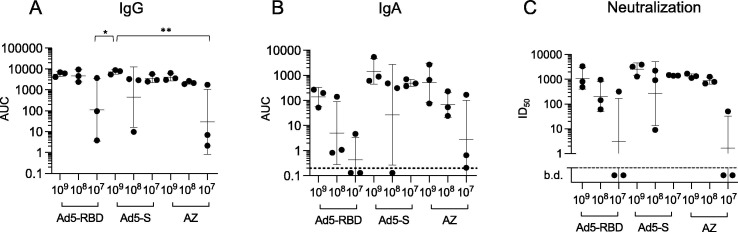
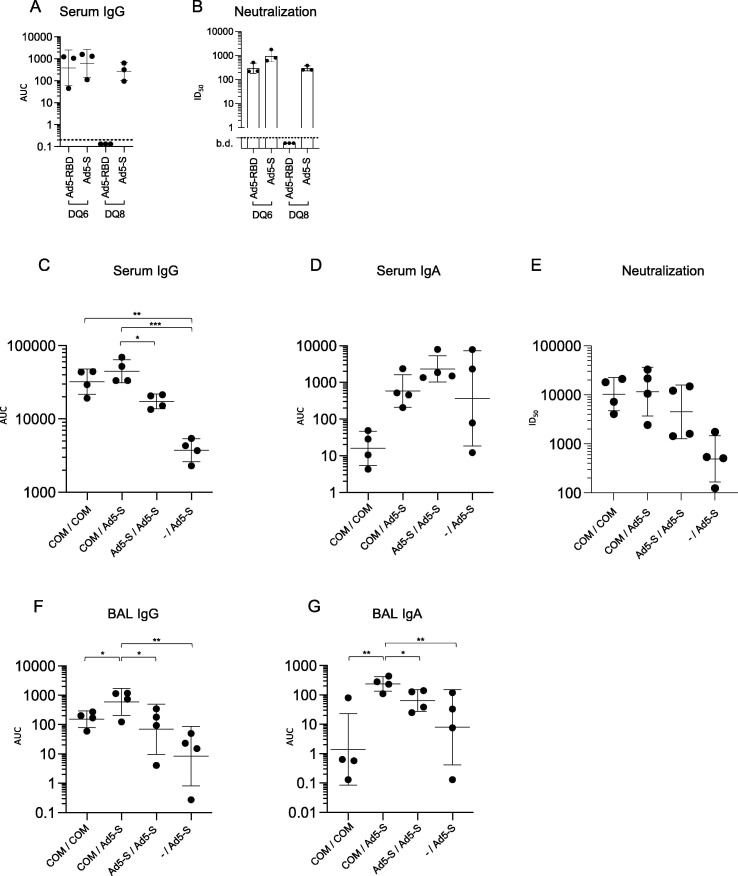
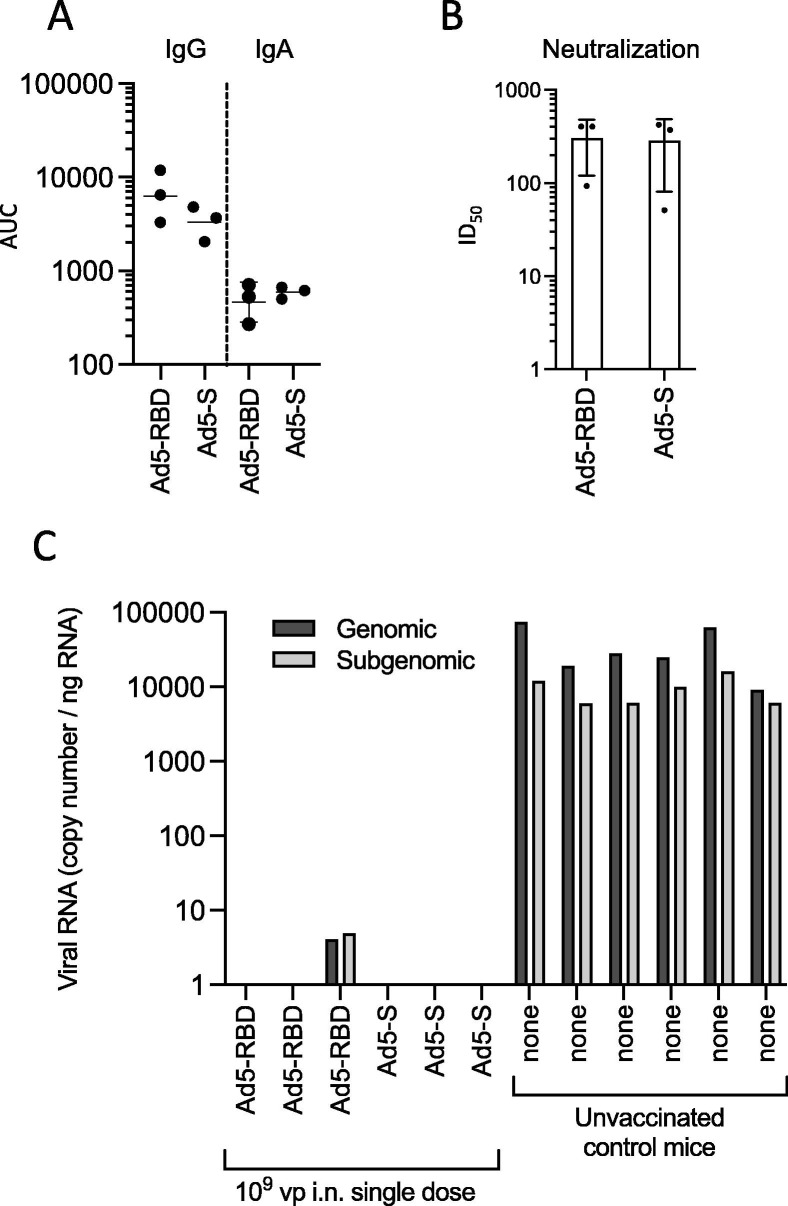
The ongoing SARS-CoV-2 pandemic is controlled but not halted by public health measures and mass vaccination strategies which have exclusively relied on intramuscular vaccines. Intranasal vaccines can prime or recruit to the respiratory epithelium mucosal immune cells capable of preventing infection. Here we report a comprehensive series of studies on this concept using various mouse models, including HLA class II-humanized transgenic strains. We found that a single intranasal (i.n.) dose of serotype-5 adenoviral vectors expressing either the receptor binding domain (Ad5-RBD) or the complete ectodomain (Ad5-S) of the SARS-CoV-2 spike protein was effective in inducing i) serum and bronchoalveolar lavage (BAL) anti-spike IgA and IgG, ii) robust SARS-CoV-2-neutralizing activity in the serum and BAL, iii) rigorous spike-directed T helper 1 cell/cytotoxic T cell immunity, and iv) protection of mice from a challenge with the SARS-CoV-2 beta variant. Intramuscular (i.m.) Ad5-RBD or Ad5-S administration did not induce serum or BAL IgA, and resulted in lower neutralizing titers in the serum. Moreover, prior immunity induced by an intramuscular mRNA vaccine could be potently enhanced and modulated towards a mucosal IgA response by an i.n. Ad5-S booster. Notably, Ad5 DNA was found in the liver or spleen after i.m. but not i.n. administration, indicating a lack of systemic spread of the vaccine vector, which has been associated with a risk of thrombotic thrombocytopenia. Unlike in otherwise genetically identical HLA-DQ6 mice, in HLA-DQ8 mice Ad5-RBD vaccine was inferior to Ad5-S, suggesting that the RBD fragment does not contain a sufficient collection of helper-T cell epitopes to constitute an optimal vaccine antigen. Our data add to previous promising preclinical results on intranasal SARS-CoV-2 vaccination and support the potential of this approach to elicit mucosal immunity for preventing transmission of SARS-CoV-2.
持续的 SARS-CoV-2 大流行虽然受到公共卫生措施和大规模疫苗接种策略的控制,但尚未被遏制,这些策略仅依赖于肌肉内疫苗。鼻内疫苗可以刺激或募集到能够预防感染的呼吸道上皮黏膜免疫细胞。在这里,我们使用各种小鼠模型,包括 HLA 类 II 人源化转基因品系,报告了一系列关于这一概念的综合研究。我们发现,单次鼻腔(i.n.)给予表达 SARS-CoV-2 刺突蛋白受体结合域(Ad5-RBD)或完整外域(Ad5-S)的血清型 5 腺病毒载体,可有效诱导 i)血清和支气管肺泡灌洗液(BAL)中的抗刺突 IgA 和 IgG,ii)血清和 BAL 中强大的 SARS-CoV-2 中和活性,iii)严格的刺突导向 Th1 细胞/细胞毒性 T 细胞免疫,以及 iv)保护小鼠免受 SARS-CoV-2 beta 变体的挑战。肌肉内(i.m.)给予 Ad5-RBD 或 Ad5-S 不会诱导血清或 BAL 中的 IgA,并且在血清中的中和滴度较低。此外,肌肉内 mRNA 疫苗诱导的先前免疫可以通过鼻腔内 Ad5-S 加强剂有效地增强并调节为黏膜 IgA 反应。值得注意的是,Ad5 DNA 在肌肉内给予后可在肝脏或脾脏中检测到,但在鼻腔内给予后则无法检测到,这表明疫苗载体没有全身传播,这与血栓性血小板减少症的风险相关。与其他在遗传上完全相同的 HLA-DQ6 小鼠不同,在 HLA-DQ8 小鼠中,Ad5-RBD 疫苗不如 Ad5-S,这表明 RBD 片段不包含足够数量的辅助 T 细胞表位,无法构成最佳疫苗抗原。我们的数据增加了之前关于 SARS-CoV-2 鼻腔内疫苗接种的有希望的临床前结果,并支持了这种方法诱导黏膜免疫以预防 SARS-CoV-2 传播的潜力。