Programme in Cancer and Stem Cell Biology, Duke-NUS Medical School, 8, College road, Singapore, 169857, Singapore.
Centre for Computational Biology, Duke-NUS Medical School, Singapore, 169857, Singapore.
Genome Biol. 2021 Jun 1;22(1):167. doi: 10.1186/s13059-021-02375-2.
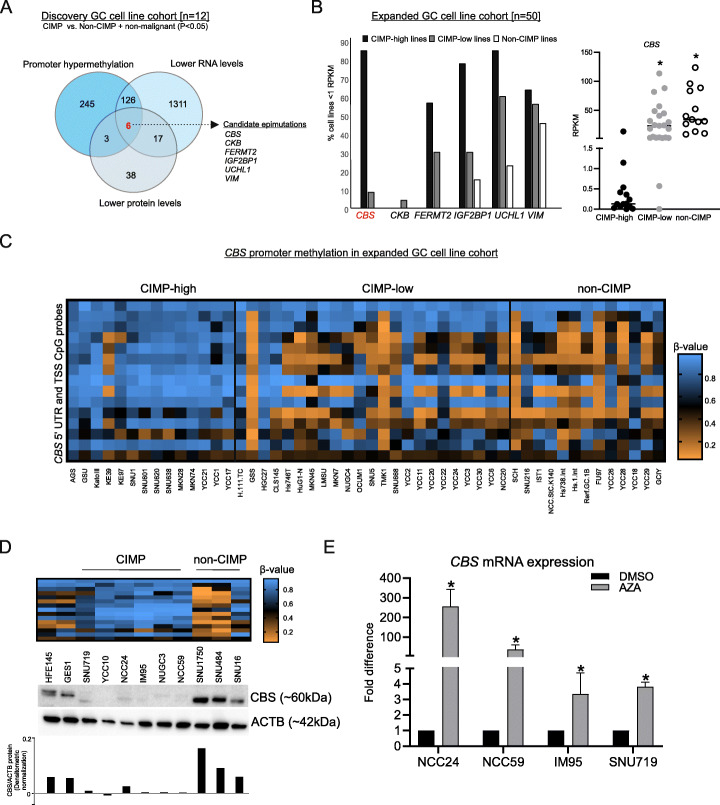
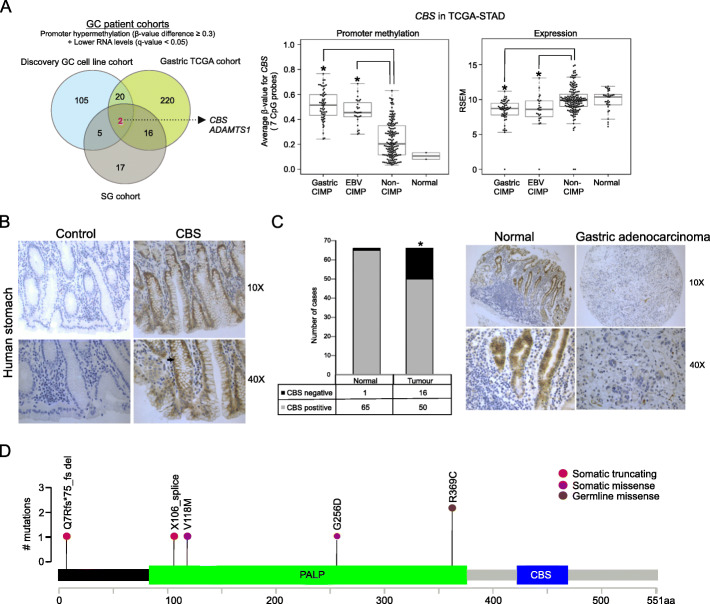
CIMP (CpG island methylator phenotype) is an epigenetic molecular subtype, observed in multiple malignancies and associated with the epigenetic silencing of tumor suppressors. Currently, for most cancers including gastric cancer (GC), mechanisms underlying CIMP remain poorly understood. We sought to discover molecular contributors to CIMP in GC, by performing global DNA methylation, gene expression, and proteomics profiling across 14 gastric cell lines, followed by similar integrative analysis in 50 GC cell lines and 467 primary GCs.
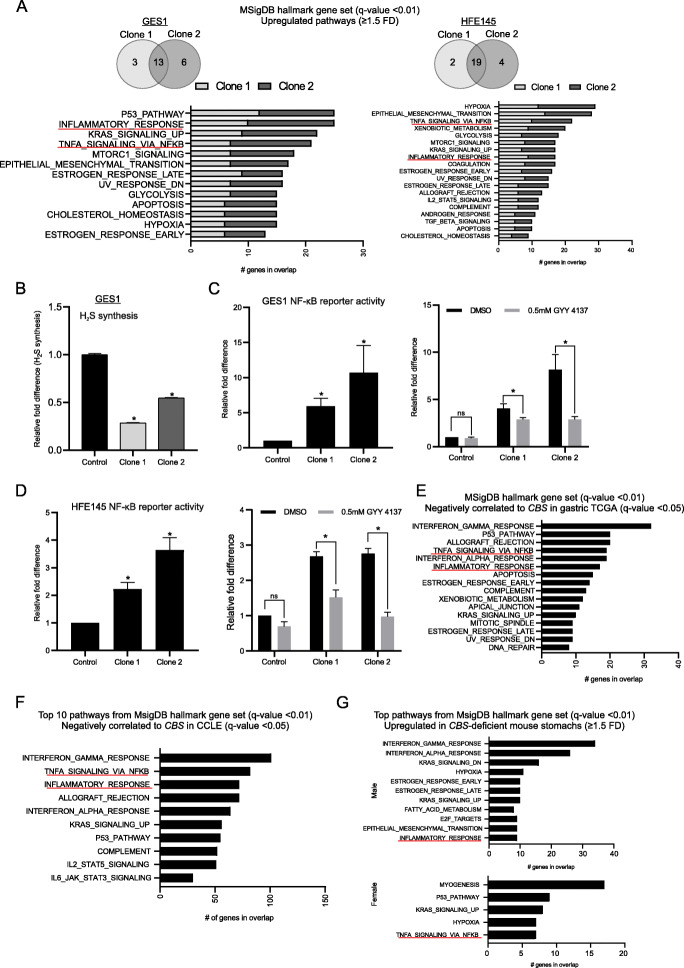
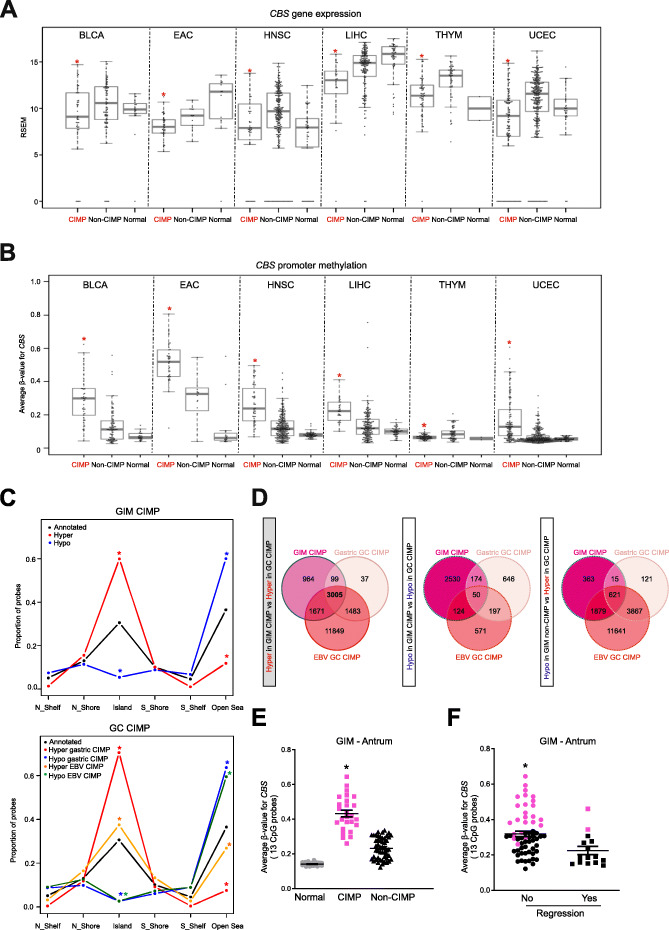
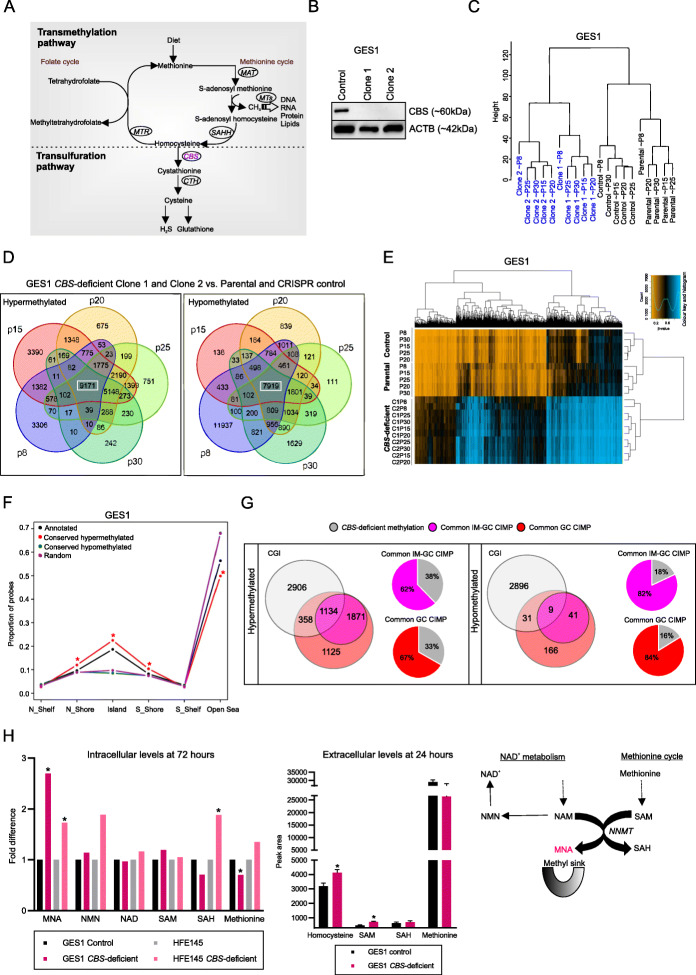
We identify the cystathionine beta-synthase enzyme (CBS) as a highly recurrent target of epigenetic silencing in CIMP GC. Likewise, we show that CBS epimutations are significantly associated with CIMP in various other cancers, occurring even in premalignant gastroesophageal conditions and longitudinally linked to clinical persistence. Of note, CRISPR deletion of CBS in normal gastric epithelial cells induces widespread DNA methylation changes that overlap with primary GC CIMP patterns. Reflecting its metabolic role as a gatekeeper interlinking the methionine and homocysteine cycles, CBS loss in vitro also causes reductions in the anti-inflammatory gasotransmitter hydrogen sulfide (HS), with concomitant increase in NF-κB activity. In a murine genetic model of CBS deficiency, preliminary data indicate upregulated immune-mediated transcriptional signatures in the stomach.
Our results implicate CBS as a bi-faceted modifier of aberrant DNA methylation and inflammation in GC and highlights HS donors as a potential new therapy for CBS-silenced lesions.
CIMP(CpG 岛甲基化表型)是一种表观遗传学分子亚型,在多种恶性肿瘤中观察到,并与肿瘤抑制因子的表观遗传沉默有关。目前,对于包括胃癌(GC)在内的大多数癌症,CIMP 的机制仍知之甚少。我们通过对 14 种胃细胞系进行全基因组 DNA 甲基化、基因表达和蛋白质组学分析,随后对 50 种 GC 细胞系和 467 例原发性 GC 进行类似的综合分析,旨在发现 GC 中 CIMP 的分子贡献者。
我们确定半胱氨酸β-合酶酶(CBS)为 CIMP GC 中表观遗传沉默的高度反复出现的靶标。同样,我们表明 CBS 表观突变与各种其他癌症中的 CIMP 显著相关,甚至在癌前胃食管条件下发生,并与临床持续性纵向相关。值得注意的是,CRISPR 缺失正常胃上皮细胞中的 CBS 会诱导广泛的 DNA 甲基化变化,与原发性 GC CIMP 模式重叠。反映其作为连接蛋氨酸和同型半胱氨酸循环的代谢关键酶的作用,CBS 在体外的缺失也会导致抗炎气体递质硫化氢(HS)的减少,同时 NF-κB 活性增加。在 CBS 缺乏的小鼠遗传模型中,初步数据表明胃中免疫介导的转录特征上调。
我们的结果表明 CBS 是 GC 中异常 DNA 甲基化和炎症的双方面调节剂,并强调 HS 供体可能是治疗 CBS 沉默病变的潜在新疗法。