Department of Medical Microbiology, Amsterdam Infection & Immunity Institute, Amsterdam UMC, location AMC, University of Amsterdam, Amsterdam, The Netherlands.
Department of Immunology and Microbiology, The Scripps Research Institute, La Jolla, California, USA.
J Virol. 2021 Aug 10;95(17):e0009421. doi: 10.1128/JVI.00094-21.
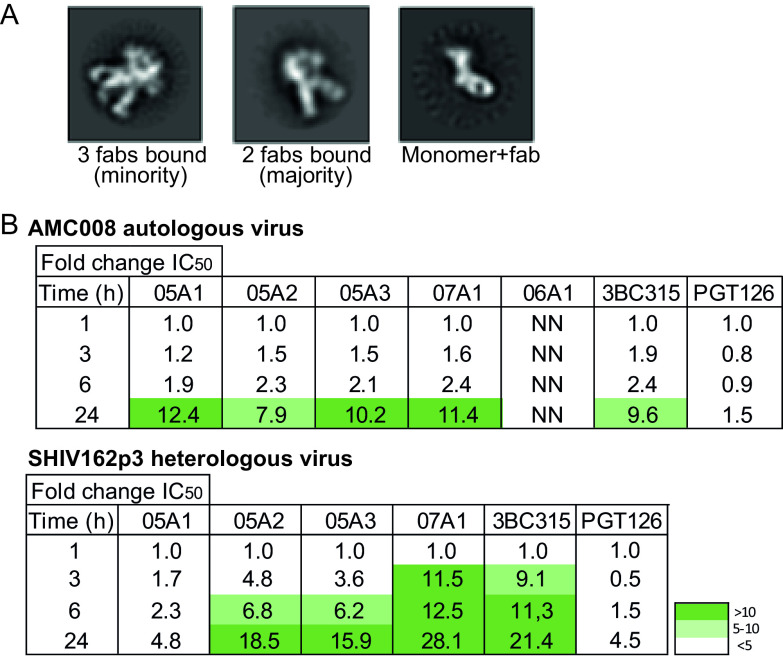
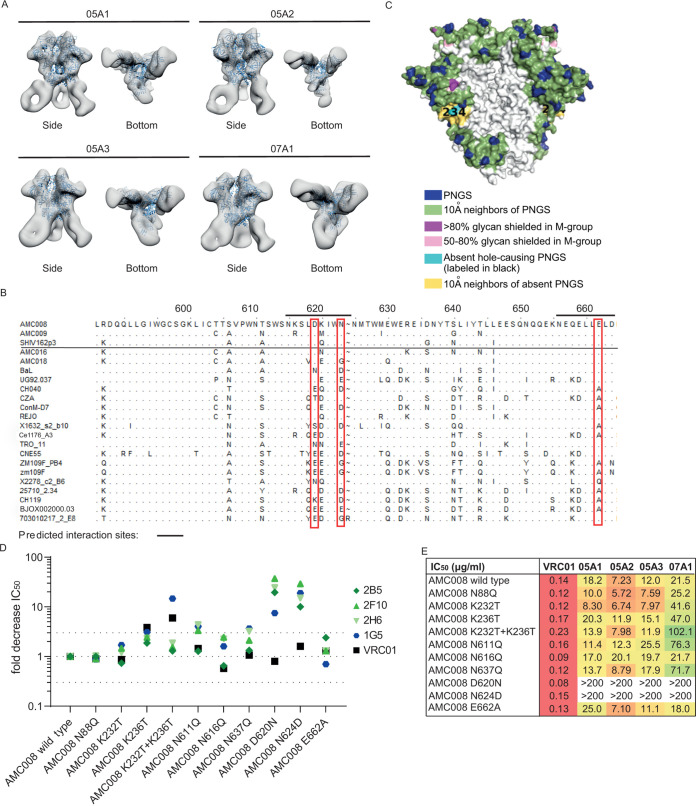
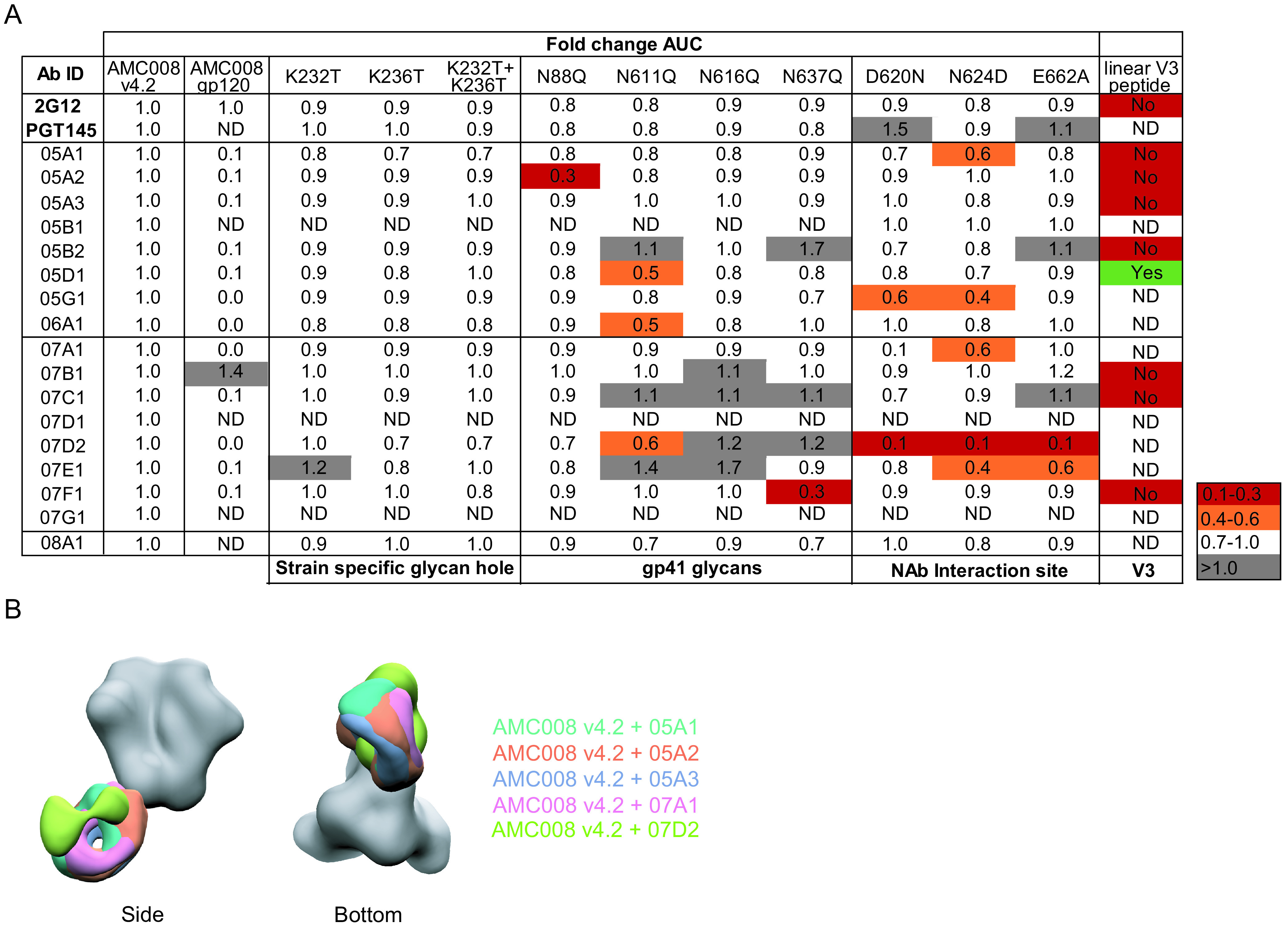
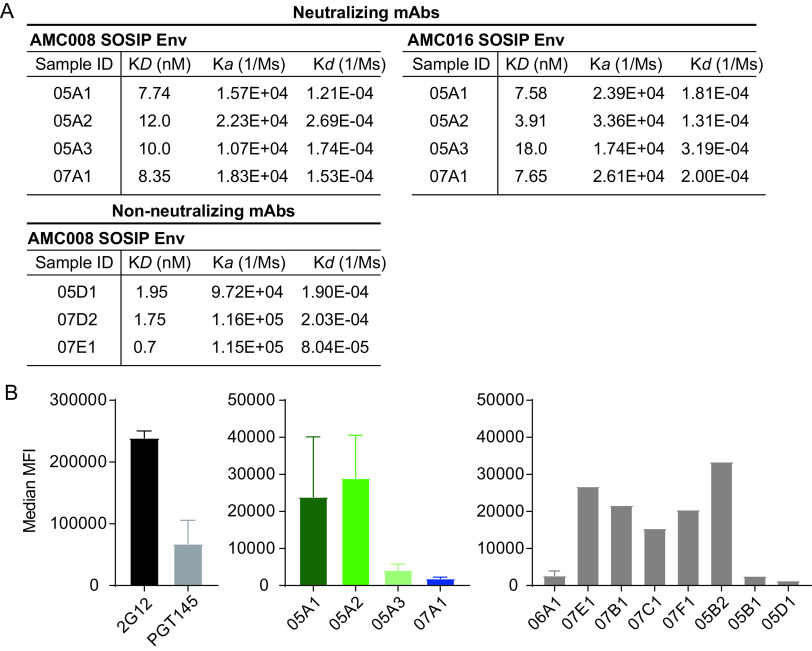
The high viral diversity of HIV-1 is a formidable hurdle for the development of an HIV-1 vaccine. Elicitation of broadly neutralizing antibodies (bNAbs) would offer a solution, but so far immunization strategies have failed to efficiently elicit bNAbs. To overcome these obstacles, it is important to understand the immune responses elicited by current HIV-1 envelope glycoprotein (Env) immunogens. To gain more insight, we characterized monoclonal antibodies (MAbs) isolated from rabbits immunized with Env SOSIP trimers based on the clade B isolate AMC008. Four rabbits that were immunized three times with AMC008 trimer developed robust autologous and sporadic low-titer heterologous neutralizing responses. Seventeen AMC008 trimer-reactive MAbs were isolated using antigen-specific single B-cell sorting. Four of these MAbs neutralized the autologous AMC008 virus and several other clade B viruses. When visualized by electron microscopy, the complex of the neutralizing MAbs with the AMC008 trimer showed binding to the gp41 subunit with unusual approach angles, and we observed that their neutralization ability depended on their capacity to induce Env trimer dissociation. Thus, AMC008 SOSIP trimer immunization induced clade B-neutralizing MAbs with unusual approach angles with neutralizing effects that involve trimer destabilization. Optimizing these responses might provide an avenue to the induction of trimer-dissociating bNAbs. Roughly 32 million people have died as a consequence of HIV-1 infection since the start of the epidemic, and 1.7 million people still get infected with HIV-1 annually. Therefore, a vaccine to prevent HIV-1 infection is urgently needed. Current HIV-1 immunogens are not able to elicit the broad immune responses needed to provide protection against the large variation of HIV-1 strains circulating globally. A better understanding of the humoral immune responses elicited by immunization with state-of-the-art HIV-1 immunogens should facilitate the design of improved HIV-1 vaccine candidates. We identified antibodies with the ability to neutralize multiple HIV-1 viruses by destabilization of the envelope glycoprotein. Their weak but consistent cross-neutralization ability indicates the potential of this epitope to elicit broad responses. The trimer-destabilizing effect of the neutralizing MAbs, combined with detailed characterization of the neutralization epitope, can be used to shape the next generation of HIV-1 immunogens to elicit improved humoral responses after vaccination.
HIV-1 的高病毒多样性是开发 HIV-1 疫苗的一个巨大障碍。广泛中和抗体(bNAbs)的诱导将提供一种解决方案,但到目前为止,免疫策略未能有效地诱导 bNAbs。为了克服这些障碍,了解当前 HIV-1 包膜糖蛋白(Env)免疫原诱导的免疫反应非常重要。为了获得更深入的了解,我们根据 B 型 clade 分离株 AMC008 对用 Env SOSIP 三聚体免疫的兔子分离的单克隆抗体(MAbs)进行了表征。用 AMC008 三聚体免疫三次的四只兔子产生了强大的自体和散发性低滴度异源中和反应。使用抗原特异性单个 B 细胞分选分离了 17 种对 AMC008 三聚体有反应的 MAbs。其中 4 种 MAbs 中和自体 AMC008 病毒和几种其他 B 型 clade 病毒。通过电子显微镜观察,与 AMC008 三聚体结合的中和 MAbs 与 gp41 亚基结合的角度不同,我们观察到它们的中和能力取决于诱导 Env 三聚体解离的能力。因此,AMC008 SOSIP 三聚体免疫诱导了具有不寻常接近角度的 B 型 clade 中和 MAbs,其中和作用涉及三聚体不稳定。优化这些反应可能为诱导三聚体解离的 bNAbs 提供途径。自艾滋病流行开始以来,大约有 3200 万人死于 HIV-1 感染,每年仍有 170 万人感染 HIV-1。因此,迫切需要一种预防 HIV-1 感染的疫苗。目前的 HIV-1 免疫原不能诱导广泛的免疫反应,无法提供对全球广泛传播的 HIV-1 株的保护。更好地了解用最先进的 HIV-1 免疫原免疫诱导的体液免疫反应,将有助于设计更好的 HIV-1 疫苗候选物。我们通过破坏包膜糖蛋白鉴定出具有中和多种 HIV-1 病毒能力的抗体。它们微弱但一致的交叉中和能力表明该表位有潜力诱导广泛的反应。中和 MAbs 的三聚体破坏作用,结合中和表位的详细表征,可用于塑造下一代 HIV-1 免疫原,以在接种疫苗后诱导更好的体液反应。