Department of Nephrology, Philipps-University of Marburg, Baldingerstrasse, 35033, Marburg, Germany.
Department of Nephrology, Justus-Liebig-University of Gießen, Klinikstrasse 33, Gießen, Germany.
BMC Nephrol. 2021 Jun 2;22(1):205. doi: 10.1186/s12882-021-02333-x.
Cognitive impairment in chronic kidney disease, especially in end stage renal disease, is a public health problem. Nevertheless, the cause of chronic kidney disease still remains unclear. A prevalence of cognitive impairment in patients with end stage renal disease of up to 87% has been found.
The study at hand deals with the research on the - potential - effect of timing on cognitive performance when testing cognitive impairment in hemodialysis patients during the dialysis cycle. We tested cognitive performance with a neuropsychological test battery (RBANS, Repeatable Battery for the Assessment of Neuropsychological Status) on two occasions while patients were on dialysis as well as on a dialysis-free day. In addition, all participants were rated using the Geriatric Depression Scale (GDS) and several demographic and clinical variables were recorded in order to investigate their possible influence on cognitive performance. The patients were recruited in three dialysis centers in the central region of Hesse, Germany. Twenty-six participants completed the 3 testings during a period of 6 weeks. The testing was carried out in the dialysis centers.
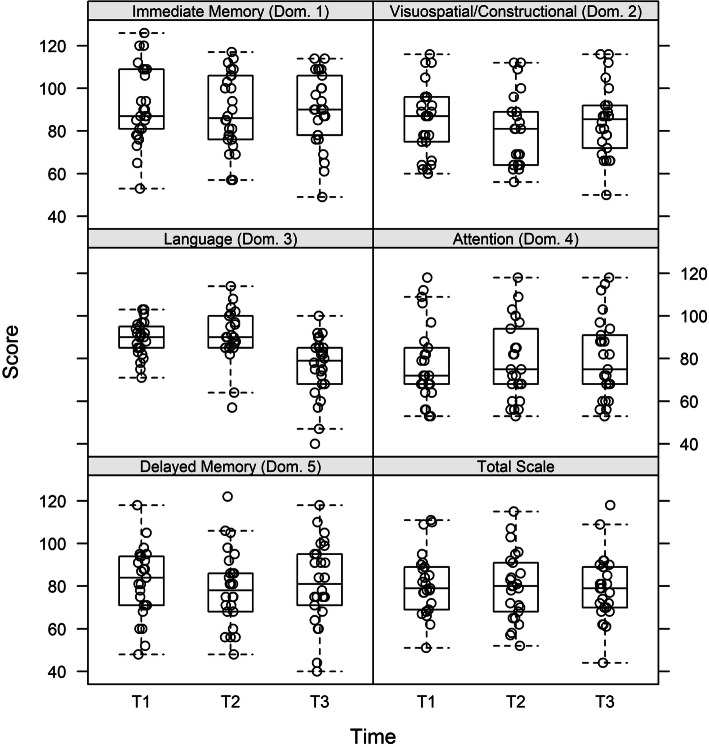
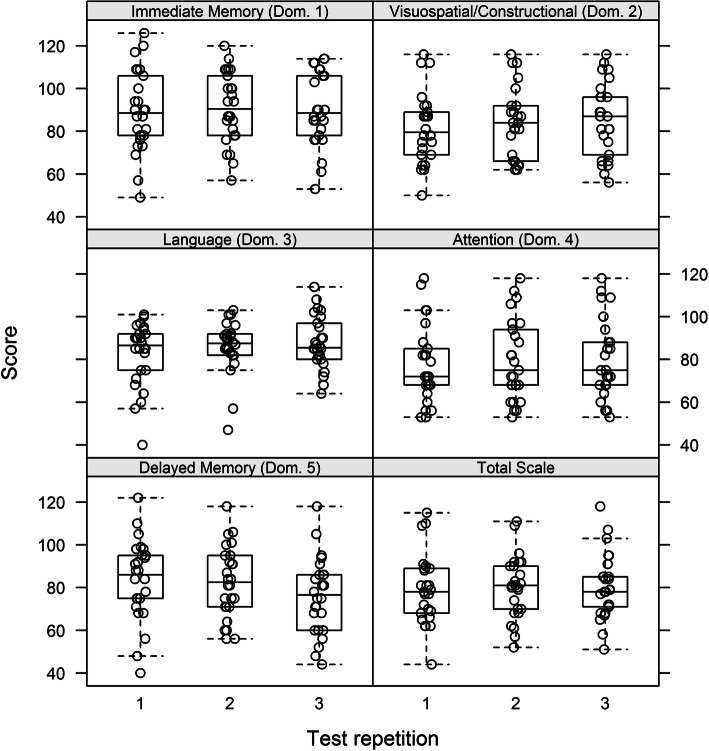
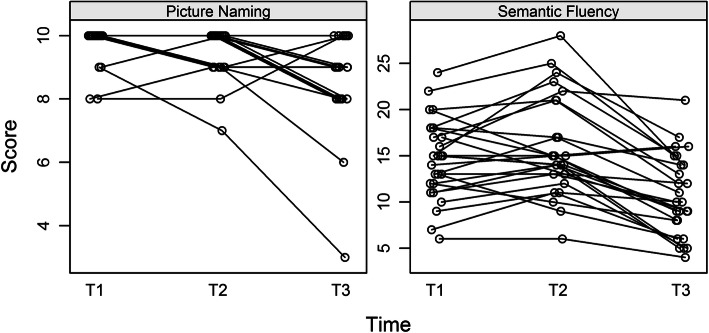
Looking at the total scale score, patients achieved the best cognitive performance in the RBANS during the first 2 h on dialysis with 81.1 points. When comparing the scores of the three measurement occasions (first 2 h, Timepoint 1 vs. last 2 h, Timepoint 2 vs. dialysis free day, Timepoint 3, however, no significant difference in the total scale score was detected. But patients showed significantly better cognitive performance in language in the first 2 h (p < 0.001) as well as in the last 2 h (p < 0.001) compared with the dialysis-free day.
Due to the high prevalence of cognitive impairment, there is an increasing need to assess cognitive function in dialysis patients. Our data show that the time point of testing (first 2 h on hemodialysis vs. last 2 h on hemodialysis vs. Hemodialysis free day) had no influence of cognitive function in hemodialysis patients in routine indications.
慢性肾脏病患者,尤其是终末期肾病患者的认知障碍是一个公共卫生问题。然而,慢性肾脏病的病因仍不清楚。有研究发现,终末期肾病患者的认知障碍患病率高达 87%。
本研究探讨了在血液透析患者的透析周期中,测试认知障碍时,时间对认知表现的潜在影响。我们在两次透析期间以及无透析日使用神经心理学测试组合(RBANS,重复性成套神经心理状态测验)测试认知表现。此外,所有参与者均接受老年抑郁量表(GDS)评定,并记录了几个人口统计学和临床变量,以调查它们对认知表现的可能影响。患者在德国黑森州中部的三个透析中心招募。26 名参与者在 6 周内完成了 3 次测试。测试在透析中心进行。
从总评分来看,患者在透析的前 2 小时内 RBANS 认知表现最佳,得分为 81.1 分。比较三次测量时(前 2 小时,时间点 1 与后 2 小时,时间点 2 与无透析日,时间点 3)的评分,总评分无显著差异。但是,患者在第一次 2 小时(p<0.001)和最后 2 小时(p<0.001)的语言测试中认知表现明显更好,而与无透析日相比。
由于认知障碍的高患病率,越来越需要评估透析患者的认知功能。我们的数据表明,在常规适应证下,测试时间点(血液透析的前 2 小时与后 2 小时与血液透析无时间)对血液透析患者的认知功能没有影响。