Institute of Diagnostic and Interventional Radiology, Pediatric Radiology and Neuroradiology, University Medical Centre Rostock, Ernst-Heydemann-Str. 6, 18057, Rostock, Germany.
Center for Transdisciplinary Neurosciences Rostock, University Medical Centre Rostock, Rostock, Germany.
BMC Med Imaging. 2021 Jun 2;21(1):93. doi: 10.1186/s12880-021-00615-2.
In patients with peripheral artery disease (PAD), run-off MR-angiography (MRA) is a commonly performed diagnostic test to obtain high-resolution images for evaluation of the arterial system from the aorta through the distal run-off vessels. The aim of this study was to investigate the prevalence of visceral artery involvement (VAI) in patients with PAD and leg symptoms examined with run-off MRA.
We retrospectively analyzed 145 patients (median age 68 years, range 27-91) who underwent MRA due to known or suspected PAD at our institution between 2012 and 2018. MRA examinations were re-evaluated for visceral artery stenosis. Patient dossiers were reviewed to determine cardiovascular risk factors, kidney function and Fontaine stage of PAD.
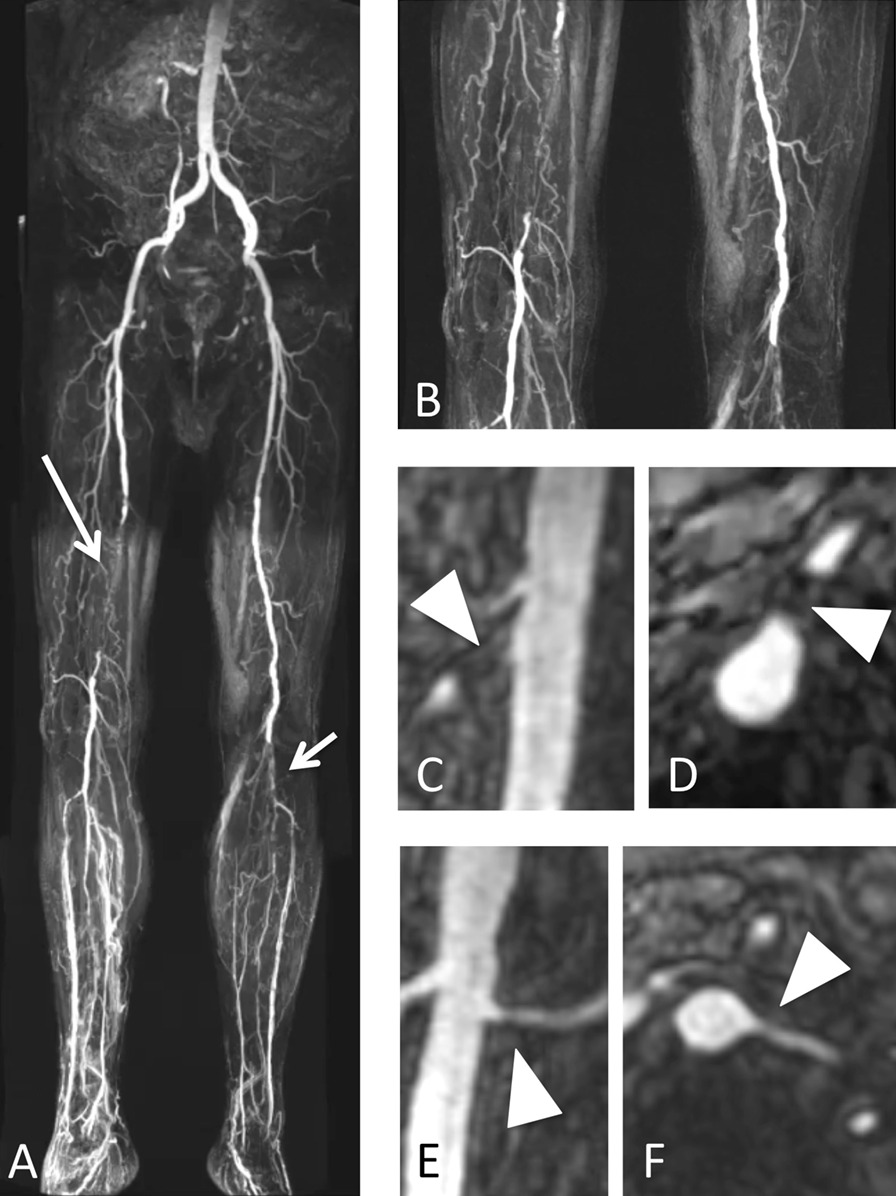
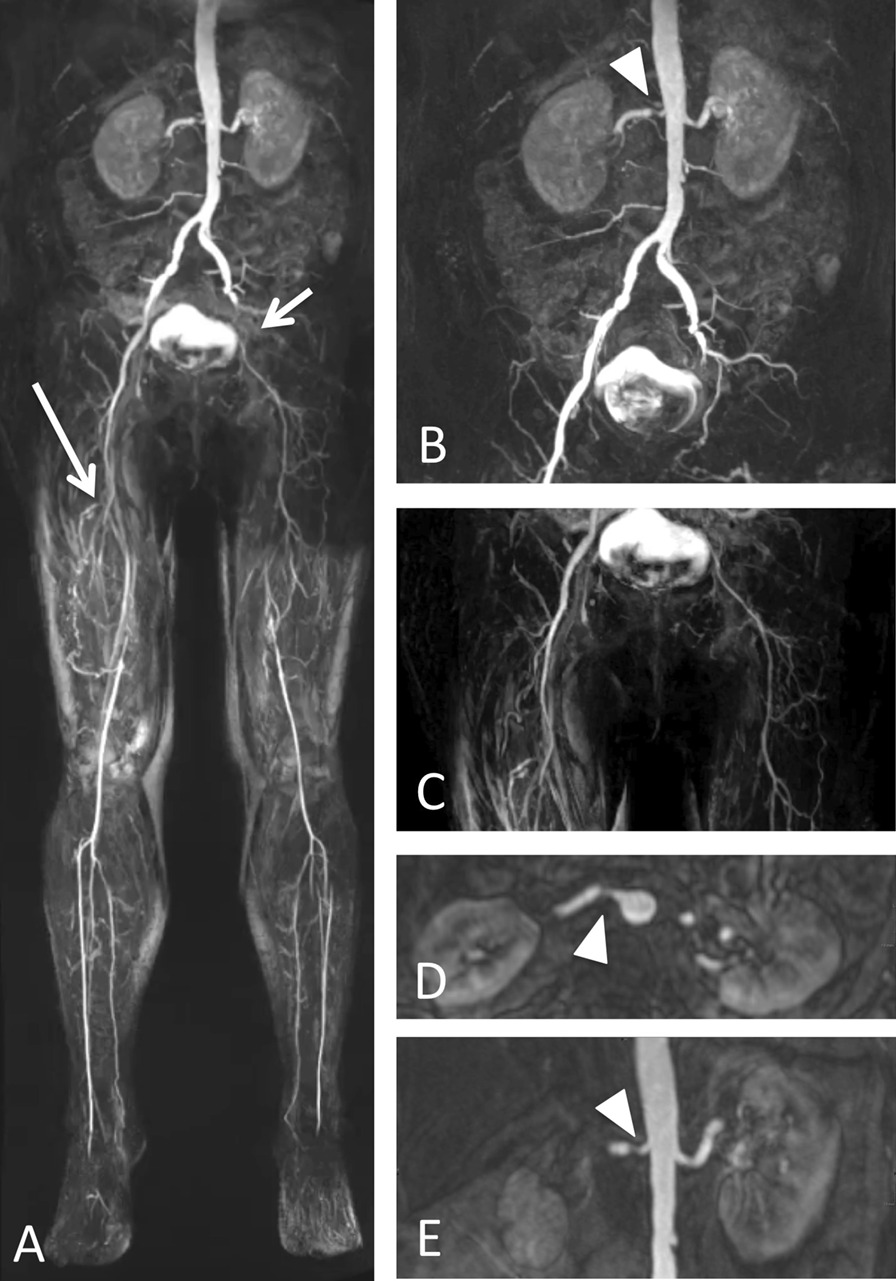
Involvement of at least one visceral artery with ≥ 50% diameter stenosis was found in 72 (50%) patients. There were no differences in age, gender, MRA indication, Fontaine stage, levels of C-reactive protein (CRP), cardiovascular risk factors or vascular comorbidities between patients with and without VAI. Renal artery (RA) involvement with ≥ 50% diameter stenosis was observed in 28 (20%) of patients. Patients with involvement of the RA were more likely to suffer from hypertension (79 vs. 54%, p = 0.019) and reduced renal function (glomerular filtration rate 70 vs. 88 mL/min/1.73m, p = 0.014).
Visceral artery stenosis can be seen in half of patients with known or suspected PAD and leg symptoms on run-off MRA. Investigating for RA stenosis in patients with PAD and hypertension and/or impaired renal function may have high diagnostic yield.
在患有外周动脉疾病(PAD)的患者中,流出道磁共振血管造影(MRA)是一种常用的诊断测试方法,用于从主动脉到远端流出血管获取用于评估动脉系统的高分辨率图像。本研究旨在探讨在因已知或疑似 PAD 且伴有腿部症状而行流出道 MRA 检查的患者中,内脏动脉受累(VAI)的患病率。
我们回顾性分析了 2012 年至 2018 年期间在我院因已知或疑似 PAD 而接受 MRA 检查的 145 例患者(中位年龄 68 岁,范围 27-91 岁)。重新评估 MRA 检查以确定内脏动脉狭窄情况。查阅患者病历以确定心血管危险因素、肾功能和 PAD 的 Fontaine 分期。
至少有一条内脏动脉存在≥50%的直径狭窄的患者有 72 例(50%)。VAI 患者和无 VAI 患者之间在年龄、性别、MRA 适应证、Fontaine 分期、C 反应蛋白(CRP)水平、心血管危险因素或血管合并症方面无差异。28 例(20%)患者的肾动脉(RA)存在≥50%的直径狭窄。RA 受累的患者更有可能患有高血压(79%比 54%,p=0.019)和肾功能降低(肾小球滤过率 70 比 88 ml/min/1.73m,p=0.014)。
已知或疑似 PAD 且伴有腿部症状的患者中,有一半在流出道 MRA 上可见内脏动脉狭窄。在伴有高血压和/或肾功能受损的 PAD 患者中,对 RA 狭窄进行检查可能具有较高的诊断价值。