Department of Nursing, Shengjing Hospital of China Medical University, No.36 Sanhao Street, Shenyang, Liaoning, 110004, People's Republic of China.
J Ovarian Res. 2021 Jun 2;14(1):75. doi: 10.1186/s13048-021-00821-0.
The BOLA gene family, comprising three members, is mainly involved in regulating intracellular iron homeostasis. Emerging evidence suggests that BolA family member 2 plays a vital role in tumorigenesis and hepatic cellular carcinoma progression. However, there was less known about its role in ovarian cancer.
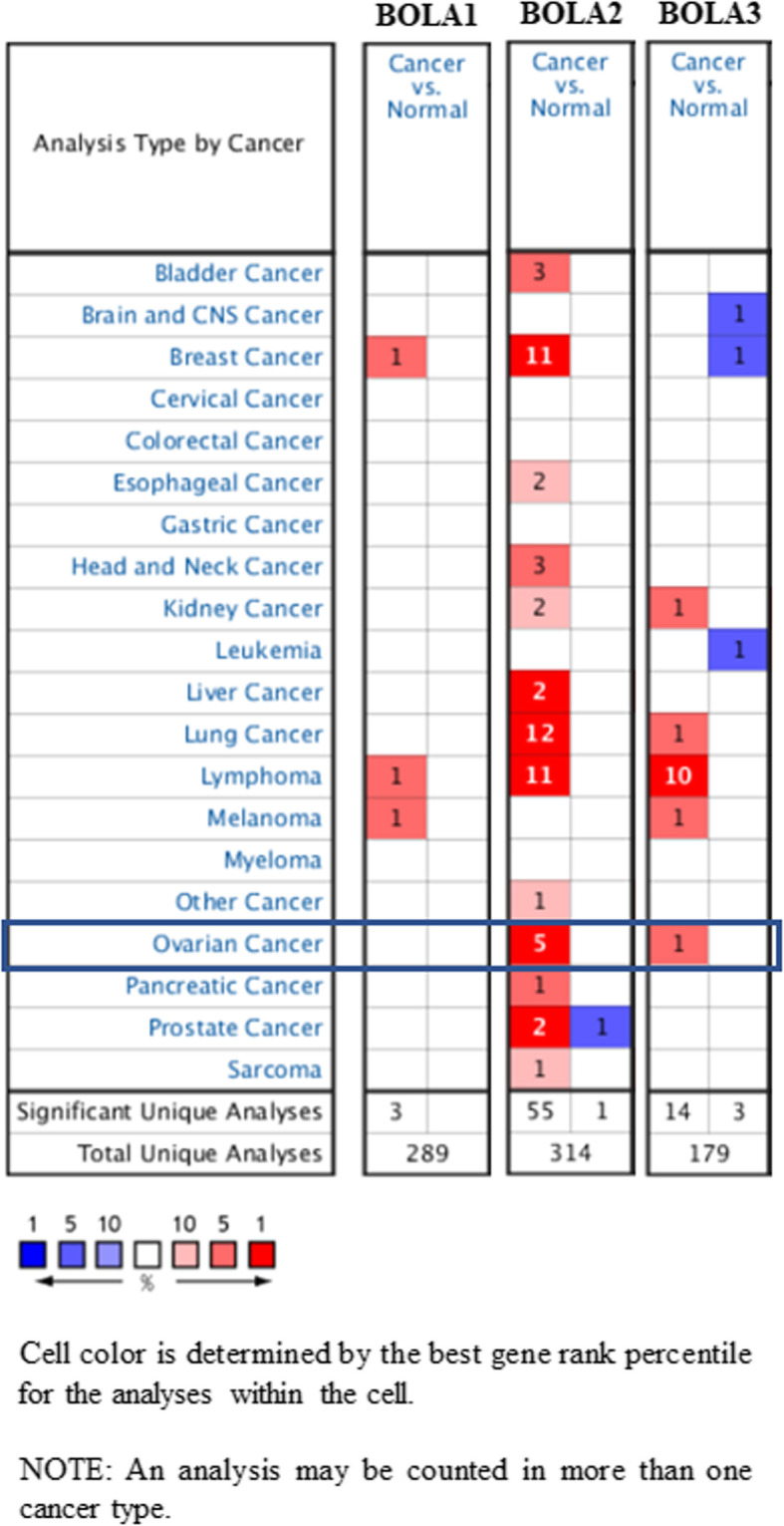
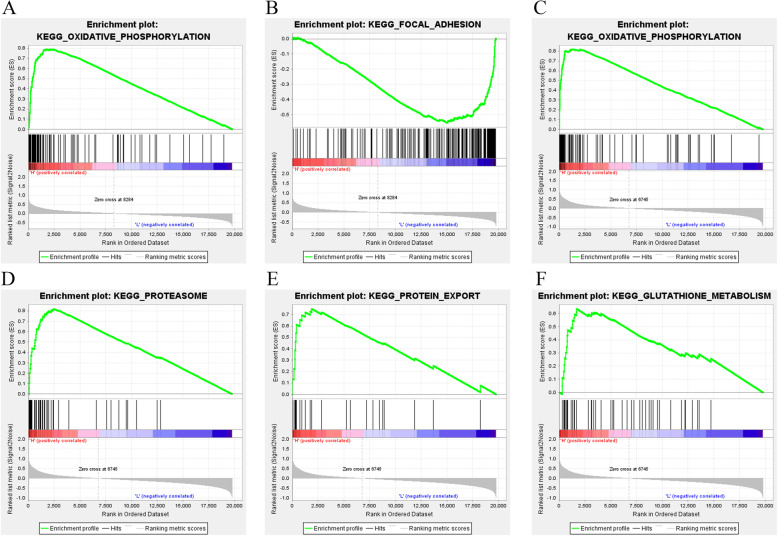
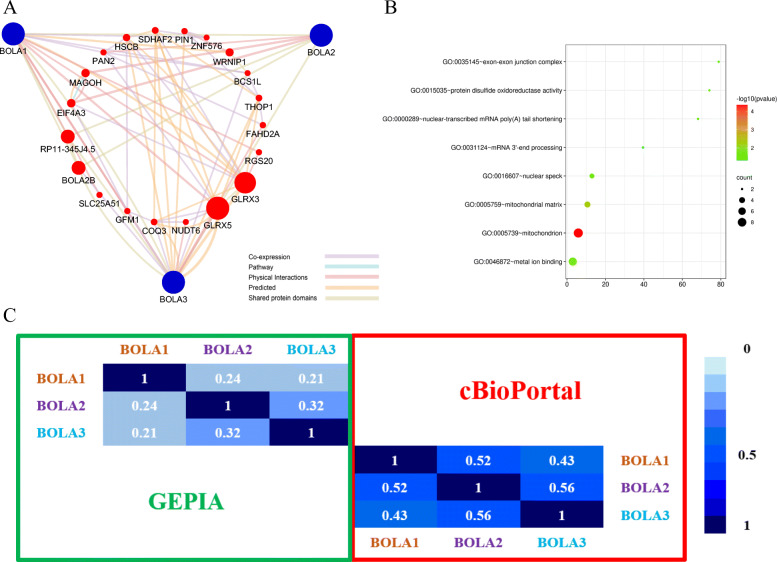
In the present study, we investigated the expression profiles, prognostic roles, and genetic alterations of three BolA family members in patients with ovarian cancer through several public databases, containing Oncomine and Gene Expression Profiling Interactive Analysis, Human Protein Atlas, Kaplan-Meier plotter and cBioPortal. Then, we constructed the protein-protein interaction networks of BOLA proteins and their interactors by using the String database and Cytoscape software. In addition, we performed the Gene Ontology (GO) and Kyoto Encyclopedia of Genes and Genomes (KEGG) pathway enrichment by the Annotation, Visualization, and Integrated Discovery database. Finally, we explored the mechanisms underlying BolA family members' involvement in OC by using gene set enrichment analysis.
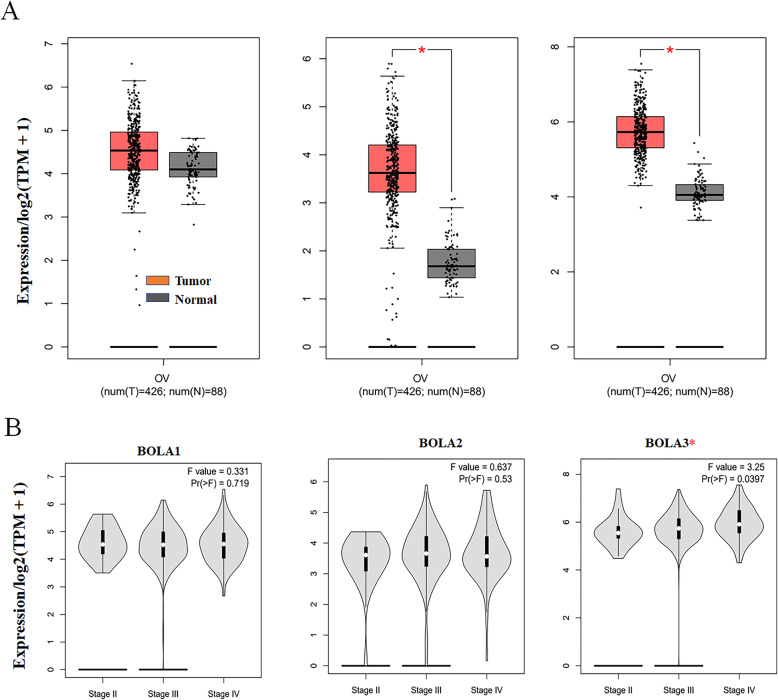
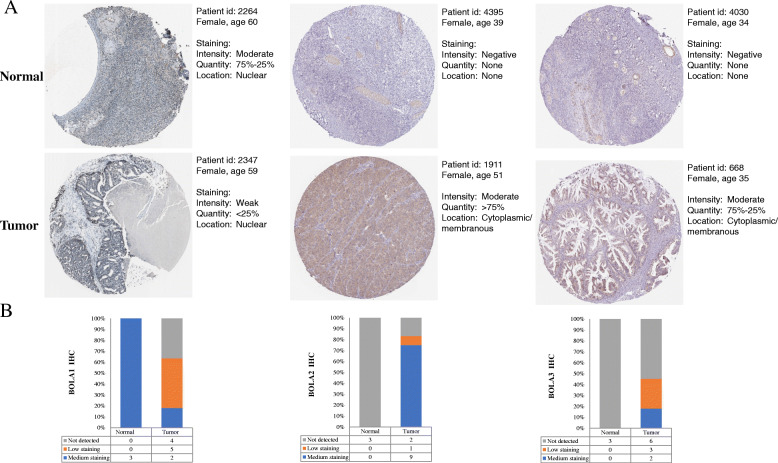
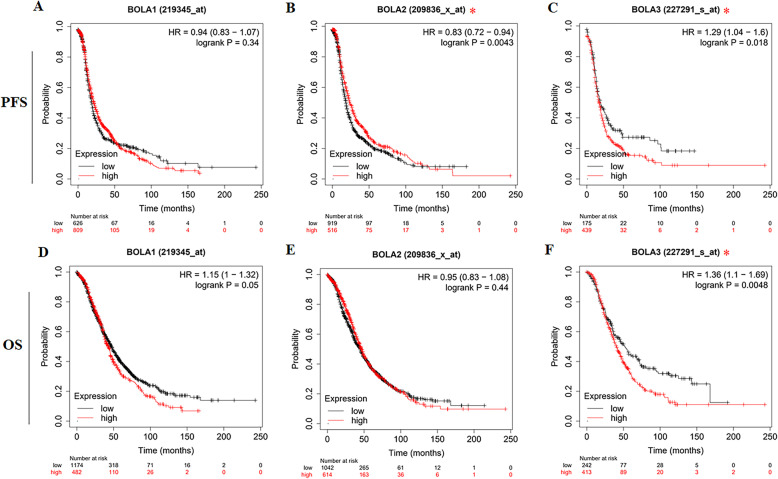
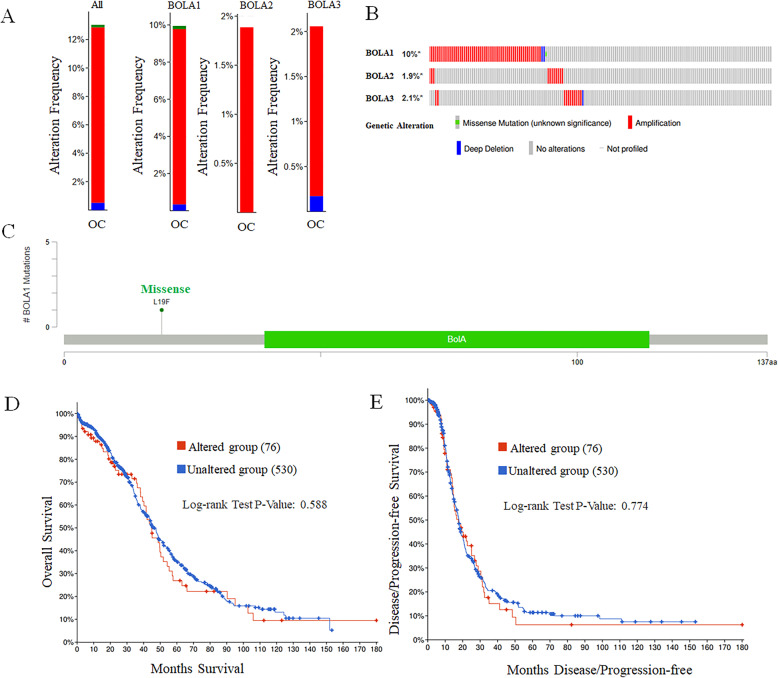
The mRNA and protein expression levels of BOLA2 and BOLA3 were heavily higher in ovarian cancer tissues than in normal ovarian tissues. Dysregulated mRNA expressions of three BolA family members were significantly associated with prognosis in overall or subgroup analysis. Moreover, genetic alterations also occurred in three BolA family members in ovarian cancer. GO analysis indicated that BolA family members might regulate the function of metal ion binding and protein disulfide oxidoreductase activity. Gene set enrichment analysis indicated that BolA family members were mainly associated with oxidative phosphorylation, proteasome, protein export, and glutathione metabolism in ovarian cancer.
In brief, our finding may contribute to increasing currently limited prognostic biomarkers and treatment options for ovarian cancer.
BOLA 基因家族由三个成员组成,主要参与调节细胞内铁稳态。新出现的证据表明,BolA 家族成员 2 在肿瘤发生和肝细胞癌进展中起着至关重要的作用。然而,关于其在卵巢癌中的作用知之甚少。
在本研究中,我们通过 Oncomine 和基因表达谱交互式分析、人类蛋白质图谱、Kaplan-Meier plotter 和 cBioPortal 等多个公共数据库,研究了三个 BolA 家族成员在卵巢癌患者中的表达谱、预后作用和遗传改变。然后,我们使用 String 数据库和 Cytoscape 软件构建了 BOLA 蛋白及其相互作用蛋白的蛋白质-蛋白质相互作用网络。此外,我们通过 Annotation、Visualization、and Integrated Discovery 数据库进行了基因本体论 (GO) 和京都基因与基因组百科全书 (KEGG) 通路富集分析。最后,我们通过基因集富集分析探讨了 BolA 家族成员参与 OC 的机制。
BOLA2 和 BOLA3 的 mRNA 和蛋白表达水平在卵巢癌组织中明显高于正常卵巢组织。三个 BolA 家族成员的失调 mRNA 表达与总分析或亚组分析中的预后显著相关。此外,三个 BolA 家族成员在卵巢癌中也发生了遗传改变。GO 分析表明,BolA 家族成员可能调节金属离子结合和蛋白质二硫键氧化还原酶活性的功能。基因集富集分析表明,BolA 家族成员在卵巢癌中主要与氧化磷酸化、蛋白酶体、蛋白质输出和谷胱甘肽代谢有关。
总之,我们的发现可能有助于增加目前有限的卵巢癌预后生物标志物和治疗选择。