Department of Microbiology and Immunology, Pennsylvania State University College of Medicine, Hershey, PA, United States.
Front Immunol. 2021 May 17;12:683710. doi: 10.3389/fimmu.2021.683710. eCollection 2021.
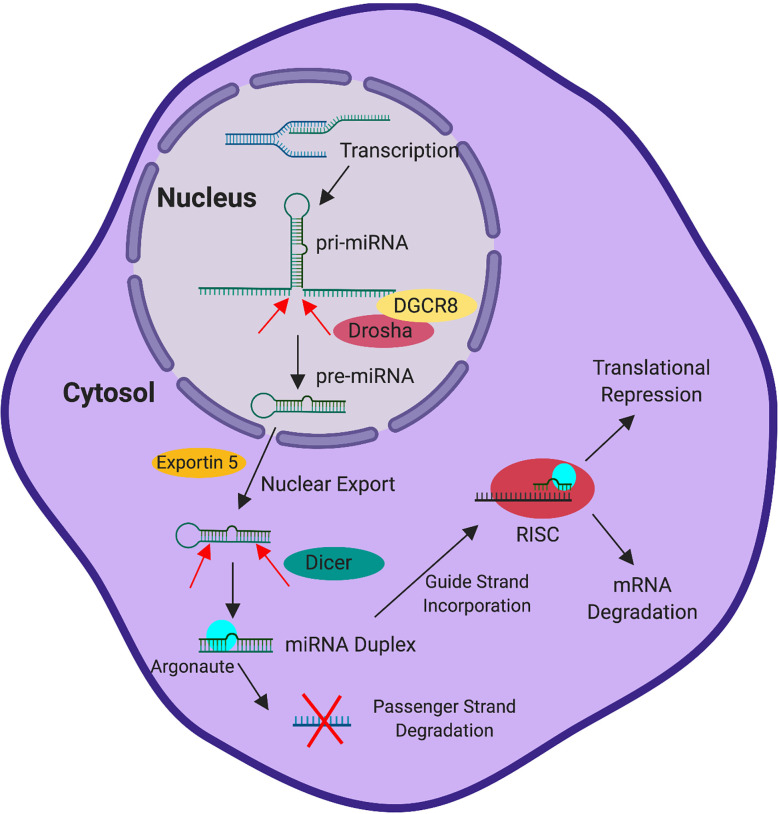
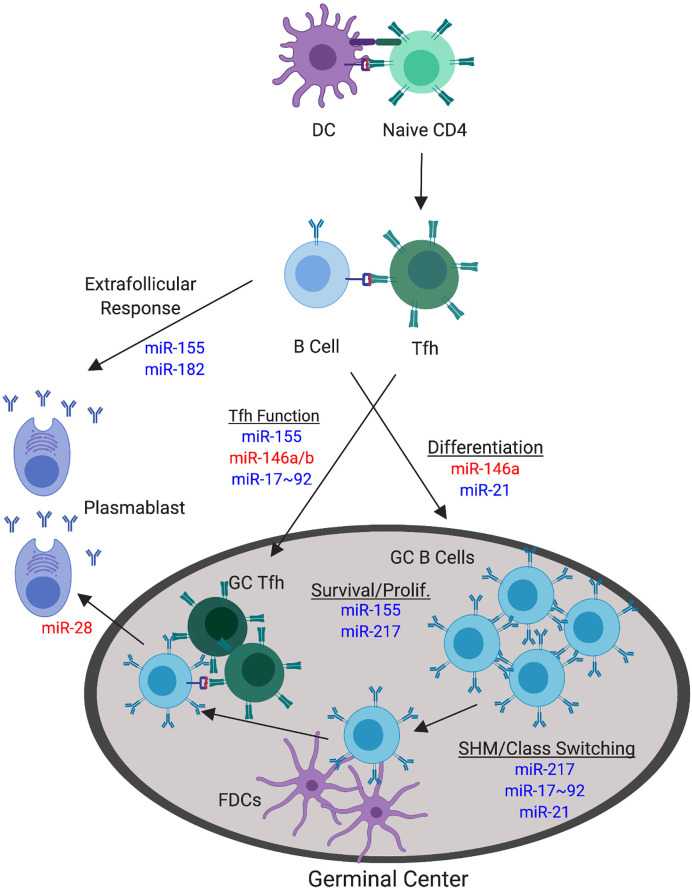
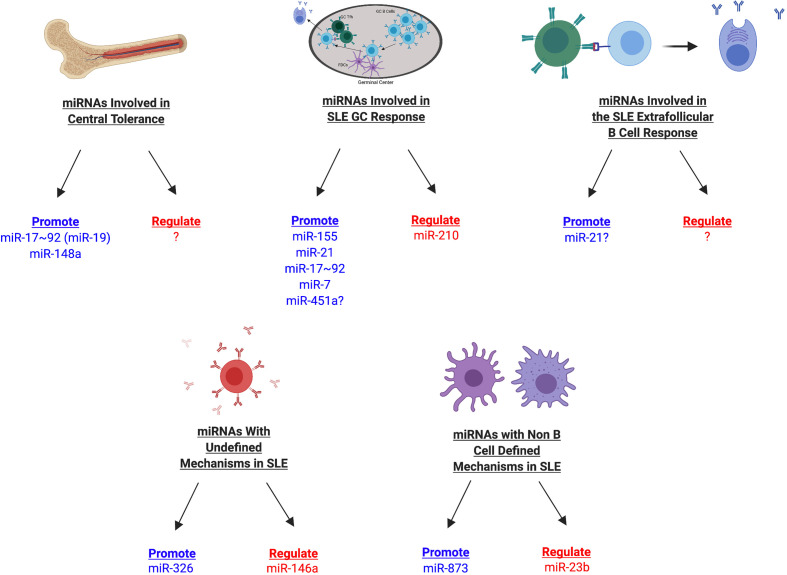
Loss of B cell tolerance is central to autoimmune diseases such as systemic lupus erythematosus (SLE). As such, the mechanisms involved in B cell development, maturation, activation, and function that are aberrantly regulated in SLE are of interest in the design of targeted therapeutics. While many factors are involved in the generation and regulation of B cell responses, miRNAs have emerged as critical regulators of these responses within the last decade. To date, miRNA involvement in B cell responses has largely been studied in non-autoimmune, immunization-based systems. However, miRNA profiles have also been strongly associated with SLE in human patients and these molecules have proven critical in both the promotion and regulation of disease in mouse models and in the formation of autoreactive B cell responses. Functionally, miRNAs are small non-coding RNAs that bind to complementary sequences located in target mRNA transcripts to mediate transcript degradation or translational repression, invoking a post-transcriptional level of genetic regulation. Due to their capacity to target a diverse range of transcripts and pathways in different immune cell types and throughout the various stages of development and response, targeting miRNAs is an interesting potential therapeutic avenue. Herein, we focus on what is currently known about miRNA function in both normal and SLE B cell responses, primarily highlighting miRNAs with confirmed functions in mouse models. We also discuss areas that should be addressed in future studies and whether the development of miRNA-centric therapeutics may be a viable alternative for the treatment of SLE.
B 细胞耐受的丧失是系统性红斑狼疮(SLE)等自身免疫性疾病的核心。因此,SLE 中异常调节的 B 细胞发育、成熟、激活和功能相关机制是靶向治疗的设计目标。虽然许多因素参与了 B 细胞反应的产生和调节,但 miRNA 在过去十年中已成为这些反应的关键调节因子。迄今为止,miRNA 参与 B 细胞反应的研究主要集中在非自身免疫性、免疫接种为基础的系统中。然而,miRNA 图谱也与人类患者的 SLE 密切相关,这些分子在小鼠模型中疾病的促进和调节以及自身反应性 B 细胞反应的形成中被证明是至关重要的。从功能上讲,miRNA 是小的非编码 RNA,可与靶 mRNA 转录本中互补序列结合,介导转录物降解或翻译抑制,从而在转录后水平上进行遗传调控。由于它们能够针对不同免疫细胞类型以及发育和反应的各个阶段中的不同转录物和途径,靶向 miRNA 是一种有趣的潜在治疗途径。在此,我们重点介绍 miRNA 在正常和 SLE B 细胞反应中的已知功能,主要强调了在小鼠模型中具有确认功能的 miRNA。我们还讨论了未来研究中应解决的问题,以及 miRNA 为中心的治疗方法是否可能成为治疗 SLE 的可行替代方法。