Yang Liu, Chen Xin, Wang Qian, Zhu Yuankui, Wu Changfa, Ma Xuqian, Zuo Dianbao, He Huixia, Huang Le, Li Jingwen, Xia Chunjiao, Hu Sheng, Yang Xiaoqing, Feng Mingqian
College of Life Science and Technology, Huazhong Agricultural University, Wuhan, Hubei 430070, P.R. China.
Clinical Testing Branch, Hongshan District Chinese Medicine Hospital, Wuhan, Hubei 430000, P.R. China.
Oncol Lett. 2021 Jul;22(1):542. doi: 10.3892/ol.2021.12803. Epub 2021 May 20.
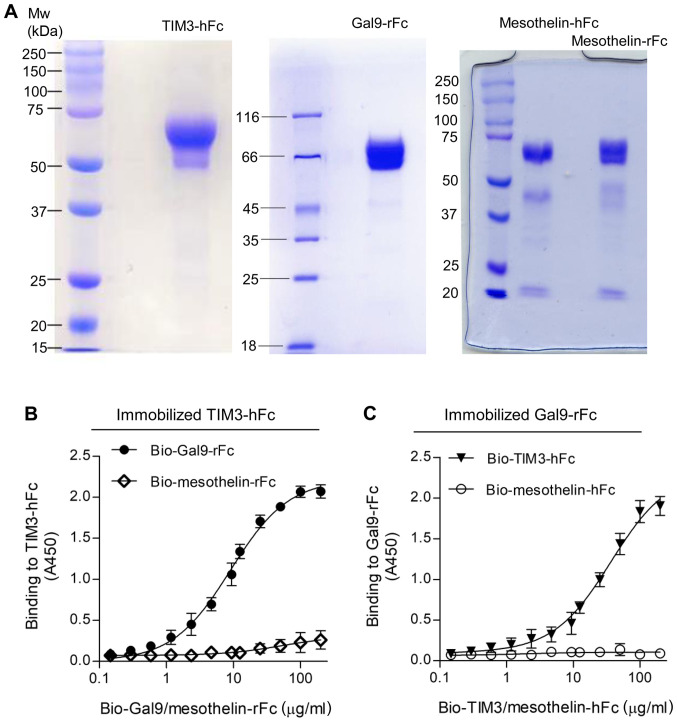
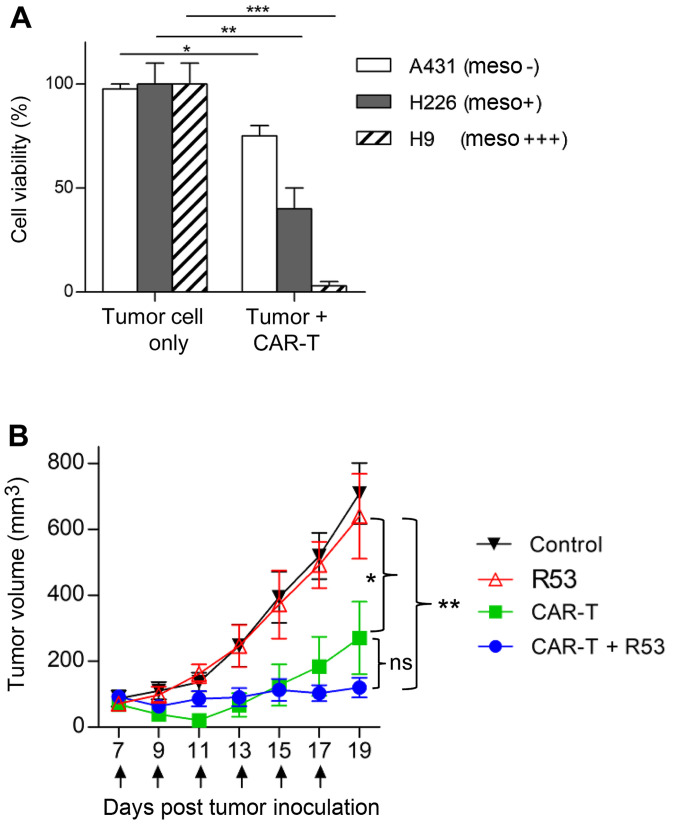
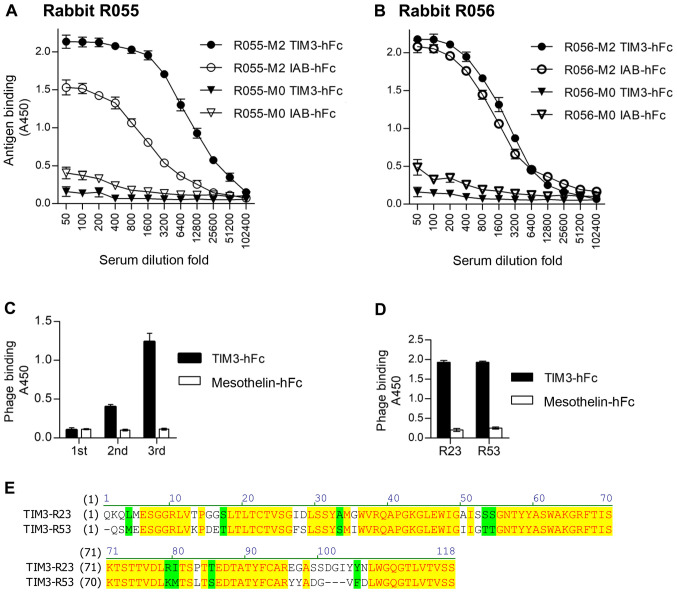
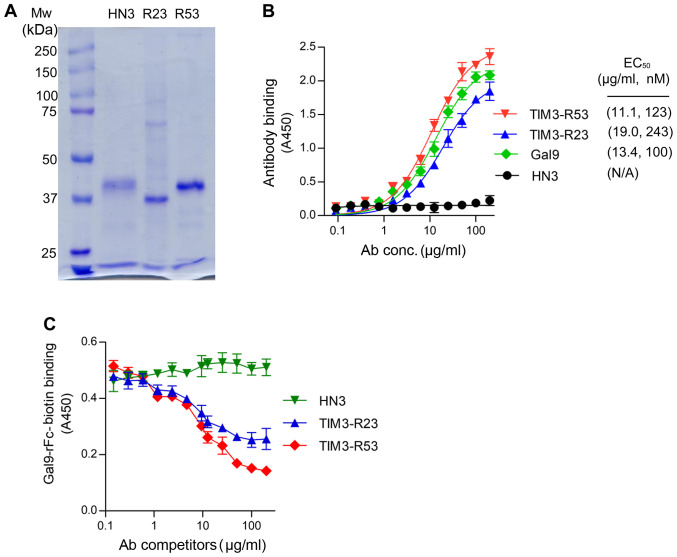
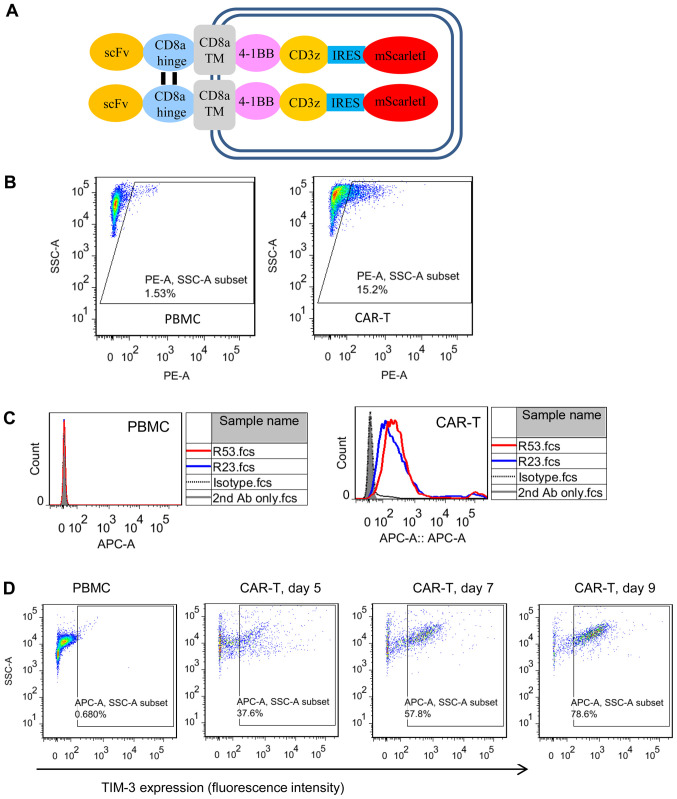
Targeting inhibitory immune checkpoint molecules has significantly altered cancer treatment regimens. T cell immunoglobulin and mucin domain 3 (TIM3) is one of the major inhibitory immune checkpoints expressed on T cells. Blocking the engagement of TIM3 and its inhibitory ligand galectin-9 may potentiate the effects of immunotherapy or overcome the adaptive resistance to the therapeutic blockade of programmed cell death protein 1, cytotoxic T-lymphocyte-associated protein 4, B- and T-lymphocyte attenuator and lymphocyte-activation gene 3, amongst others, as each of these immune checkpoints harbors unique properties that set it apart from the rest. Heavy chain variable fragment (VH)-derived single-domain antibodies (sdAbs) represent a class of expanding drug candidates. These sdAbs have unique advantages, including their minimal size in the antibody class, ease of expression, broad scope for modular structure design and re-engineering, and excellent tumor penetration. In the present study, two sdAbs, TIM3-R23 and TIM3-R53, were generated by immunizing rabbits with the recombinant extracellular domain of TIM3 and applying phage display technology. These sdAbs were easily expressed in mammalian cells. The purified sdAbs were able to bind to both recombinant and cell surface TIM3, and blocked it from binding to the ligand galectin-9. studies demonstrated that TIM3-R53 was able to potentiate the antitumor activity of chimeric antigen receptor T cells that targeted mesothelin. In conclusion, the results of the present study suggested that TIM3-R53 may be a novel and attractive immune checkpoint inhibitor against TIM3, which is worthy of further investigation.
靶向抑制性免疫检查点分子已显著改变了癌症治疗方案。T细胞免疫球蛋白和粘蛋白结构域3(TIM3)是T细胞上表达的主要抑制性免疫检查点之一。阻断TIM3与其抑制性配体半乳糖凝集素-9的结合,可能会增强免疫治疗的效果,或克服对程序性细胞死亡蛋白1、细胞毒性T淋巴细胞相关蛋白4、B和T淋巴细胞衰减器以及淋巴细胞激活基因3等治疗性阻断的适应性抗性,因为这些免疫检查点各自具有使其与其他检查点区分开来的独特特性。重链可变片段(VH)衍生的单域抗体(sdAbs)代表了一类不断扩大的候选药物。这些sdAbs具有独特的优势,包括在抗体类别中尺寸最小、易于表达、模块化结构设计和重新工程的广泛范围以及出色的肿瘤穿透性。在本研究中,通过用TIM3的重组细胞外结构域免疫兔子并应用噬菌体展示技术,产生了两种sdAbs,即TIM3-R23和TIM3-R53。这些sdAbs在哺乳动物细胞中易于表达。纯化后的sdAbs能够与重组TIM3和细胞表面TIM3结合,并阻止其与配体半乳糖凝集素-9结合。研究表明,TIM3-R53能够增强靶向间皮素的嵌合抗原受体T细胞的抗肿瘤活性。总之,本研究结果表明,TIM3-R53可能是一种针对TIM3的新型且有吸引力的免疫检查点抑制剂,值得进一步研究。