Center for Translational Biomedical Research, University of North Carolina at Greensboro, North Carolina Research Campus, Kannapolis, North Carolina.
Center for Translational Biomedical Research, University of North Carolina at Greensboro, North Carolina Research Campus, Kannapolis, North Carolina; Department of Nutrition, University of North Carolina at Greensboro, North Carolina Research Campus, Kannapolis, North Carolina.
Cell Mol Gastroenterol Hepatol. 2021;12(3):793-811. doi: 10.1016/j.jcmgh.2021.05.013. Epub 2021 May 31.
BACKGROUND & AIMS: Aryl hydrocarbon receptor (AhR) is a liver-enriched xenobiotic receptor that plays important role in detoxification response in liver. This study aimed to investigate how AhR signaling may impact the pathogenesis of alcohol-related liver disease (ALD).
Chronic alcohol feeding animal studies were conducted with mouse models of hepatocyte-specific AhR knockout (AhR) and NAD(P)H quinone dehydrogenase 1 (NQO1) overexpression, and dietary supplementation of the AhR ligand indole-3-carbinol. Cell studies were conducted to define the causal role of AhR and NQO1 in regulation of redox balance and apoptosis.
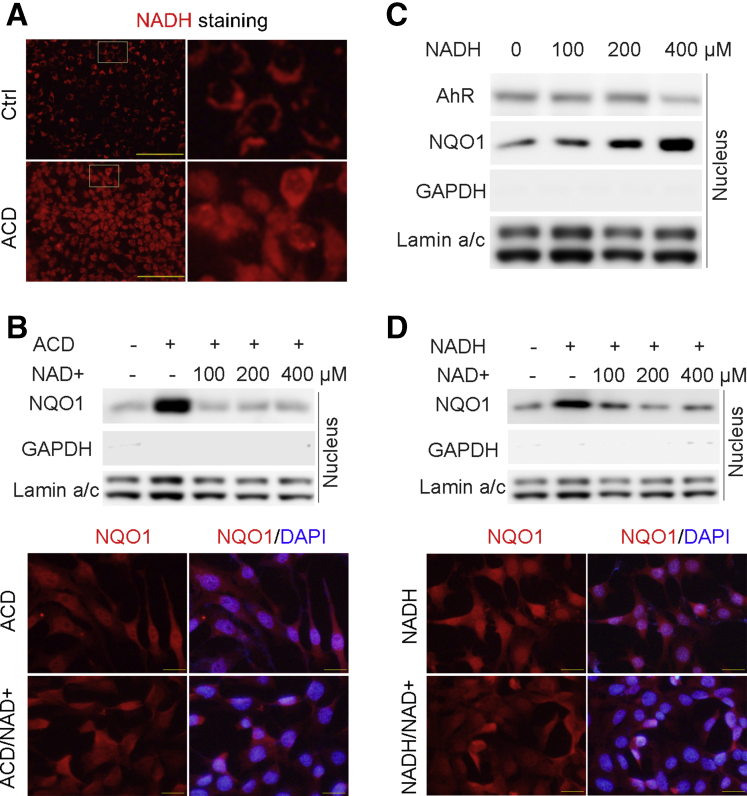
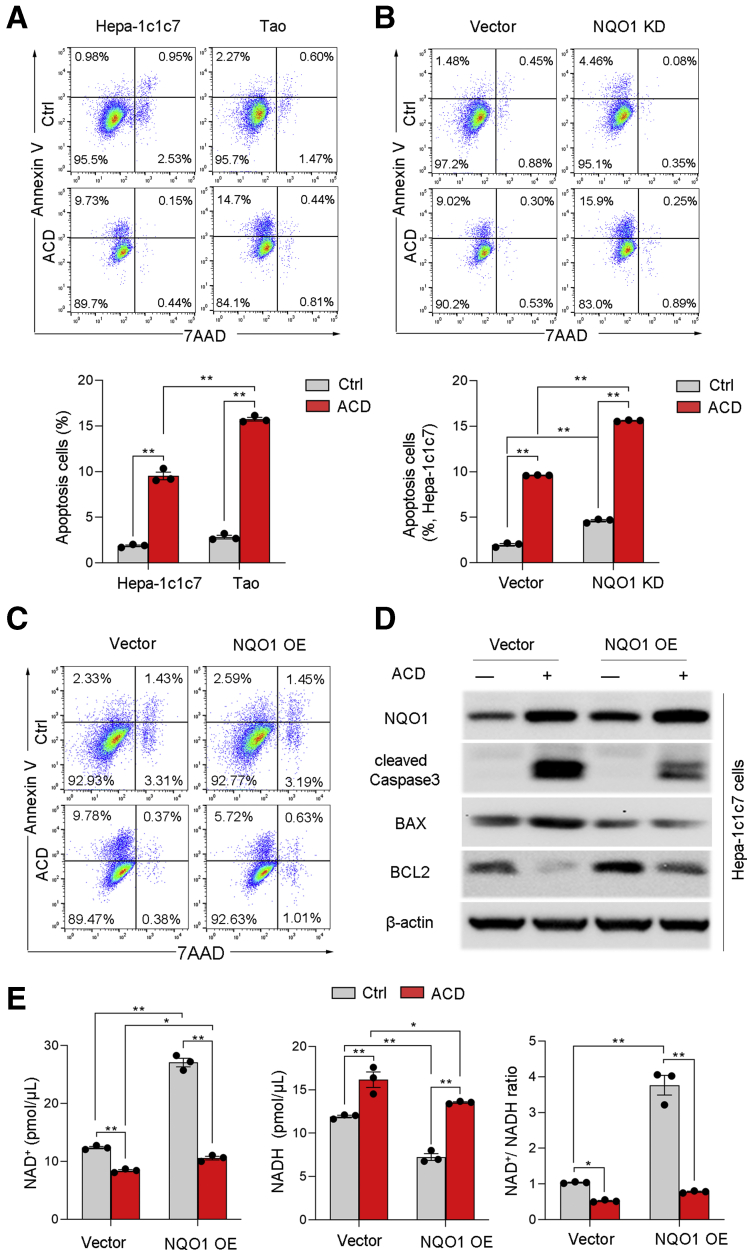
Chronic alcohol consumption induced AhR activation and nuclear enrichment of NQO1 in hepatocytes of both alcoholic hepatitis patients and ALD mice. AhR deficiency exacerbated alcohol-induced liver injury, along with reduction of NQO1. Consistently, in vitro studies demonstrated that NQO1 expression was dependent on AhR. However, alcohol-induced NQO1 nuclear translocation was triggered by decreased cellular oxidized nicotinamide adenine dinucleotide (NAD)-to-NADH ratio, rather than by AhR activation. Furthermore, both in vitro and in vivo overexpression NQO1 prevented alcohol-induced hepatic NAD depletion, thereby enhancing activities of NAD-dependent enzymes and reversing alcohol-induced liver injury. In addition, therapeutic targeting of AhR in the liver with dietary indole-3-carbinol supplementation efficiently reversed alcoholic liver injury by AhR-NQO1 signaling activation.
This study demonstrated that AhR activation is a protective response to counteract alcohol-induced hepatic NAD depletion through induction of NQO1, and targeting the hepatic AhR-NQO1 pathway may serve as a novel therapeutic approach for ALD.
芳香烃受体(AhR)是一种富含肝脏的外源性受体,在肝脏解毒反应中发挥重要作用。本研究旨在探讨 AhR 信号通路如何影响酒精相关性肝病(ALD)的发病机制。
采用肝细胞特异性 AhR 敲除(AhR)和 NAD(P)H 醌氧化还原酶 1(NQO1)过表达的小鼠模型以及 AhR 配体吲哚-3-甲醇膳食补充进行慢性酒精喂养动物研究。进行细胞研究以确定 AhR 和 NQO1 在调节氧化还原平衡和细胞凋亡中的因果作用。
慢性酒精摄入可诱导酒精性肝炎患者和 ALD 小鼠肝细胞中 AhR 激活和 NQO1 的核富集。AhR 缺乏可加重酒精引起的肝损伤,同时减少 NQO1。一致地,体外研究表明 NQO1 的表达依赖于 AhR。然而,酒精诱导的 NQO1 核易位是由细胞内氧化型烟酰胺腺嘌呤二核苷酸(NAD)与烟酰胺腺嘌呤二核苷酸还原酶(NADH)比值降低引起的,而不是由 AhR 激活引起的。此外,体外和体内过表达 NQO1 可防止酒精引起的肝内 NAD 耗竭,从而增强 NAD 依赖性酶的活性并逆转酒精引起的肝损伤。此外,通过膳食补充吲哚-3-甲醇对肝脏 AhR 的治疗性靶向,通过 AhR-NQO1 信号通路的激活有效地逆转了酒精性肝损伤。
本研究表明,AhR 激活是一种保护反应,可通过诱导 NQO1 来抵消酒精引起的肝内 NAD 耗竭,针对肝脏 AhR-NQO1 途径可能成为治疗 ALD 的新方法。