Department of Pathology, Amsterdam UMC, Vrije Universiteit Amsterdam and Amsterdam Neuroscience, de Boelelaan 1117, 1081HV, Amsterdam, The Netherlands.
Amsterdam Leukodystrophy Center, Amsterdam UMC, Amsterdam, The Netherlands.
Acta Neuropathol Commun. 2021 Jun 3;9(1):103. doi: 10.1186/s40478-021-01206-6.
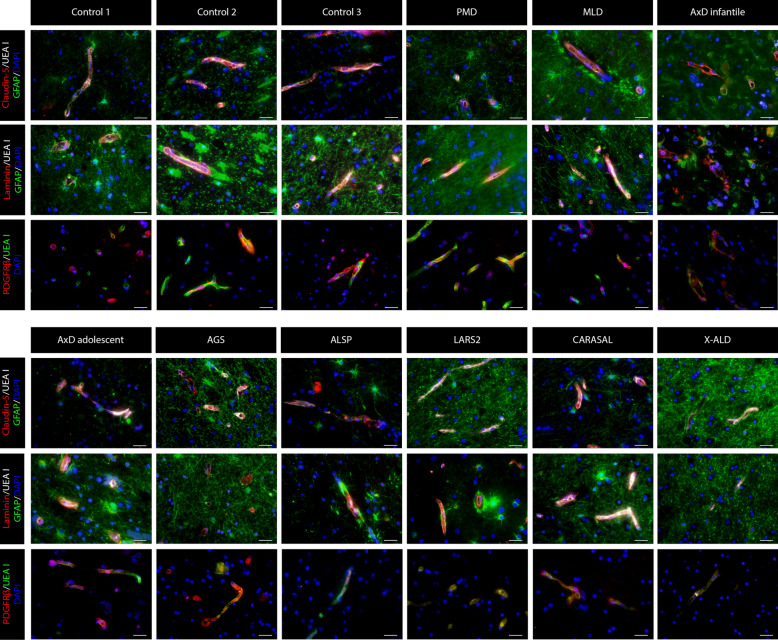
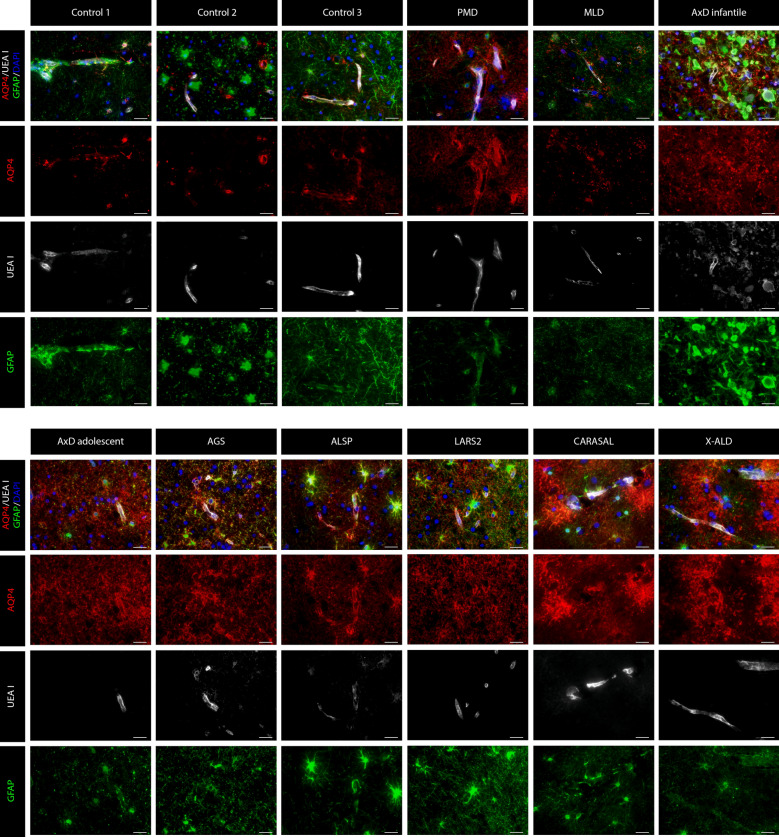
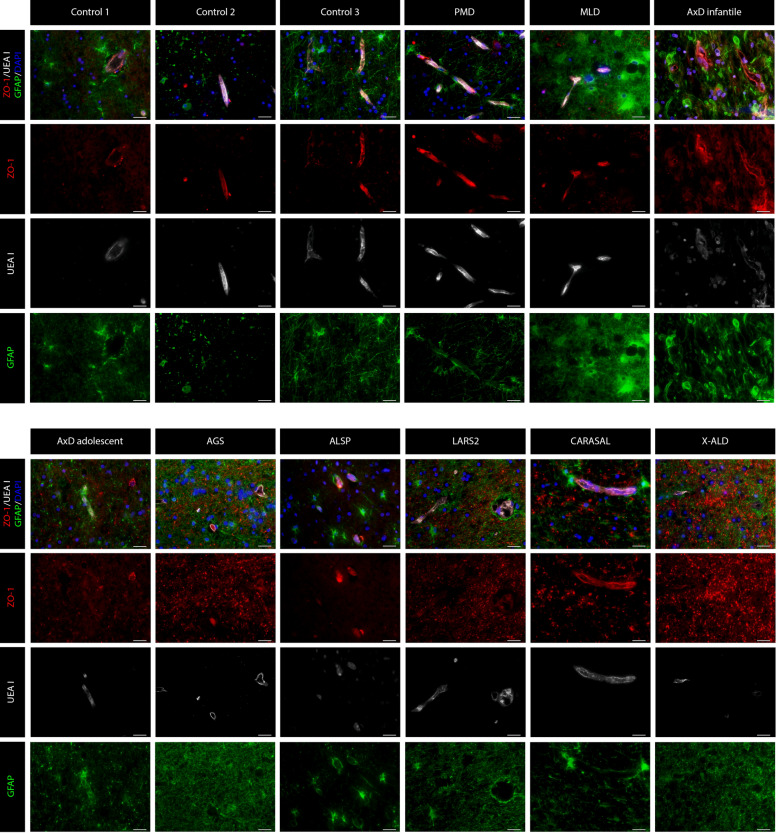
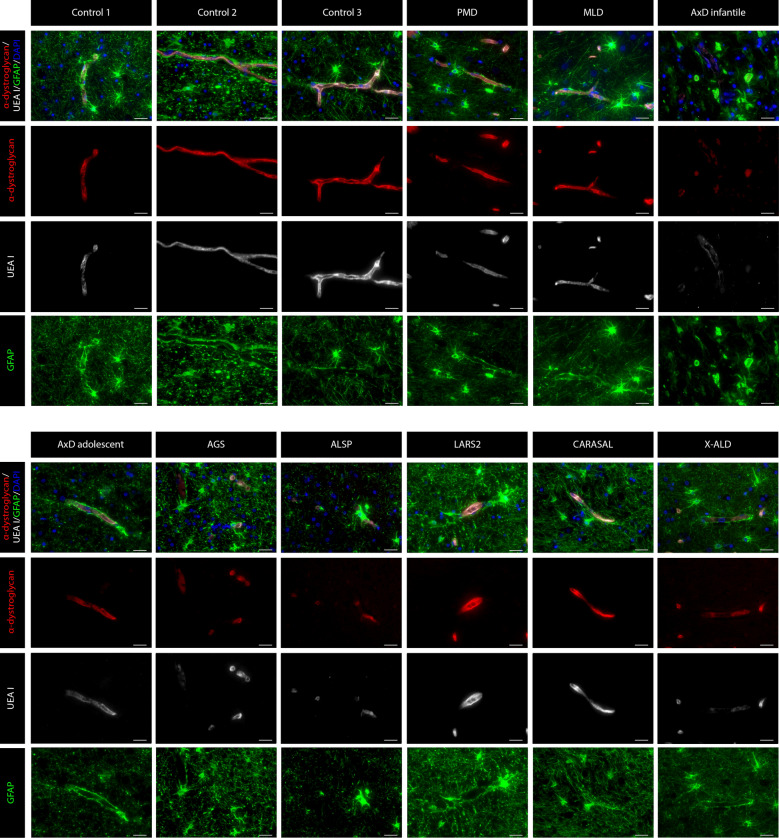
The blood-brain barrier is a dynamic endothelial cell barrier in the brain microvasculature that separates the blood from the brain parenchyma. Specialized brain endothelial cells, astrocytes, neurons, microglia and pericytes together compose the neurovascular unit and interact to maintain blood-brain barrier function. A disturbed brain barrier function is reported in most common neurological disorders and may play a role in disease pathogenesis. However, a comprehensive overview of how the neurovascular unit is affected in a wide range of rare disorders is lacking. Our aim was to provide further insights into the neuropathology of the neurovascular unit in leukodystrophies to unravel its potential pathogenic role in these diseases. Leukodystrophies are monogenic disorders of the white matter due to defects in any of its structural components. Single leukodystrophies are exceedingly rare, and availability of human tissue is unique. Expression of selective neurovascular unit markers such as claudin-5, zona occludens 1, laminin, PDGFRβ, aquaporin-4 and α-dystroglycan was investigated in eight different leukodystrophies using immunohistochemistry. We observed tight junction rearrangements, indicative of endothelial dysfunction, in five out of eight assessed leukodystrophies of different origin and an altered aquaporin-4 distribution in all. Aquaporin-4 redistribution indicates a general astrocytic dysfunction in leukodystrophies, even in those not directly related to astrocytic pathology or without prominent reactive astrogliosis. These findings provide further evidence for dysfunction in the orchestration of the neurovascular unit in leukodystrophies and contribute to a better understanding of the underlying disease mechanism.
血脑屏障是脑微血管中的一种动态内皮细胞屏障,将血液与脑组织分隔开来。专门的脑内皮细胞、星形胶质细胞、神经元、小胶质细胞和周细胞共同构成了神经血管单元,并相互作用以维持血脑屏障的功能。大多数常见的神经疾病都报道存在血脑屏障功能障碍,并且可能在疾病发病机制中起作用。然而,缺乏对广泛的罕见疾病中神经血管单元如何受到影响的全面概述。我们的目的是提供白质营养不良中神经血管单元神经病理学的进一步见解,以揭示其在这些疾病中的潜在致病作用。白质营养不良是由于其任何结构成分的缺陷导致的白质的单基因疾病。单一的白质营养不良极其罕见,并且人类组织的可用性是独一无二的。使用免疫组织化学技术,在八种不同的白质营养不良中研究了选择性神经血管单元标志物(如紧密连接蛋白 5、封闭蛋白 1、层粘连蛋白、血小板衍生生长因子受体-β、水通道蛋白-4 和 α- 肌营养不良蛋白)的表达。我们观察到五种不同来源的八种评估的白质营养不良中有五种存在紧密连接重排,表明内皮功能障碍,而所有白质营养不良中均存在水通道蛋白-4 分布改变。水通道蛋白-4 的重新分布表明白质营养不良中存在普遍的星形胶质细胞功能障碍,即使在那些与星形胶质细胞病理学无关或没有明显的反应性星形胶质增生的白质营养不良中也是如此。这些发现为白质营养不良中神经血管单元的失调提供了进一步的证据,并有助于更好地理解潜在的疾病机制。