Centre for Microsystems and Photonics, EEE Department, University of Strathclyde, Glasgow, UK.
Institute of Cancer Sciences, University of Glasgow, Glasgow, UK and Cancer Research UK Beatson Institute, Glasgow, UK.
Lab Chip. 2021 Jun 15;21(12):2306-2329. doi: 10.1039/d0lc01305f.
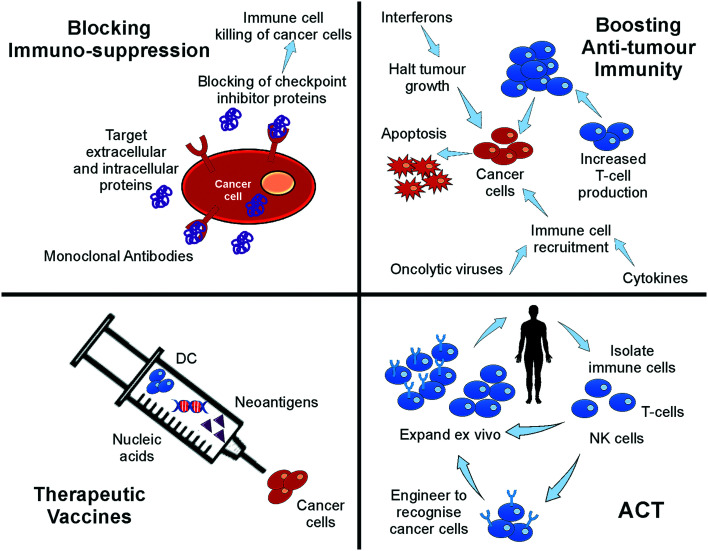
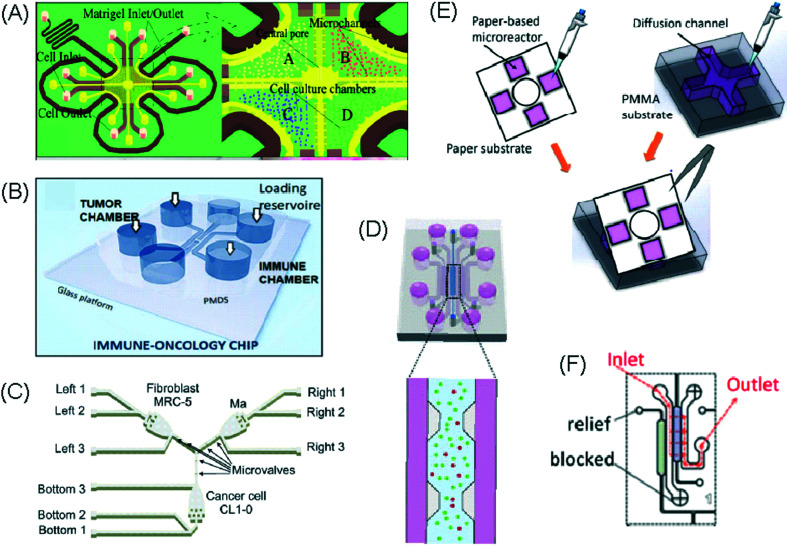
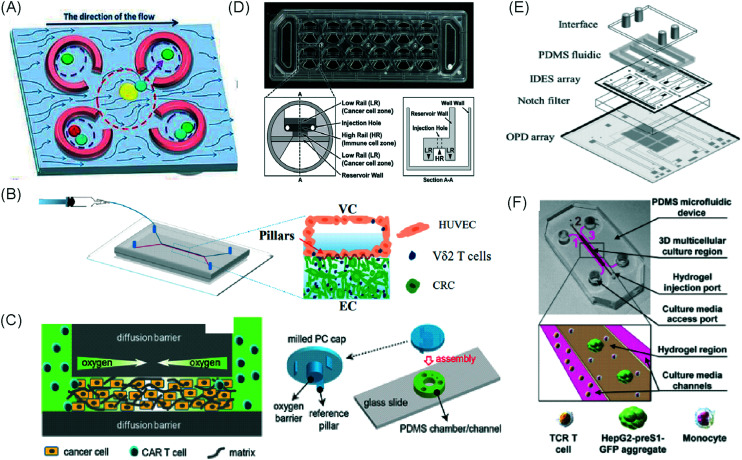
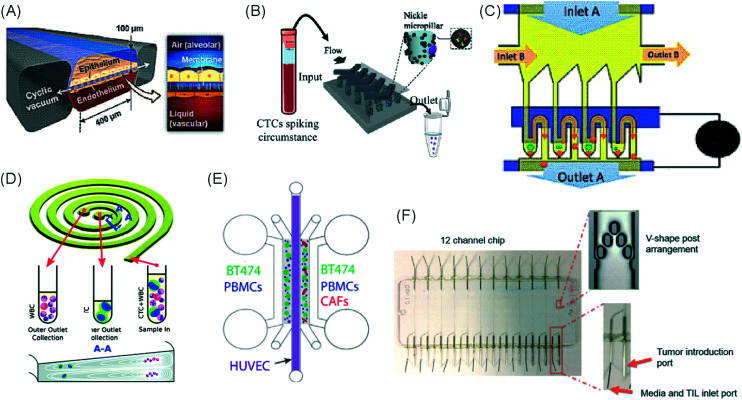
Immunotherapy is a powerful and targeted cancer treatment that exploits the body's immune system to attack and eliminate cancerous cells. This form of therapy presents the possibility of long-term control and prevention of recurrence due to the memory capabilities of the immune system. Various immunotherapies are successful in treating haematological malignancies and have dramatically improved outcomes in melanoma. However, tackling other solid tumours is more challenging, mostly because of the immunosuppressive tumour microenvironment (TME). Current in vitro models based on traditional 2D cell monolayers and animal models, such as patient-derived xenografts, have limitations in their ability to mimic the complexity of the human TME. As a result, they have inadequate translational value and can be poorly predictive of clinical outcome. Thus, there is a need for robust in vitro preclinical tools that more faithfully recapitulate human solid tumours to test novel immunotherapies. Microfluidics and lab-on-a-chip technologies offer opportunities, especially when performing mechanistic studies, to understand the role of the TME in immunotherapy, and to expand the experimental throughput when using patient-derived tissue through its miniaturization capabilities. This review first introduces the basic concepts of immunotherapy, presents the current preclinical approaches used in immuno-oncology for solid tumours and then discusses the underlying challenges. We provide a rationale for using microfluidic-based approaches, highlighting the most recent microfluidic technologies and methodologies that have been used for studying cancer-immune cell interactions and testing the efficacy of immunotherapies in solid tumours. Ultimately, we discuss achievements and limitations of the technology, commenting on potential directions for incorporating microfluidic technologies in future immunotherapy studies.
免疫疗法是一种强大而有针对性的癌症治疗方法,它利用人体的免疫系统来攻击和消除癌细胞。这种治疗方法有可能通过免疫系统的记忆能力实现长期控制和预防复发。各种免疫疗法在治疗血液恶性肿瘤方面取得了成功,并显著改善了黑色素瘤的治疗效果。然而,攻克其他实体瘤更具挑战性,主要是因为肿瘤微环境(TME)具有免疫抑制性。目前基于传统 2D 细胞单层和动物模型(如患者来源的异种移植物)的体外模型在模拟人类 TME 的复杂性方面存在局限性。因此,它们的转化价值不足,对临床结果的预测能力较差。因此,需要有强大的体外临床前工具来更真实地模拟人类实体瘤,以测试新的免疫疗法。微流控和芯片实验室技术提供了机会,特别是在进行机制研究时,可以了解 TME 在免疫疗法中的作用,并通过其小型化能力扩展使用患者来源组织时的实验通量。
这篇综述首先介绍了免疫疗法的基本概念,介绍了目前用于实体瘤免疫肿瘤学的临床前方法,然后讨论了潜在的挑战。我们提供了使用基于微流控的方法的基本原理,强调了最近用于研究癌症-免疫细胞相互作用和测试实体瘤中免疫疗法疗效的最先进的微流控技术和方法。最终,我们讨论了该技术的成就和局限性,并对将微流控技术纳入未来免疫疗法研究的潜在方向进行了评论。