Guangdong Provincial Key Laboratory of Industrial Surfactant, Institute of Chemical Engineering, Guangdong Academy of Sciences, Guangzhou 510075, China.
Research Center for Intelligent Sensing Systems, Zhejiang Laboratory, Hangzhou 311100, China.
Biosensors (Basel). 2022 Nov 18;12(11):1045. doi: 10.3390/bios12111045.
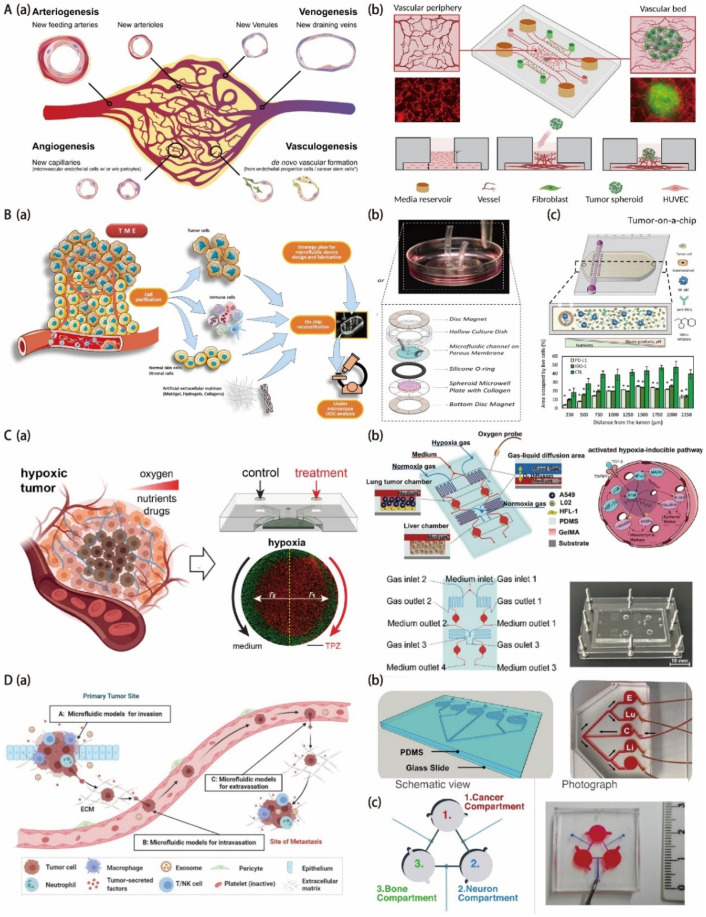
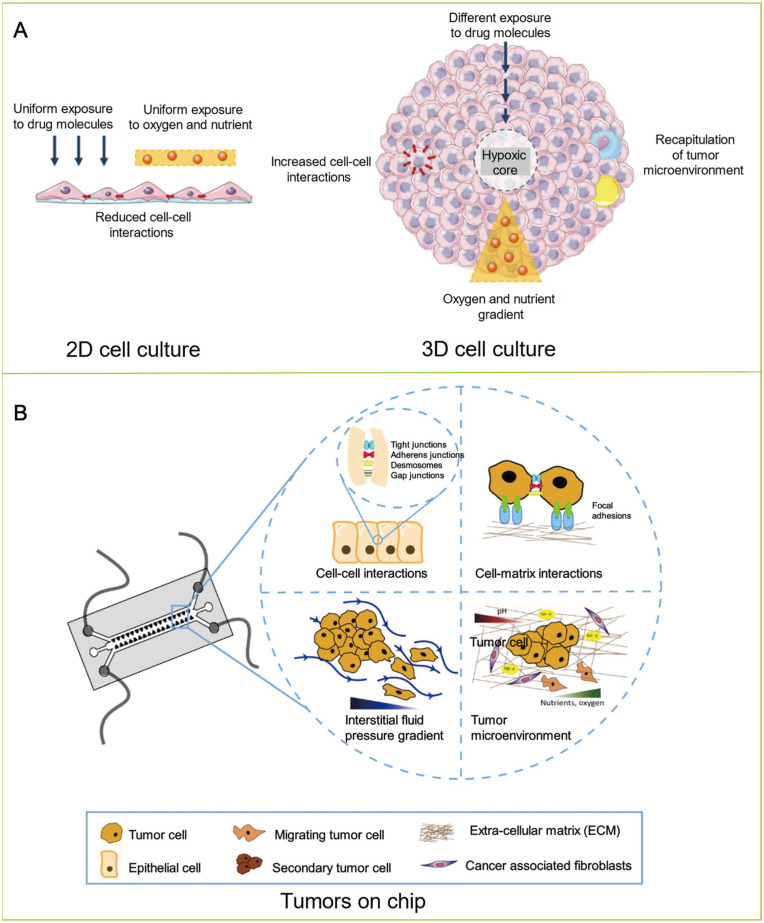
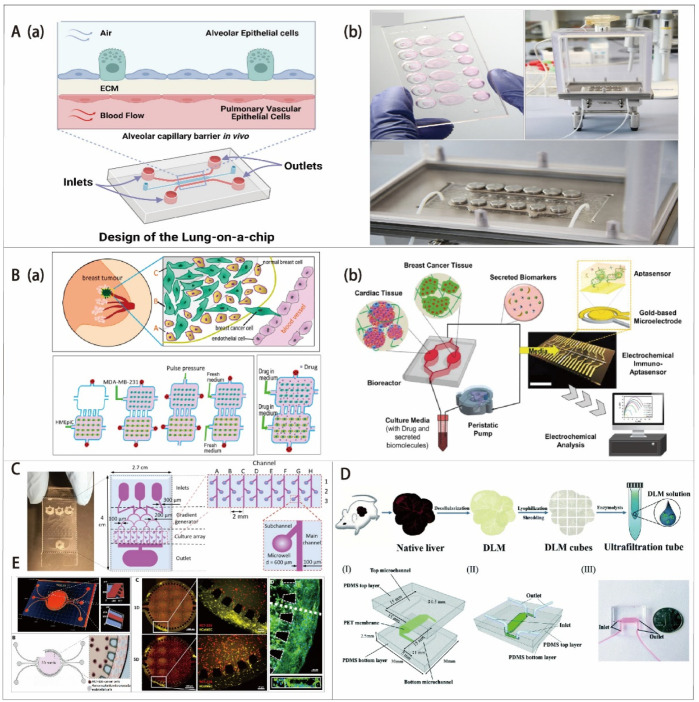
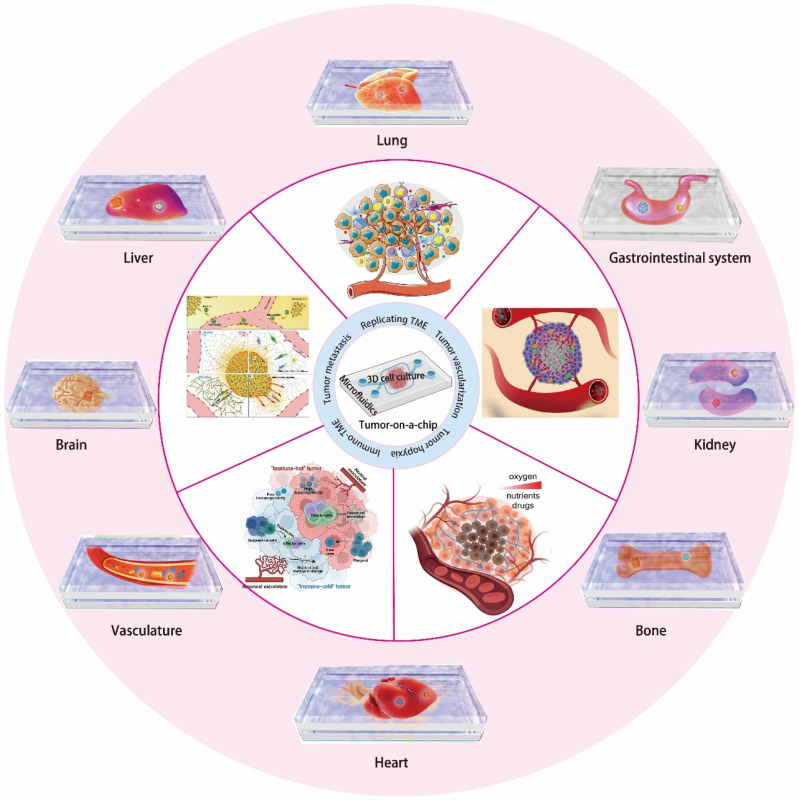
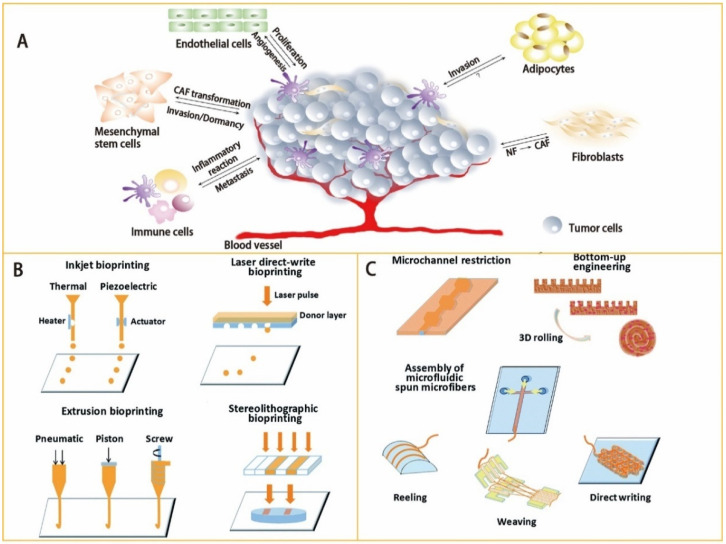
Although many studies have focused on oncology and therapeutics in cancer, cancer remains one of the leading causes of death worldwide. Due to the unclear molecular mechanism and complex in vivo microenvironment of tumors, it is challenging to reveal the nature of cancer and develop effective therapeutics. Therefore, the development of new methods to explore the role of heterogeneous TME in individual patients' cancer drug response is urgently needed and critical for the effective therapeutic management of cancer. The organ-on-chip (OoC) platform, which integrates the technology of 3D cell culture, tissue engineering, and microfluidics, is emerging as a new method to simulate the critical structures of the in vivo tumor microenvironment and functional characteristics. It overcomes the failure of traditional 2D/3D cell culture models and preclinical animal models to completely replicate the complex TME of human tumors. As a brand-new technology, OoC is of great significance for the realization of personalized treatment and the development of new drugs. This review discusses the recent advances of OoC in cancer biology studies. It focuses on the design principles of OoC devices and associated applications in cancer modeling. The challenges for the future development of this field are also summarized in this review. This review displays the broad applications of OoC technique and has reference value for oncology development.
尽管许多研究都集中在肿瘤学和癌症治疗上,但癌症仍然是全球主要死因之一。由于肿瘤的分子机制不清楚且体内微环境复杂,揭示癌症的本质和开发有效的治疗方法具有挑战性。因此,迫切需要开发新方法来探索个体患者癌症药物反应中异质 TME 的作用,这对于癌症的有效治疗管理至关重要。器官芯片 (OoC) 平台结合了 3D 细胞培养、组织工程和微流控技术,作为一种新方法来模拟体内肿瘤微环境的关键结构和功能特征。它克服了传统 2D/3D 细胞培养模型和临床前动物模型无法完全复制人类肿瘤复杂 TME 的缺陷。作为一项全新的技术,OoC 对于实现个性化治疗和新药开发具有重要意义。本文综述了 OoC 在癌症生物学研究中的最新进展。重点讨论了 OoC 器件的设计原理及其在癌症建模中的相关应用。本文还总结了该领域未来发展面临的挑战。本文展示了 OoC 技术的广泛应用,对肿瘤学的发展具有参考价值。